

When managing lengthy or oversized inventory items—including timber, sheet materials, and tubular products—specialized storage solutions become critical. You might be searching for pipe storage racks or lumber storage systems, but these all fall under a single category: cantilever racking.
This guide serves as your comprehensive resource, addressing fundamental questions about cantilever systems. We’ll explore their core functionality, optimal application scenarios.
I. What is Cantilever Shelving?
Cantilever racking structures provide adaptable storage for extended, heavy, or irregularly shaped goods of virtually any dimension. A defining feature setting them apart from conventional shelving is their obstruction-free framework. Material handling equipment such as forklifts can directly access stored items without front column interference, enabling unimpeded loading and unloading operations.

Cantilever Rack System Components Overview
A typical cantilever rack setup employs several interconnected elements:
- Floor-mounted bases form the fundamental stabilizing structure. These components secure the rack to the concrete foundation and attach directly to the vertical upright posts, ensuring overall stability.
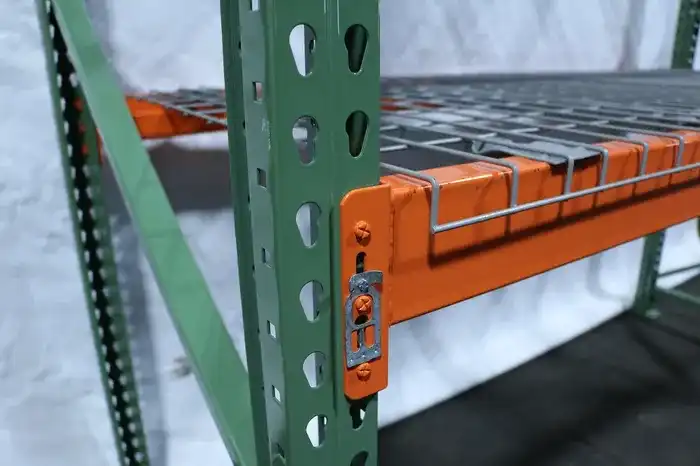
- Vertical upright posts integrate with the base units. These posts feature pre-drilled openings allowing the insertion of cantilever arms, which establish the actual storage tiers. Single-column uprights handle one-sided units, while double-sided configurations utilize shared uprights efficiently.
- Load-bearing horizontal arms connect securely into the uprights’ designated holes. These protruding elements function as the primary storage surfaces, effectively replacing traditional shelving within the cantilever design.
- Diagonal and horizontal braces deliver essential reinforcement. By connecting firmly between adjacent upright columns, these braces counteract lateral forces, fortifying the entire framework’s structural integrity against shifting loads.
- Optional decking panels can be laid across the cantilever arms. This addition creates a solid, flat shelf surface where needed, enhancing support for certain types of stored materials.
II. Varieties of Cantilever Storage Systems
Two primary designs dominate cantilever rack configurations.
1. Single sided cantilever racking:
Single-sided cantilever racking design features cantilever beams extending horizontally from only one side of the column. The racks are usually installed against the wall, in a “back-to-back” manner (i.e. the columns of the two rows of racks are close together, and the cantilever beams of each row are facing outwards). This structure means that goods can only be accessed from the side of the column with the cantilever beam.

Single-sided design is the basic and widely used form, especially suitable for single-sided storage areas arranged along the warehouse wall or as independent channels, providing a clear, one-way access path.
2. Double sided cantilever racking:
The key to the double-sided cantilever racking design is that both sides of the column are equipped with horizontally extending cantilever beams. The column is usually located in the middle of the two rows of cantilever beams. This allows the rack to access goods from both sides of the column.

The core advantage of double-sided cantilever racking is that it significantly improves storage density (because the columns are shared by both sides) and provides more flexible access direction (can be operated from left and right), which is a common solution for maximizing space utilization and improving access efficiency.
III. Is Cantilever Racking Essential for Your Storage?
Standard pallet racks often fall short when handling exceptionally lengthy or oversized items. In such scenarios, cantilever racking systems become a practical necessity. These racks excel at storing lumber, piping, and sizable furniture pieces, frequently incorporating shelving components.
Given the substantial weight of typical stored materials, cantilever racks prioritize robust load-bearing design. Individual arms commonly support loads ranging from 1,500 to 5,000 pounds, with certain heavy-duty models capable of handling up to 18,000 pounds per arm. Market-prevalent systems typically offer approximately 11,600 pounds capacity per side. Accurately assessing your material weight is vital to select a rack system matching your operational demands.
Available vertical clearance within your warehouse or storage yard significantly influences rack selection. Cantilever rack heights generally span from six feet to thirty feet, with systems between twelve and sixteen feet tall being the most frequently chosen option.
Cantilever racks are configured as either single-sided or double-sided units. Single-sided designs provide storage access from one direction and are optimally positioned against facility walls. Conversely, double-sided racks allow access from both sides, increasing storage density but requiring more floor area.
Crucially, repurposing a single-sided rack for double-sided storage introduces unacceptable safety hazards. Industry professionals strongly advise against this practice.
IV. Can Cantilever Racks Be Purchased?
Absolutely. However, selecting a trustworthy supplier is critical. Without proper vetting, you risk acquiring racking systems with prior collision damage or inadequate seismic certification. Some structural flaws remain undetectable to non-specialists—recognizing red flags demands expertise.
Tailored Solutions & Regulatory Support, Partnering with Aceally means accessing deep industry knowledge. We comprehend your storage challenges and navigate complex permitting landscapes alongside you. Whether new or used cantilever systems, we prioritize certified, premium-grade options tailored to your spatial and operational requirements.
Comprehensive Service Commitment, Beyond supplying top-tier racks, we provide personalized consultation for optimal space utilization. Our experts guide you through equipment selection, layout planning, and seamless permitting procedures—eliminating bureaucratic hurdles from start to finish.
Initiate your project today: Collaborate with Aceally for bespoke storage solutions engineered to your specifications.