


When warehouses and industrial facilities need more space, utilizing vertical space is often more practical than expanding the building footprint.
Equipment platforms and mezzanine floors are two common steel structures used for this purpose. Although they may look similar, they are designed for different applications and operational requirements.
Equipment platforms support machinery and industrial systems, while mezzanine floors create additional usable space for storage, work areas, and warehouse operations.
Understanding their differences helps you select the right solution for your facility and avoid unnecessary investment.
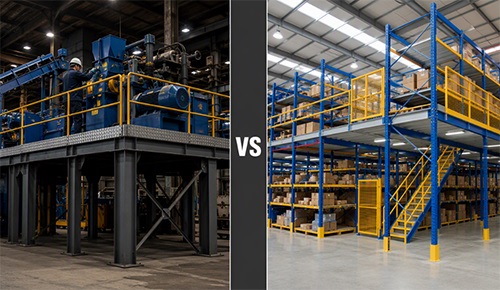
Equipment Platform vs Mezzanine Floor: Quick Comparison
| Feature | Equipment Platform | Mezzanine Floor |
|---|---|---|
| Main Purpose | Support machinery and equipment | Create additional usable floor space |
| Typical Application | Manufacturing, automation, production lines | Storage, picking, offices, warehouse operations |
| Load Type | Concentrated equipment loads | Distributed loads from storage and personnel |
| Design Focus | Equipment stability and operation | Space utilization and flexibility |
| Common Industries | Manufacturing and industrial facilities | Logistics, retail, and distribution centers |
Key Difference:
Equipment platforms are designed around machinery requirements, while mezzanine floors are designed around storage, workspace, and operational needs.
Key Differences Between Equipment Platform and Mezzanine Floor
The main difference between an equipment platform and a mezzanine floor is what the structure is designed to support.
An equipment platform is engineered around specific machinery requirements, while a mezzanine floor is designed to create additional usable space for storage, working areas, and warehouse operations.
Equipment Platform
An equipment platform is a customized steel structure designed to support industrial machinery and production systems.
The design focuses on equipment weight, dimensions, operating conditions, and maintenance requirements.
Typical Applications:
- Production equipment support
- Conveyor systems
- Automation equipment
- Industrial maintenance platforms
Supporting specific equipment safely and reliably.
Mezzanine Floor
A mezzanine floor is a steel structure installed inside an existing building to create an additional working level.
The design focuses on maximizing available space, improving workflow, and providing flexible layouts.
Typical Applications:
- Warehouse storage areas
- Picking and packing stations
- Office areas
- Inventory management spaces
Creating flexible and efficient additional space.
Differences in Design and Load Requirements
Although both structures use steel frames, their engineering considerations are different.
Equipment Platform Design Considerations
- Concentrated Loads: Designed to support specific machinery loads rather than general floor loading.
- Equipment Integration: Often connected with conveyors, automation systems, or production lines.
- Maintenance Access: Can include stairs, handrails, and service walkways for equipment inspection.
Mezzanine Floor Design Considerations
- Flexible Layout: Designed for storage, workstations, and general warehouse activities.
- Space Optimization: Helps companies increase usable area without expanding the building.
- Future Expansion: Modular designs allow easier modification when operational needs change.
Equipment Platform vs Mezzanine Floor: Cost Comparison
Cost is an important factor when choosing between an equipment platform and a mezzanine floor. The final investment depends on factors such as structure size, load requirements, materials, installation conditions, and customization level.
In general, mezzanine floors are usually more economical for creating additional working or storage space, while equipment platforms often require higher investment because they are designed around specific machinery and operational requirements.
| Cost Factor | Equipment Platform | Mezzanine Floor |
|---|---|---|
| Overall Cost Level | Usually higher | Generally lower |
| Main Cost Driver | Equipment requirements and customized engineering | Floor area, load capacity, and layout requirements |
| Design Complexity | Higher due to equipment-specific design | Medium with more standardized solutions |
| Flexibility | Designed for specific applications | Easier to modify and expand |
Important:
The lowest initial cost is not always the best choice. The right structure should match your actual operational requirements to ensure long-term safety and efficiency.
Equipment Platform or Mezzanine Floor: Which One Should You Choose?
The right solution depends on the primary purpose of the structure. Consider whether you need to support equipment or create additional usable space.
Choose an Equipment Platform When:
- Supporting heavy machinery or production equipment
- Installing conveyors or automation systems
- Creating maintenance access around equipment
- Handling equipment-specific loading requirements
Choose a Mezzanine Floor When:
- Increasing warehouse storage capacity
- Adding picking, packing, or working areas
- Improving vertical space utilization
- Creating flexible space for future expansion
Can an Equipment Platform Be Used as a Mezzanine Floor?
Although equipment platforms and mezzanine floors may look similar, they are not interchangeable.
An equipment platform is designed for specific machinery loads, while a mezzanine floor is designed for general use such as storage, personnel, and workspace.
Using one system for another purpose without proper engineering evaluation may affect structural safety and performance. The intended application should always be considered during the design stage.
Professional Tip:
Before modifying or repurposing any steel platform structure, consult an experienced engineering team to ensure the design meets your actual requirements.
Customized Steel Platform Solutions from Spieth
Spieth provides customized steel platform solutions designed for different industrial and warehouse applications. Whether you need an equipment platform for machinery support or a mezzanine floor for space expansion, our engineering team can develop a solution based on your facility requirements.
Engineering Design
Customized design based on project layout, operational requirements, and application conditions.
Custom Fabrication
Steel structures manufactured according to required dimensions, loading conditions, and installation environments.
Structural Evaluation
Load assessment and engineering support to help ensure safe and reliable performance.
Installation Support
Technical guidance to support efficient installation and project implementation.
Need the Right Steel Platform Solution?
Whether your goal is supporting industrial equipment or creating additional warehouse space, Spieth can help you develop a customized steel structure that fits your operational needs.
Conclusion
Equipment platforms and mezzanine floors both help businesses make better use of vertical space, but they serve different purposes.
An equipment platform is designed around machinery requirements, while a mezzanine floor is designed around storage, workspace, and operational flexibility.
Selecting the right structure during the planning stage helps improve safety, efficiency, and long-term value. With professional engineering and customized manufacturing, the right steel platform solution can help businesses optimize their facilities and support future growth.


