

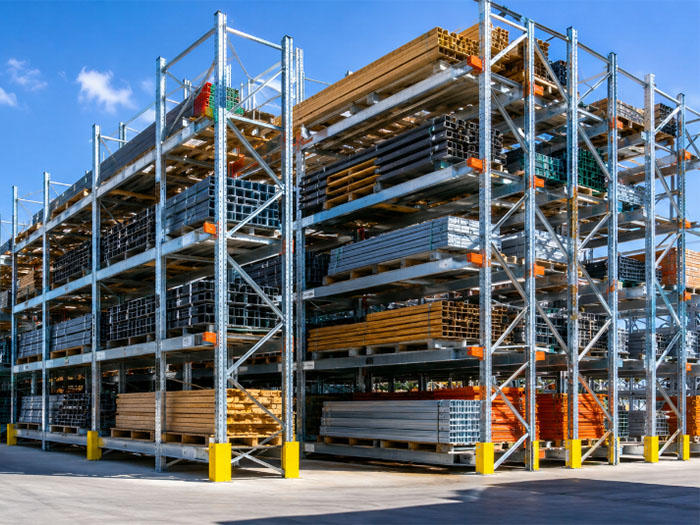
1. Introduction: Engineering Scope of Outdoor Racking Systems
Outdoor pallet racking is a load-bearing steel structure exposed to environmental forces, including wind pressure, rainfall, UV exposure, and thermal variation.
Unlike indoor storage systems, outdoor racking must be evaluated as a structural engineering system rather than a simple warehousing solution.
- Wind load resistance design
- Corrosion protection system (galvanization)
- Foundation anchoring and load transfer
- Long-term structural fatigue control
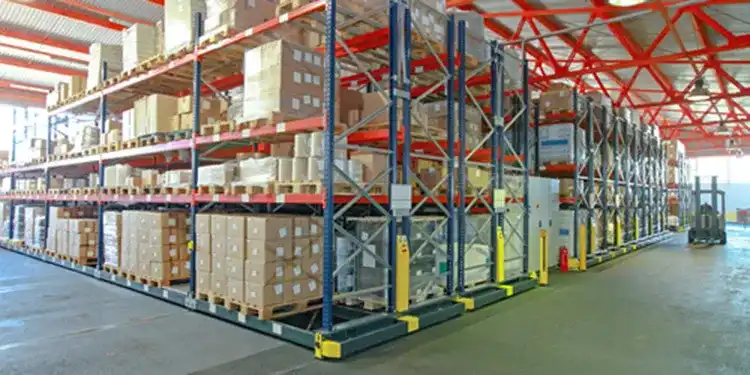
2. Indoor vs Outdoor Racking System (Engineering Comparison)
| Engineering Factor | Indoor System | Outdoor System |
|---|---|---|
| Load Condition | Vertical static load only | Vertical + lateral wind + environmental load |
| Corrosion Exposure | Low (controlled environment) | High (rain, UV, humidity, salt air) |
| Surface Protection | Powder coating | Hot-dip galvanization (70–100 μm zinc layer) |
| Design Life | 8–12 years | 15–25 years (environment dependent) |
3. Wind Load as a Critical Design Factor
In outdoor pallet racking systems, wind load is often the dominant lateral force acting on the structure.
Where wind pressure increases with height, exposure category, and effective pallet surface area.
4. Structural Engineering Design of Outdoor Pallet Racking
4.1 Upright Frame Engineering Design
The upright frame is the primary load-bearing component of an outdoor pallet racking system.
It must resist vertical loads, lateral wind pressure, and torsional deformation.
- Steel thickness: typically 2.0–3.0 mm for outdoor grade systems
- Closed or reinforced section profiles for torsional resistance
- X-bracing or frame bracing to prevent lateral sway
- Impact resistance design for forklift operations in yard environments
4.2 Bracing System & Structural Stability Control
Bracing systems are responsible for maintaining geometric stability under lateral forces such as wind and uneven pallet loading.
- X-bracing systems are preferred for high-rise outdoor racks
- Frame bracing improves torsional rigidity
- Bracing must be designed to resist cyclic wind loading fatigue
4.3 Base Plate & Anchoring System Engineering
Outdoor pallet racking systems must be mechanically anchored to a reinforced concrete foundation to resist overturning moments generated by wind loads and operational impact forces.
- Base plate thickness: typically ≥ 10 mm for outdoor systems
- Anchor type: expansion anchors or chemical anchoring systems
- Load transfer: vertical + lateral load must be transferred into concrete slab
- Optional raised base design to prevent water accumulation and corrosion
4.4 Foundation & Drainage Engineering Requirements
The foundation system plays a critical role in ensuring long-term stability of outdoor racking structures, especially in environments with rainfall or ground moisture variation.
- Concrete slab thickness: typically 150–200 mm minimum
- Ground slope: 1–2% drainage gradient recommended
- Water runoff channels to prevent base immersion
- Soil settlement control to avoid rack misalignment
4.5 Structural Response Under Wind Load
When wind load is applied, the structural system responds through a combination of axial compression, bending moment, and lateral shear forces.
As rack height increases, the overturning moment increases proportionally, making height one of the most critical design variables in outdoor racking systems.
4. Structural Engineering Design of Outdoor Pallet Racking
4.1 Upright Frame Engineering Design
The upright frame is the primary load-bearing component of an outdoor pallet racking system.
It must resist vertical loads, lateral wind pressure, and torsional deformation.
- Steel thickness: typically 2.0–3.0 mm for outdoor grade systems
- Closed or reinforced section profiles for torsional resistance
- X-bracing or frame bracing to prevent lateral sway
- Impact resistance design for forklift operations in yard environments
4.2 Bracing System & Structural Stability Control
Bracing systems are responsible for maintaining geometric stability under lateral forces such as wind and uneven pallet loading.
- X-bracing systems are preferred for high-rise outdoor racks
- Frame bracing improves torsional rigidity
- Bracing must be designed to resist cyclic wind loading fatigue
4.3 Base Plate & Anchoring System Engineering
Outdoor pallet racking systems must be mechanically anchored to a reinforced concrete foundation to resist overturning moments generated by wind loads and operational impact forces.
- Base plate thickness: typically ≥ 10 mm for outdoor systems
- Anchor type: expansion anchors or chemical anchoring systems
- Load transfer: vertical + lateral load must be transferred into concrete slab
- Optional raised base design to prevent water accumulation and corrosion
4.4 Foundation & Drainage Engineering Requirements
The foundation system plays a critical role in ensuring long-term stability of outdoor racking structures, especially in environments with rainfall or ground moisture variation.
- Concrete slab thickness: typically 150–200 mm minimum
- Ground slope: 1–2% drainage gradient recommended
- Water runoff channels to prevent base immersion
- Soil settlement control to avoid rack misalignment
4.5 Structural Response Under Wind Load
When wind load is applied, the structural system responds through a combination of axial compression, bending moment, and lateral shear forces.
As rack height increases, the overturning moment increases proportionally, making height one of the most critical design variables in outdoor racking systems.
6. Application Scenarios, Failure Case Logic & Design Recommendations
6.1 Engineering Application Scenarios for Outdoor Pallet Racking
Outdoor pallet racking systems are widely used in environments where indoor warehouse space is insufficient or where materials are naturally stored in open-air conditions.
- Construction Material Yards: steel bars, formwork, cement pallets, scaffolding systems
- Port Logistics Terminals: container staging and temporary cargo storage
- Manufacturing Outdoor Buffer Zones: overflow inventory storage
- Heavy Industry Sites: machinery parts and oversized components
- Cold Climate Warehousing: snow-exposed storage requiring galvanized protection
6.2 Real-World Failure Mechanism Scenario (Engineering Simulation)
The following simulation reflects a common failure pattern observed in improperly designed outdoor pallet racking systems exposed to extreme weather conditions.
Under sudden wind load increase, the following sequence typically occurs:
- Initial lateral displacement at base plate connection point
- Micro-slippage between anchor bolts and concrete foundation
- Progressive upright inclination (1–3 degrees)
- Load redistribution to adjacent rack frames
- Bracing system overstress and structural instability propagation
6.3 Engineering Selection Framework
The selection of outdoor pallet racking systems should not be based solely on initial cost, but on a structured engineering evaluation model.
Key evaluation factors include:
- Environmental exposure level (wind, humidity, coastal conditions)
- Required design lifespan (short-term vs long-term infrastructure)
- Load cycle frequency and pallet weight distribution
- Maintenance capability and inspection cycle
- Foundation conditions and installation constraints
6.4 Final Engineering Design Guidelines
To ensure long-term structural safety and operational stability, outdoor pallet racking systems should follow these engineering principles:
- Always design for combined load conditions (vertical + wind + environmental)
- Use hot-dip galvanized steel for all outdoor applications
- Ensure reinforced anchoring with certified concrete foundation systems
- Include structural bracing to prevent lateral instability
- Implement periodic inspection after extreme weather events
7. Conclusion
Outdoor pallet racking is a structural engineering system designed to operate under environmental stress conditions.
Its performance depends on the integration of material selection, corrosion protection, structural reinforcement, and foundation engineering.
When properly engineered, outdoor pallet racking systems can achieve long-term operational stability, transforming unused outdoor space into a safe and efficient logistics storage infrastructure.