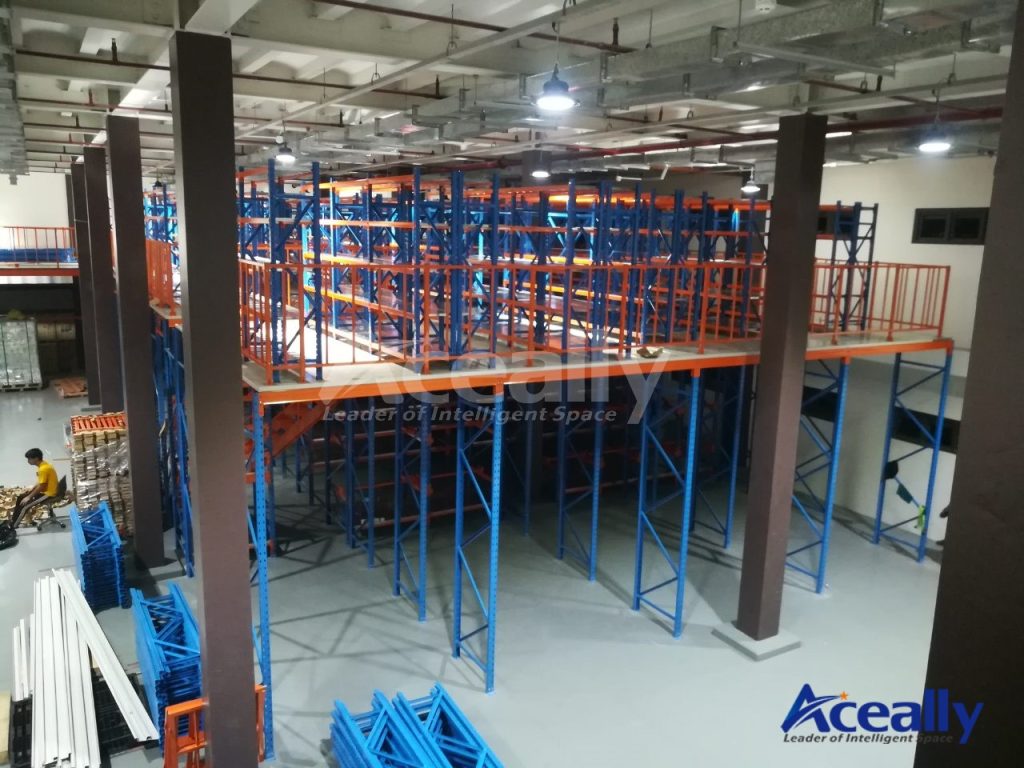


Standard pallet racking is better for most conventional warehouses, while custom pallet racking is better when your building, loads, workflow, or equipment create non-standard requirements.
If your operation uses common pallet sizes, regular aisle layouts, and needs fast installation at a controlled budget, standard pallet racking is usually the right choice.
If you need to improve space use in a constrained warehouse, support unusual loads, or integrate with a specific handling process, custom pallet racking can deliver better long-term value.
For most buyers, the decision comes down to four factors: layout, load profile, speed of deployment, and long-term operating efficiency. That is where a clear comparison matters.
✔ Key takeaways
- • Standard pallet racking fits most general warehousing and distribution operations.
- • Custom pallet racking is justified when standard rack sizes waste space or do not fit your operational process.
- • Upfront cost is only one part of the decision; long-term space efficiency and workflow performance matter more in some projects.
- • Lead time is usually shorter for standard pallet racking, while custom pallet racking requires engineering, confirmation, and production time.
- • Safety and load calculation are non-negotiable in both options.
- • The best choice depends on your warehouse scenario, not on which option sounds more advanced.
What Is Standard Pallet Racking?
Standard pallet racking is a modular storage system built around common rack dimensions, beam lengths, upright sizes, and pallet handling requirements. If your warehouse uses standard pallets and a regular layout, standard pallet racking is often the most practical option.
This type of pallet racking system is widely used because it is simple to specify, easier to source, and fast to install. Most warehouse projects do not need a fully custom structure. They need a reliable system that fits standard pallet sizes, common forklift access, and predictable load ranges.
[lr_layout image=”https://www.acerackingsystem.com/wp-content/uploads/2026/03/Standard-Pallet-Racking-in-a-Warehouse.webp” alt=”Standard Pallet Racking in a Warehouse”]In a typical warehouse, standard pallet racking works well when you have:
- regular building geometry
- standard aisle widths
- common pallet dimensions
- stable SKU profiles
- no unusual floor, temperature, or handling constraints
Advantages of standard pallet racking
| Factor | Standard Pallet Racking |
|---|---|
| Upfront cost | Usually lower |
| Lead time | Usually faster |
| Expansion | Easier with modular components |
| Replacement parts | Easier to source |
| Design process | Simpler |
| Best fit | Regular warehouse layouts |
What Is Custom Pallet Racking?
Custom pallet racking is designed around your warehouse conditions rather than around fixed standard specifications. If standard rack sizes leave wasted space, do not support your load type, or conflict with your workflow, a custom pallet racking system may be the better investment.
[lr_layout image=”https://www.acerackingsystem.com/wp-content/uploads/2026/03/Custom-Pallet-Racking-for-Unusual-Loads.webp” alt=”Custom Pallet Racking for Unusual Loads”]A custom pallet racking system can be adjusted in several ways:
- upright height and section size
- beam length and level spacing
- layout around columns or building restrictions
- rack configuration for unusual pallets or containers
- corrosion protection or finish for cold storage or specific environments
- compatibility with defined handling equipment or automation flow
This does not always mean a completely new system from zero. In many projects, custom pallet racking is a controlled modification of proven rack structures to match site conditions.
As a Pallet Racking factory manufacturer, Aceally sees this most often in projects where clients need to solve one of these problems:
- the warehouse is not a clean rectangular space
- the pallet dimensions are non-standard
- the loads are unusually heavy or long
- vertical clearance must be used more efficiently
- the customer needs a tighter relationship between storage layout and operating flow
Custom Pallet Racking vs Standard Racking: Key Differences
The main difference is not simply price. It is how closely the pallet racking system fits your warehouse and operating model. Standard pallet racking is built for speed and general use. Custom pallet racking is built for fit, efficiency, and scenario-specific performance.
| Factor | Standard Pallet Racking | Custom Pallet Racking |
|---|---|---|
| Design basis | Standard sizes and modules | Site-specific and load-specific design |
| Upfront cost | Lower in most cases | Higher in most cases |
| Lead time | Shorter | Longer |
| Installation complexity | Lower | Moderate to higher |
| Space utilization | Good in regular layouts | Better in constrained or irregular layouts |
| Load adaptability | Suitable for common loads | Better for heavy, long, or special loads |
| Future expansion | Usually easier | Depends on design |
| Automation compatibility | Limited to moderate | Better for process-specific needs |
| Best use case | Common warehousing | Specialized or efficiency-driven projects |
If your warehouse is straightforward, standard pallet racking will often be the rational choice.
If your warehouse has design constraints or your operation loses money because of wasted space or poor flow, custom pallet racking becomes easier to justify.
Cost Comparison: Which Option Delivers Better Value?
Standard pallet racking usually costs less at the start. Custom pallet racking may deliver better value over time if it improves storage density, workflow, or space use enough to offset the higher initial investment.
This is where many buyers make a weak comparison. They compare only the purchase price. That is incomplete.
Upfront cost
Standard pallet racking is usually less expensive because:
- components are standardized
- engineering time is lower
- production is more repeatable
- supply chain is simpler
- installation is more predictable
A custom pallet racking system often adds cost in these areas:
- design review
- load calculation and layout adjustment
- non-standard materials or dimensions
- lower production scale
- longer manufacturing schedule
Long-term value
The long-term result depends on what your warehouse gains from custom pallet racking.
| Cost / Value Factor | Standard Pallet Racking | Custom Pallet Racking |
|---|---|---|
| Purchase price | Lower | Higher |
| Design cost | Lower | Higher |
| Storage density gain | Limited | Potentially higher |
| Labor efficiency impact | Moderate | Can be significant |
| Reconfiguration cost | Usually lower | Depends on design |
| ROI potential | Good in standard operations | Better when custom pallet racking solves a real constraint |
If your operation can store more pallets in the same building, reduce handling time, or avoid relocation or expansion costs, custom pallet racking can make financial sense. If none of those benefits are material, standard pallet racking is likely the better buy.
This is also where you may want to connect to related topics such as warehouse layout planning, pallet rack load capacity, or selective rack design standards if you are building a broader content cluster.
Which Option Uses Warehouse Space More Efficiently?
Custom pallet racking usually wins on space efficiency when your warehouse has irregular dimensions, low-clearance zones, columns, awkward corners, or specific flow requirements. Standard pallet racking is efficient when the building is regular and the pallet profile is consistent.
[lr_layout image=”https://www.acerackingsystem.com/wp-content/uploads/2026/03/High-Density-Storage-with-Custom-Racking.webp” alt=”High-Density Storage with Custom Racking”]Space efficiency is not only about how many pallets fit in the building. It also affects:
- forklift travel distance
- aisle planning
- picking flow
- replenishment speed
- safety clearances
In a standard rectangular warehouse with predictable pallet dimensions, standard pallet racking can already perform very well. You do not need a custom pallet racking system just to achieve normal storage density.
But in these scenarios, custom pallet racking often has a clear advantage:
- facilities with building columns disrupting bay spacing
- warehouses with unusual ceiling heights
- operations using oversized or mixed pallet types
- cold storage projects where cubic utilization matters more
- high-value urban warehouses where every square meter matters
A common mistake is forcing standard rack sizes into a space that is clearly not standard. The result is avoidable dead space. When that dead space is large enough, custom pallet racking stops being “more expensive” and starts being “more efficient.”
Safety, Load Capacity, and Compliance Considerations
Neither standard pallet racking nor custom pallet racking is safe by default. Safety depends on correct engineering, accurate load data, proper installation, and ongoing inspection.
The correct pallet racking system specification should consider:
- pallet weight
- load distribution
- beam span
- upright section
- lift height
- forklift type
- aisle width
- floor slab condition
- anchor method
- seismic or local structural requirements
- environmental conditions such as cold storage or corrosion exposure
When custom pallet racking becomes important
Custom pallet racking becomes especially relevant when your loads are outside common conditions :
- very heavy pallet loads
- long goods or irregular containers
- high-bay storage with tighter deflection control
- operations with repeated impact risk
- environments with unusual coating or material needs
At Aceally, this is one of the most practical reasons customers move from a standard specification to a custom pallet racking solution. Not because they want something unique, but because they need a safer and more suitable structure.
Installation Time and Operational Impact
If speed is your top priority, standard pallet racking is usually the better option. If your project is part of a new warehouse plan or a long-term upgrade, custom pallet racking can be worth the extra lead time.
Standard pallet racking usually has an advantage in delivery and installation because the design path is shorter. The specification is known, the components are familiar, and installation teams can work with a predictable sequence.
Custom pallet racking takes more time because the process typically includes:
- load and workflow assessment
- engineering confirmation
- drawing approval
- production
- installation planning
Practical decision rule
- If you need to add storage capacity quickly, choose standard pallet racking whenever possible.
- If you are planning a new facility, redesigning a warehouse, or trying to solve a persistent storage constraint, custom pallet racking deserves serious consideration.
Use Cases for Standard Pallet Racking
Standard pallet racking is best when your storage needs are conventional, your building is regular, and your priority is cost control with reliable performance.
- general warehousing
- retail and e-commerce overflow storage
- 3PL operations with common pallet types
- manufacturing warehouses with standard inbound pallets
- businesses that expect frequent modular expansion
- projects with short installation windows
Use Cases for Custom Pallet Racking
Custom pallet racking is best when standard components leave money on the floor through wasted space, poor fit, or operational inefficiency.
- cold storage warehouses
- high-density storage projects
- facilities with columns, offsets, or non-standard geometry
- heavy-duty industrial storage
- warehouses using non-standard pallets or stillages
- operations that need a defined interface with automation or specialized handling equipment
How to Choose Between Custom and Standard Racking
Choose based on warehouse conditions, The right solution is the one that fits your loads, layout, budget, and future operating plan with the least compromise.
Before you decide, ask these practical questions:
Are your pallet sizes standard?
If yes, standard pallet racking may be enough. If not, custom pallet racking may prevent wasted bay space and unstable storage.
Is your building layout regular?
If yes, standard pallet racking layouts usually work well. If your warehouse has columns, narrow zones, odd corners, or height restrictions, custom pallet racking becomes more useful.
Do you need quick deployment?
If yes, standard pallet racking has the advantage.
Are your loads unusual in weight or shape?
If yes, custom pallet racking may be necessary for safety and operational fit.
Is your main goal to lower initial cost or improve long-term efficiency?
If the first goal dominates, standard pallet racking is often better. If the second goal has a measurable financial return, custom pallet racking can be justified.
Will your operation change in the next three to five years?
If flexibility and modular expansion matter most, standard pallet racking often has a simpler path. If your future state is already known, a custom pallet racking system can be designed around it.
Decision guide
| If your priority is… | Better choice |
|---|---|
| Lower upfront cost | Standard pallet racking |
| Faster installation | Standard pallet racking |
| Standard pallet storage | Standard pallet racking |
| Irregular warehouse layout | Custom pallet racking |
| Special loads or containers | Custom pallet racking |
| Better space utilization | Custom pallet racking |
| Process-specific design | Custom pallet racking |
conclusion: Which Is Better?
Neither option is universally better. Standard pallet racking is better for most normal warehouse operations. Custom pallet racking is better when your storage environment or operating requirements are outside standard conditions.
If your warehouse is conventional, your pallets are standard, and your goal is to install a reliable pallet racking system quickly and economically, standard pallet racking is the right answer in most cases. If your space is constrained, your loads are specialized, or your workflow depends on a tighter storage design, custom pallet racking can produce a better operational result and a stronger long-term return.
At Aceally, we manufacture warehouse racking systems for both standard and project-specific storage requirements. In practice, the best results come from matching the warehouse racking system to the real operating scenario instead of assuming that more custom pallet racking is always better or that standard pallet racking is always enough.
If you are comparing options for a new warehouse, expansion, or replacement project, we can help you review your layout, pallet profile, and load requirements before you commit to a pallet racking system. A clear technical review early in the process usually prevents the most expensive mistakes later.
FAQ
Is custom pallet racking more expensive than standard pallet racking?
Yes, in most cases the upfront cost is higher. But if custom pallet racking increases storage density or improves workflow enough, the long-term value can be better.
Is standard pallet racking strong enough for heavy loads?
Often yes, but only within the correct rack specification. Load capacity depends on upright size, beam length, level spacing, and actual pallet weight.
When should you choose custom pallet racking?
You should choose custom pallet racking when standard sizes do not fit your building, pallet dimensions, load profile, or handling process.
Is custom pallet racking better for small warehouses?
Not always. For a simple small warehouse, standard pallet racking is often enough. For a small warehouse with layout restrictions, custom pallet racking may improve usable space.
Which is better for cold storage, custom pallet racking or standard pallet racking?
Custom pallet racking is often better for cold storage because cubic space use, material finish, and layout efficiency are more critical in temperature-controlled facilities.
Can standard pallet racking be modified later?
Yes, in many cases standard pallet racking can be expanded or adjusted with compatible components. The exact flexibility depends on the original system design.
Does custom pallet racking take longer to install?
Yes. Custom pallet racking usually takes longer because it includes engineering, confirmation, production, and project-specific installation planning.
How do you know if your warehouse needs custom pallet racking?
If you have irregular building dimensions, non-standard pallets, unusual loads, high space costs, or a workflow that standard pallet racking cannot support well, custom pallet racking is worth evaluating.
Is standard pallet racking better for 3PL warehouses?
In many cases, yes. 3PL operations often benefit from the speed, modularity, and cost efficiency of standard pallet racking, especially when pallet dimensions are common.
What information should you prepare before asking for a pallet racking quote?
You should prepare pallet dimensions, pallet weight, warehouse clear height, building layout, aisle width targets, forklift type, SKU profile, and expected storage capacity.