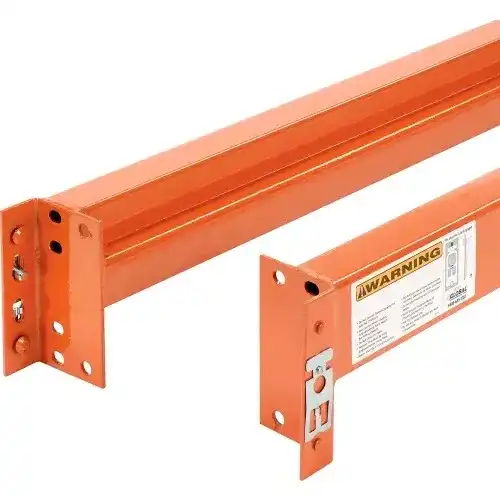


Pallet Rack Beam Load Limits
Whether through quotations or online purchases, suppliers typically provide rated load capacities for new equipment when procuring shelf beams. For used shelving, such rated capacities may not be guaranteed. These figures represent the total safe weight supported by a pair of beams combined (not a single beam). Quotations for individual beams still reference the paired limit values.
Load assessment for pallet rack beams relies on UDL, or uniformly distributed load across the beam’s surface. This differs from point loads, which concentrate weight within a limited area. Beam and truss ratings always assume uniform distribution, as uneven placement compromises overall structural integrity.
Beam Sag and Limits
Under excessive loads, pallet rack beams may bend downward, particularly at their midpoints—a phenomenon known as deflection. While concerning, slight bending is normal. The Shelf Manufacturers Association recommends a standard deflection limit of beam length divided by 180. For a 96-inch span, deflection is approximately 0.53 inches (96 ÷ 180 = 0.53). Measure the height from the beam end to the floor and compare it to the midpoint; exceeding 0.53 inches indicates overload.
Exceptions exist for certain zero-tolerance setups or short-beam high-front configurations, which can withstand heavier loads without sagging. Always adhere to the specified limits regardless of observed deflection. For recommendations on your setup’s load capacity or deflection, contact us, we’re here to help.

Wire Decks and Pallet Rails
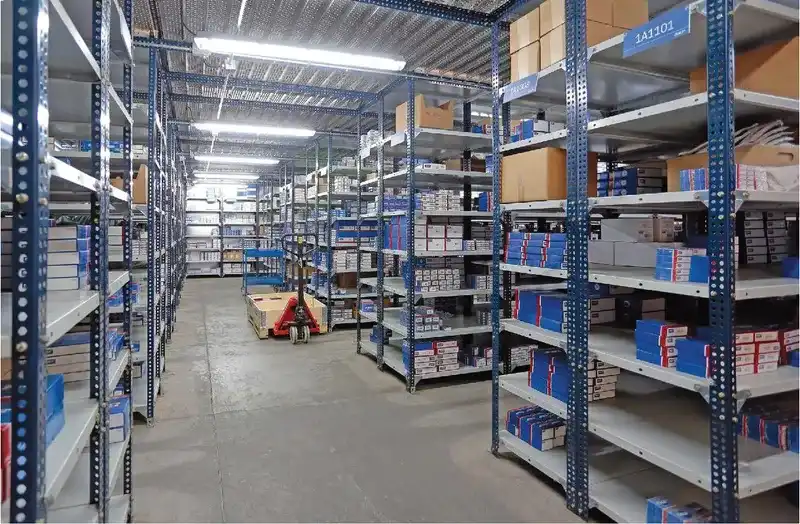
The stability of shelving depends not only on the beams; proper placement is also crucial. Goods should be positioned at least 3 inches above each beam. If items are too small or improperly placed, use mesh platforms or support rails to prevent falling and hazards.
Wire Deck Features
Wire mesh decks provide essential support for goods on pallet racks, far surpassing alternatives like wooden decks, metal grating, or slotted decks in popularity. They bridge gaps between beams via cross-welded steel bars.
Select wire mesh decking that matches your beam’s rated load capacity to enhance flexibility (e.g., two 2,500-pound decks for a 5,000-pound beam) and avoid constraints during future layout changes. Stickers are applied to beams, not decks, so pre-matching simplifies maintenance.
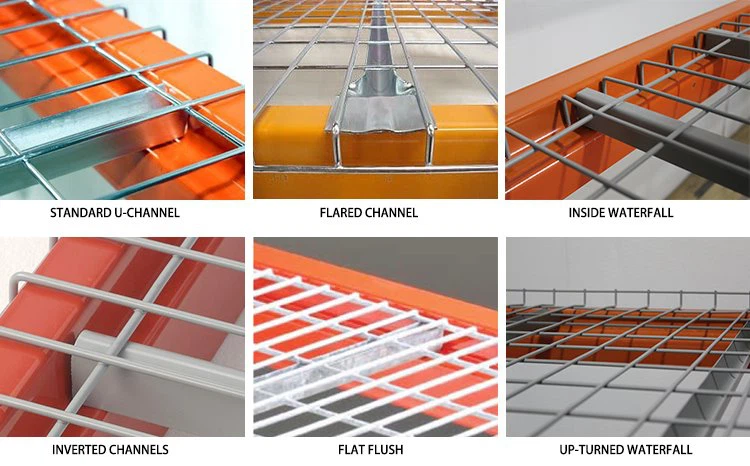
The mesh deck rating must meet or exceed your planned maximum load. Per ANSI MH26.2-2017 standards, load capacity refers to the maximum uniform static load without beam support, preventing misoperation or shallow placement. Manufacturers typically require a load distance of approximately 1-2 inches from the beam.
Pallet Support Rails
Pallet support rails are the most popular beam connectors in warehouse facilities. These beams connect front and rear beams and are secured with screws for stability, typically using two screws per layer. They inherit the advantages of metal mesh while eliminating the mesh openings, preventing small items from getting stuck and slipping through.
For safety, always use decks and guardrails with evenly distributed loads. They are designed to disperse weight, not to bear concentrated forces, foot traffic, or climbing.
For guidance on warehouse layout—including capacity planning, contact us.