

Choosing the Right Level of Defense to Prevent Pallet Rack Damage
In high-traffic warehouse environments, rack damage isn’t a matter of “if,” but “when.” Choosing between Rack Barriers and Rack Protectors is the first step in building a resilient safety strategy. While both aim to reduce collision costs, they serve very different tactical roles on the floor.
Are you looking to shield an entire row end or just reinforce a few vulnerable uprights? In this guide, we’ll compare Barriers (the “area defense”) with Protectors (the “point defense”) to help you optimize your warehouse safety budget.
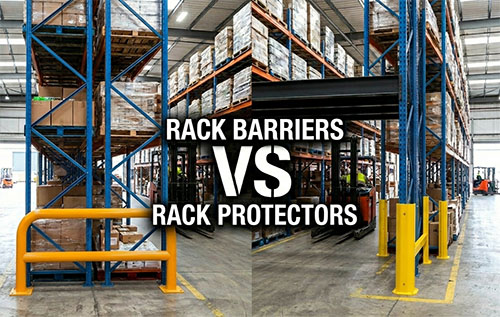
Quick Comparison: Barriers vs. Protectors
Scenario-Based Decision Guide
Choosing the right tool depends on your traffic flow and specific risk factors:
Scenario A: High-Traffic Main Aisleways
The Winner: Rack Barriers. In areas where forklifts travel at speed, you need a heavy-duty “line defense.” A Barrier system protects the entire side of a rack row, ensuring that a turning forklift doesn’t clip the racking structure.
Scenario B: Picking Aisles & Narrow Corridors
The Winner: Rack Protectors. When space is at a premium, Rack Protectors are ideal. They wrap tightly around the base of individual columns, offering critical defense against “nicks and dings” without intruding into narrow picking lanes.
Scenario C: Corner & End-of-Row Turns
The Winner: Rack Barriers. Row ends are the most vulnerable points in any warehouse. A U-shaped Barrier provides 180-degree coverage, protecting both corner uprights and the area between them from turning forklifts.
Pros and Cons
Rack Barriers (Safety Barriers)
- Pros: Protects entire rows; high energy absorption; creates clear traffic lanes.
- Cons: Requires more floor space; higher initial investment.
Rack Protectors (Post Guards)
- Pros: Space-saving design; affordable for every upright; easy to install.
- Cons: Protects individual posts only; does not prevent forklifts from entering rack sides.