


Warehouse managers are constantly weighing space maximization, ensuring worker safety and streamlining operations. Cluttered aisles, inventory damage due to improper storage, and inefficient picking routes all have a serious impact on productivity.
The right pallet racking system can effectively address these issues, providing expandable storage space, more efficient organization and strong load support.
However, when it comes to frame and beam selection, choosing the right racking is no easy task. This guide will break down the key issues you must consider when choosing the ideal racking components for your unique needs.
1. What kind of pallet rack frames and beams do I need?
Pallet racking systems are not uniform. Your specific operation determines whether standard selective racking, denser drive-in racking or a push-back racking system is the best choice. The key is choosing the right frames (uprights) and beams (the horizontal supports that make up the level of the racking).
The frames carry the vertical loads and hold the entire structure in place. The beams carry the horizontal loads of the palletized goods. Their capacities and dimensions must be perfectly matched. Mismatched choices can lead to dangerous overloads, wasted space or costly inefficiencies. Always determine your storage capacity, pallet size, weight requirements and warehouse layout before proceeding.

2. How to choose a pallet rack frame
Selecting frames dictates your rack’s height, depth, overall capacity, and compatibility with other equipment. Ignoring key factors risks structural failure or layout chaos.
2.1. What are your space restrictions?
- Ceiling Height: Measure precisely. Frame height minus beam elevations determines usable clear height. Factor in sprinkler heads, lights, ductwork, and HVAC clearance (typically 18-24 inches minimum). Taller frames offer more storage levels but demand adequate vertical space.
- Floor Plan & Obstructions: Identify fixed obstacles like columns, machinery, or doorways. Frame depth and aisle width placement depend heavily on navigating these. Ensure sufficient clearance for forklifts – aisles for standard counterbalance trucks often need 12-14 feet.
- Future Expansion: Choose frames compatible with potential reconfiguration or additions later. Consistent column profiles ensure seamless integration.
2.2. Are you utilizing pallets?
This defines your frame depth. Pallets dictate beam length needs.
- Standard Pallets: Most common US pallets are 48″ x 40″. Frames must be deep enough for beams supporting pallets plus 3-6 inches of front/back overhang for safe loading/unloading.
- Non-Standard Pallets: Oversized pallets (e.g., 48″ x 48″) or slip sheets drastically alter requirements. Measure the longest and widest pallet you handle. Frame depth must accommodate the beam length needed plus overhang clearance.
- Depth Flexibility: Adjustable frame back-to-back spacing helps accommodate different pallet depths efficiently.
2.3. What weight capacity do you need?
Frame capacity is the per-bay weight rating, including beams, decking, and stored goods. Underestimating is catastrophic.
- Calculate Real Weight: Don’t guess. Know your heaviest pallet per bay. Include beam/decking weight. Use actual weights, not estimates.
- Factor in Safety & Dynamics: Forklift impacts, seismic zones, and uneven loading require higher capacities than static pallet weight. Consult ANSI MH16.1 standards or a qualified rack engineer.
- Frame Capacity Range: Standard frames range from ~5,000 lbs to 50,000+ lbs per bay. Match your highest anticipated load per bay location.
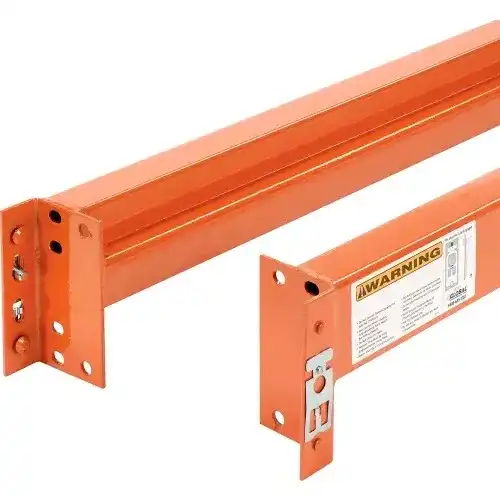
3. How to Choose Pallet Rack Beams
Beams directly support your pallet loads. Selecting the wrong beam leads to dangerous sagging, catastrophic collapse, or inefficient space use.
3.1. How many pallets are you putting on a pallet rack shelf level?
This determines beam length.
- Single Pallet Deep: Most common. Beams span the frame opening width. For a standard 48″ pallet, an 8′ (96″) frame opening typically requires 108″ beams (allowing 6″ overhang per side).
- Double-Deep: Requires special long-span beams. Calculate beam length based on two pallet widths plus necessary overhangs and clearance between pallets. Deep-reach forklifts are essential.
- Accuracy Matters: Precisely measure your actual frame opening width. Beam length = Opening Width + Overhang (usually 3-6 inches per end).
3.2. What weight capacity do you need for your beams?
Beam capacity is per pair, per shelf level. It’s distinct from frame capacity.

- Beam Capacity Dictates Shelf Load: Each beam level has its own rating. Your pallet weight on that specific shelf cannot exceed the beam capacity.
- Distributed vs. Concentrated Load: Capacity assumes even load distribution. Heavy point loads near beam center can cause failure even if total weight seems acceptable. Know how pallets contact the beams.
- Beam Type Matters: Light-duty roll-formed beams (e.g., 1,500-5,000 lbs/pair) suit moderate loads. Heavy-duty structural beams (often 10,000+ lbs/pair) offer rigidity for demanding applications. Consider deflection limits – excessive sag risks product stability.
- Factor in Decking: Pallet support decks or wire decks add weight. Deduct their weight from the beam capacity rating to find your usable pallet weight limit.
Invest in Precision for Safety & Efficiency
Choosing pallet rack frames and beams isn’t about guesswork. It demands a meticulous assessment of your pallet profiles, weight realities, spatial constraints, and operational workflow. By systematically addressing these questions – space restrictions, pallet specifics, and both frame and beam capacities – you secure a storage system that maximizes warehouse potential while safeguarding personnel and inventory.
Always consult with qualified Aceally rack suppliers or engineers to validate your selections against industry standards like ANSI MH16.1. The right rack investment pays dividends in safety, efficiency, and scalable storage for years to come.


