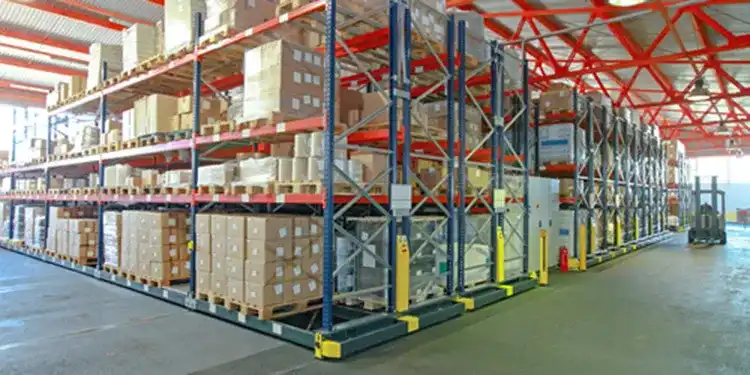


A wide range of rack systems is available for pallet storage, with the top two choices being standard selective pallet racking and double-deep pallet racking. These options dominate the market due to their efficiency and adaptability in warehouse environments.
Selective pallet racking stands out for its remarkable versatility, easily handling products of varied dimensions. It accommodates any item type, irrespective of weight or bulk. Standard forklifts provide direct access to every pallet, allowing for quick retrieval without shifting adjacent units, which streamlines operations and reduces handling time.

Double-deep pallet racking boosts storage density by cutting down on aisle requirements, making it perfect for high-volume, uniform product inventories. This system accelerates the processing of large-scale orders efficiently. It delivers high-density storage, optimizes space utilization, and maximizes vertical capacity through secure, elevated pallet arrangements for enhanced safety and space savings.
So, which racking solution fits your warehouse or distribution center best? Below is a brief comparison of each type to guide your optimal business choice and ensure peak operational performance
Standard Selective Racking: The Core Elements
What is Standard Selective Racking?
Popular in warehouse storage, Standard Selective Racking offers the lowest investment cost of all racking types while providing the highest level of flexibility. The design gives you a clear view and easy access to all your stock, and each pallet faces the aisle, ensuring that goods are always within reach and 100% accessible.
How does it work?
This racking system consists of a vertical column frame supported by horizontal beams. The beams are freely adjustable in height and can easily accommodate products of different weights and sizes. Goods are stored on pallets in an organized manner for quick access by any forklift (e.g. counterbalance or reach). The shelves can be erected up to 15 meters, helping you to maximize the use of space and improve storage efficiency.

What are The Key Benefits ?
- Comprehensive Inventory Management – you have unobstructed access to all your goods at all times, with each storage space taking up only one pallet space.
- High Compatibility – Supports a wide range of load types, material handling equipment and floor conditions, working seamlessly with counterbalanced forklifts, reach trucks, articulated forklifts, pick-up trucks and turret trucks.
- Flexibility to Expand – the system can be easily adapted or expanded as business grows or changes, and can be combined with long-span racking for manual picking operations.
- Low Initial Investment – The overall investment is relatively economical, making it suitable for organizations with limited budgets.
When to use Single Depth Selective Racking?
Single-depth selective racking is ideal when your business involves multiple products sold to different regions. It’s great if you need immediate and direct access to each pallet, or want the system to be flexible to adjust and expand. It is especially suitable for low turnover rates and product line variations. For perishables or short shelf-life inventory, the First-In-First-Out (FIFO) method efficiently manages the turnover of goods.

Why Is It a Good Choice for Some Businesses?
Standard shelving is a great solution for companies that need to store a variety of products. If you access your inventory frequently, its convenient pick-and-place design can improve operational efficiency. Businesses looking for total selectivity and quick response benefit from shelving that is easy to modify, expand or relocate. The system is available in a wide range of beam and column sizes to perfectly match your storage needs, ensuring long-term adaptability.
Explore Double Deep Pallet Racking
What is Double Deep Pallet Racking?
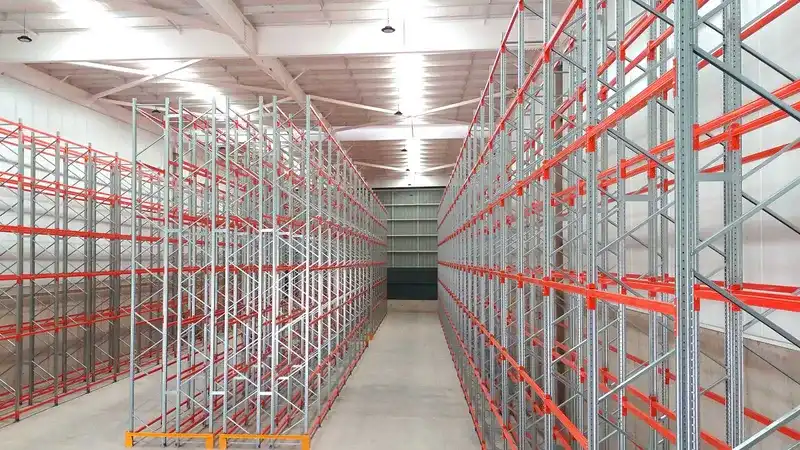
Double Deep Pallet Racking stores in two deep rows instead of the traditional single row model. With this configuration, warehouse capacity can be increased by up to 30% while keeping costs at a low level.
Double-deep racking provides an efficient way to expand capacity when other systems such as drive-in racking cannot meet demand.
This system provides direct access to only two rows of pallets on either side of the aisle and relies on specialized handling equipment for deep goods.

How Does It Work?
Double deep racking optimizes space utilization through a two-tier storage mechanism and is particularly suitable for warehouse environments with limited space. Prior to implementation, the pallet requirements for each product are evaluated. This system is best suited if the rear pallets are loaded in line with the front and do not require frequent rotation.
The use of deep pallets requires the use of a double-deep forklift or a specialized attachment. While the initial investment in the equipment is high, the long-term benefits far outweigh the cost, and the equipment is compatible with a wide range of racking types.

Optional Pallet Guides
The pallet guide is made of long angle steel and ensures precise positioning and neat placement of pallets. It allows forklift operators to safely handle high level bays without having to look at the pallets behind them. As an optional accessory, the rail significantly improves the safety and efficiency of pallet access, especially when working at high levels.
What Are the Benefits of Double Deep Racking?
- Double-deep racking provides a cost-effective solution: by reducing the number of aisles, it frees up 55% of floor space and reduces the expense of renting or purchasing a new warehouse.
- Storage density is increased by 30-40%, outperforming standard selective racking.
- Flexible system design, with rack levels easily adjusted to accommodate future changes.
- Simplified pallet loading and picking processes due to centralized storage of similar products.
- High-rise structure is more stable, and the double-row design provides additional support to minimize the risk of collapse.
When to use double-deep shelving
Double-deep shelving is used when storage capacity and selectivity are both important. Ideal situations include:
- Having a large number of pallets of the same product;
- Medium to long shelf-life products that support a last in, first out (LIFO) strategy;
- Maximizing storage and reducing energy consumption in cold storage;
- Dry environment storage of durable products;
- Bulk storage for facilities with small product assortments, high transportation volumes
- and space-constrained warehouse environments.
Why Is It a Good Choice for Some Businesses
Double-deep pallet racking is the ideal solution for space-constrained businesses that want to store large quantities of goods efficiently. It optimizes storage density and meets the requirements of high-demand warehouses. It is particularly suitable for companies with limited product range but large quantities, such as scenarios with moderate stock keeping units (SKUs) and medium to high distribution volumes. Used in a wide range of industries, including cold storage, paper, food service, manufacturing, distribution centers and dry storage areas
Which Storage Racking Is Right for You?
Are you looking for the most suitable storage racking solution? Key factors in the selection process include your business model, the characteristics of the goods you sell, the space available in your warehouse and your financial budget. Together, these elements determine the ideal configuration of your racking system.
Evaluate the operational characteristics of your business. Analyze your daily operating procedures and inventory management methods, such as whether you use FIFO or FIFO strategies, as this directly affects racking design. Also, consider the type of material handling equipment you use and the efficiency of your warehouse operations: is there a wide variety or limited number of commodities stored? Is there a waste of time or space utilization problem? It’s important to take a comprehensive look at your overall operating model.
Look at the details of the products you sell. This includes the type, weight and size of the merchandise. Are specific environmental controls required, such as temperature or humidity ranges? Does the product have a shelf life limit? All of these factors must be taken into consideration when selecting a racking system.
Evaluate the available space in the warehouse. Focus on floor area and vertical height to maximize storage density. Space optimization can significantly improve warehouse efficiency.
Budget planning is a central aspect. The main cost of adopting a double-deep racking system involves the purchase of specialized forklifts, especially the double-deep reach-forward model. If funds are limited, an extension or counterbalance can be added to an existing forklift to reduce costs. However, double-deep racking offers the lowest cost per square meter of any system and is a cost-effective option.
If you still have questions about your choices, our team of professionals is ready to provide support. We will collaborate to analyze your needs and recommend a customized solution. Contact us today to open a warehouse