


Warehouse rack collapses injure thousands of workers annually. Most incidents trace back to one root cause: non-compliance with ANSI MH16.1.
This standard, developed by the Rack Manufacturers Institute, establishes precise requirements for industrial steel storage rack design, installation, and maintenance. OSHA inspectors reference it during audits. Insurance adjusters cite it when processing claims. Attorneys use it to establish negligence in injury lawsuits.
For warehouse managers, understanding ANSI MH16.1 is non-negotiable. This guide breaks down what the standard requires, where facilities commonly fail, and how to build a compliance program that protects your operation.
Key Takeaways
- ANSI MH16.1 establishes minimum safety requirements for steel pallet rack systems in industrial storage facilities
- Non-compliance can result in OSHA citations ranging from $15,625 to $156,259 per violation
- Regular rack inspections should occur at minimum every 12 months, with documented findings
- Load capacity placards must be posted on every rack system
- Damaged components exceeding deflection limits require immediate replacement or repair
- Proper training for warehouse personnel is a compliance requirement, not a suggestion
What Is ANSI MH16.1 ?
ANSI MH16.1, officially titled “Specification for the Design, Testing and Utilization of Industrial Steel Storage Racks,” serves as the primary engineering standard for pallet racking in North America. Developed by the Rack Manufacturers Institute (RMI) and approved by the American National Standards Institute (ANSI), this document provides specific requirements for structural design, load calculations, and safety protocols.
The standard applies to steel selective pallet racking systems, the most common type found in distribution centers, manufacturing facilities, and third-party logistics warehouses. It does not cover cantilever racks, drive-in systems, or automated storage and retrieval systems, which have their own applicable standards.
The 2021 Update What Changed
The most recent version, ANSI MH16.1-2021, introduced several significant modifications that warehouse managers must understand:
| Aspect | Previous Version | 2021 Update |
|---|---|---|
| Seismic Design | Basic provisions | Enhanced requirements for high-seismic zones |
| Impact Loads | General guidance | Specific calculation methods |
| Column Protection | Recommended | More detailed specifications |
| Inspection Requirements | Annual suggested | Explicit documentation requirements |
| Load Placard Information | Basic weight limits | Additional configuration details required |
These changes reflect lessons learned from warehouse incidents and evolving understanding of rack system behavior under various load conditions.
Structural Requirements Under the Standard
Design Safety Factor
ANSI MH16.1 mandates a minimum safety factor of 1.67 for rack components under normal loading conditions. This means structural elements must be capable of supporting 67% more than their rated capacity before failure. For seismic applications, additional factors apply based on geographic location and building characteristics.
Column and Beam Specifications
- Upright frames: Including columns, bracing, and base plates
- Beams: Horizontal load-bearing members connecting upright frames
- Connectors: The mechanical interface between beams and columns
- Anchoring systems: Base plate connections to the warehouse floor
Each component must be engineered to work as part of an integrated system. A common compliance failure occurs when facilities mix components from different manufacturers without proper engineering verification.Additionally, using proper wire mesh decking ensures load distribution across beams and enhances fire safety compliance.
Floor Slab Considerations
Your warehouse floor directly impacts rack system safety. ANSI MH16.1 requires consideration of:
- Concrete compressive strength (minimum 3,000 PSI typically required)
- Slab thickness relative to anchor embedment depth
- Floor flatness and levelness tolerances
- Existing cracks or deterioration near anchor locations
Load Capacity Placards
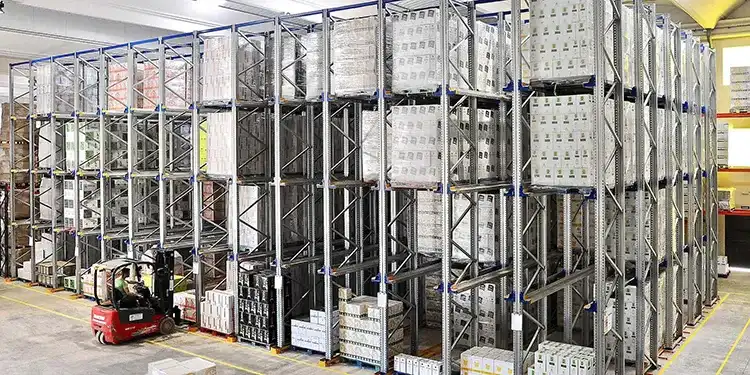
Perhaps no requirement generates more confusion—or more citations—than load capacity placards. ANSI MH16.1 specifies that every rack installation must display clear signage indicating maximum allowable loads.
What Must Appear on Load Placards
- Maximum unit load weight per beam level
- Maximum total weight per bay section
- Beam elevation configurations (if capacity varies by height)
- Number of pallets permitted per beam level
- Any special loading restrictions or conditions
A 2023 survey of distribution centers found that 34% had incomplete or missing load placards—an easily correctable violation that frequently appears on OSHA inspection reports.
Placard Placement Guidelines
Position load capacity signs where they remain visible during normal operations:
- At the end of each aisle, visible from the main traffic lane
- At eye level for forklift operators (approximately 5-6 feet from floor)
- Protected from damage by passing equipment
- Laminated or otherwise protected from environmental degradation
Inspection Requirements and Documentation
Establishing an Inspection Program
ANSI MH16.1 emphasizes ongoing inspection as critical to maintaining compliance. Your inspection program should include three tiers:
Daily Visual Checks Forklift operators and warehouse staff should report obvious damage immediately. This informal monitoring catches acute damage from impacts or overloading before conditions worsen.
Monthly Documented Walks A designated safety coordinator should perform systematic visual inspections monthly, documenting findings on standardized checklists:
- Visible column damage or deformation
- Beam deflection beyond acceptable limits
- Missing or damaged safety clips
- Anchor bolt conditions
- Floor damage near rack bases
Our complete pallet rack safety guidelines provide detailed checklists for each inspection tier.
Annual Professional Assessments At minimum once yearly, engage a qualified rack engineer or certified inspector to perform comprehensive evaluation:
- Measurement of column plumbness (maximum 0.5 inch per 10 feet height)
- Beam deflection verification (maximum L/180 under load)
- Connector engagement inspection
- Load testing where conditions warrant
- Written report with prioritized recommendations
For a comprehensive overview of inspection obligations, review our guide on racking inspection requirements to understand both voluntary standards and legal mandates.
Documentation That Protects You
Maintain inspection records for a minimum of five years. Essential documentation includes:
- Inspection dates and inspector qualifications
- Specific findings with photographic evidence
- Corrective actions taken and completion dates
- Component replacement records with part specifications
- Any engineering assessments or recertifications
Common Compliance Failures and How to Avoid Them
Analysis of OSHA citations and insurance claims reveals patterns in compliance failures. Understanding these common issues helps you prioritize prevention efforts.
Damage Tolerance Misunderstanding
Many warehouse managers struggle with determining when damage requires action. ANSI MH16.1 provides guidance, but interpretation requires judgment:
| Damage Type | Action Threshold | Required Response |
|---|---|---|
| Column dent depth | Greater than 1/4 inch | Engineering evaluation |
| Column deflection | Greater than 0.5 inch per 10 feet | Unload and replace |
| Beam sag (unloaded) | Visible deflection | Immediate replacement |
| Missing safety clips | Any missing | Replace before loading |
| Anchor bolt damage | Any visible damage | Engineering assessment |
| Weld cracks | Any visible cracks | Immediate unloading |
Replacing damaged or missing rack safety pins should be treated as an urgent priority—never load a beam level with compromised connectors.
Unauthorized Modifications
Field modifications without engineering approval represent a serious compliance violation. Common unauthorized changes include:
- Adding beam levels not in original design
- Relocating beams to non-standard heights
- Attaching accessories that alter load paths
- Mixing components from different manufacturers
- Removing bracing to accommodate oversized loads
Any modification requires written engineering approval and updated load capacity calculations.
Inadequate Training
ANSI MH16.1 compliance extends beyond hardware to human factors. Personnel interacting with rack systems need training on:
- Recognizing and reporting damage
- Understanding load capacity limitations
- Proper pallet placement techniques
- Forklift operation near rack structures
- Emergency procedures for structural failures
Document all training with attendance records and periodic refresher schedules.
Seismic Considerations in Rack Design
For facilities in seismically active regions, ANSI MH16.1 incorporates requirements from ASCE 7 (Minimum Design Loads for Buildings). These provisions significantly impact rack system design and installation.
Seismic Design Categories
The standard classifies facilities based on:
- Geographic location and mapped ground motion values
- Building occupancy classification
- Soil conditions at the site
- Rack system height and configuration
Higher seismic categories require more robust anchoring, additional bracing, and potentially reduced load capacities.
Practical Implications
In high-seismic zones (primarily West Coast and some intermountain regions), expect:
- More substantial base plates and anchor requirements
- Mandatory cross-aisle bracing at specified intervals
- Reduced maximum heights or load capacities
- More frequent inspection requirements
- Potential need for seismic restraints on stored product
The Business Case for Compliance
Beyond avoiding citations, ANSI MH16.1 compliance delivers measurable business benefits.
Insurance and Liability Protection
Insurance underwriters increasingly require documentation of rack system compliance. Understanding OSHA requirements for warehouse racking helps you prepare the documentation insurers expect.A 2022 industry analysis found that facilities with documented compliance programs experienced:
- 23% lower warehouse liability premiums on average
- Faster claims processing for legitimate incidents
- Reduced likelihood of coverage disputes
- Better defense position in litigation scenarios
Operational Efficiency
Compliant rack systems, properly maintained, deliver superior operational performance:
- Fewer unplanned shutdowns for emergency repairs
- Consistent load capacities enabling optimized storage
- Reduced product damage from structural failures
- Improved worker confidence and productivity
Regulatory Relationship
Facilities demonstrating proactive compliance typically experience more favorable regulatory interactions:
- Shorter OSHA inspection durations
- Reduced likelihood of expanded investigations
- Better positioning for variance requests when needed
- Stronger standing in any citation appeals
Working with Qualified Partners
ANSI MH16.1 compliance often requires expertise beyond internal capabilities. When selecting partners for rack systems and compliance support, evaluate:
- Engineering credentials and relevant certifications
- Experience with your specific rack configurations
- Willingness to provide detailed documentation
- Availability for ongoing support and consultation
- References from similar facilities
Aceally specializes in manufacturing pallet racking systems engineered for ANSI MH16.1 compliance from initial design through installation. With over 20+ years of experience serving distribution centers across North America, Aceally provides comprehensive documentation packages, engineering support, and ongoing technical assistance that simplifies your compliance journey. Our team understands that warehouse managers need more than products—you need partners who help you maintain safe, efficient, and compliant operations.
Frequently Asked Questions
Is ANSI MH16.1 a legal requirement?
ANSI MH16.1 itself is a voluntary consensus standard, not a law. However, OSHA references this standard when evaluating warehouse safety, and courts frequently use it as the benchmark for reasonable care in liability cases. Many jurisdictions incorporate ANSI MH16.1 by reference into building codes, making compliance legally mandatory in those areas.
How often should pallet racks be inspected according to ANSI MH16.1?
The standard recommends documented inspections at least annually by qualified personnel, with more frequent informal monitoring by trained warehouse staff. High-traffic facilities or those with history of damage incidents should consider quarterly professional inspections.
What is the maximum load capacity for pallet racking?
Load capacity varies based on rack configuration, component specifications, beam spacing, and installation conditions. There is no universal maximum—capacity must be calculated for each specific installation and displayed on load placards. Never exceed the posted capacity for your particular system.
Who is responsible for ANSI MH16.1 compliance in a warehouse?
The facility owner or operator bears primary responsibility for maintaining compliant rack systems. This includes ensuring proper installation, ongoing inspection, damage repair, and employee training. When leasing warehouse space, lease agreements should clearly specify compliance responsibilities.
Can I repair damaged rack components instead of replacing them?
ANSI MH16.1 generally requires replacement of damaged structural components rather than field repair. Some manufacturers offer engineered repair kits for specific damage types, but these require proper engineering approval and installation by qualified personnel. Welding or bending damaged components back into shape is never acceptable.
Does ANSI MH16.1 apply to used or second-hand racking?
Yes, the standard applies regardless of whether rack systems are new or used. When purchasing used racking, verify manufacturer identification, obtain load capacity documentation, and have the system inspected before putting it into service. Missing documentation may require engineering assessment to establish safe load ratings.


