


The garage often becomes the dumping ground for everything that doesn’t fit inside the house. Bikes, tools, holiday decorations, lawn equipment, leftover paint cans – it’s piles up fast. Without a solid storage system, finding anything becomes a treasure hunt, and valuable space goes to waste.
The solution? The right garage shelving. But walk into any home improvement store or browse online, and you’re bombarded with choices. Three names keep popping up: Angle Steel, Rivet (or Bolted), and Boltless. Which one truly deserves a spot in your garage?
Let’s break them down, feature by feature, so you can make a confident decision and finally reclaim your space.
Why Garage Shelving
- Heavy Hitters: We store engine blocks, stacks of tile, power tools, and loaded storage bins – stuff that would make flimsy shelves cry uncle.
- Environment: Garages battle dust, humidity, temperature swings, and sometimes even moisture. Shelving needs to resist rust and corrosion.
- Space: We need to maximize vertical space efficiently. Adjustability and smart design are key.
Angle Steel Shelving
What Is Angle Steel Shelving
Angle Steel shelving is built using thick L-shaped steel bars (angle iron), connected either by heavy-duty bolts or welding. The shelves themselves are typically thick plywood, heavy-duty particle board, or steel grating.
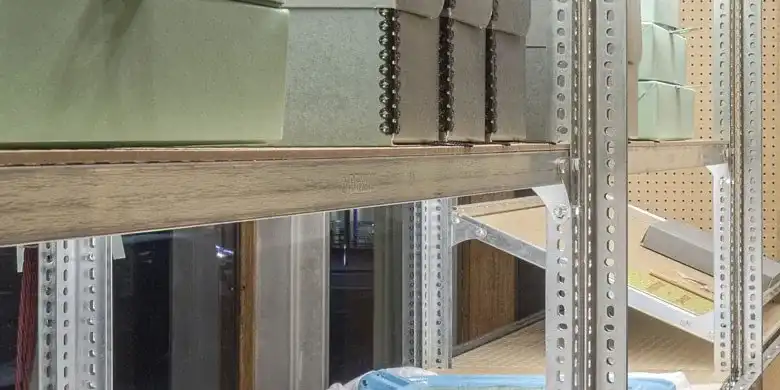
- Strength & Load Capacity: Individual shelves can handle 1,000 lbs (450 kg) or more easily. Think storing a small engine, stacks of paving stones, or massive tool collections without a hint of sag or worry.
- Durability: Constructed from thick steel (often 11-gauge or heavier), it laughs off dents, impacts, and years of tough love. Bolted or welded connections create a structure with zero wobble.
- Customization: Need a shelf 10 feet long and 4 feet deep to fit under a window? No problem. Angle steel is built to your exact specifications. You can easily add cross-braces for extra support, integrate it into a workbench, or design unique configurations.
- Rust Resistance: When properly prepped, painted (using rust-inhibiting paint), or purchased pre-galvanized or powder-coated, this thick steel offers the best long-term defense against garage moisture.
Rivet Shelving (Bolted Shelving)
What Is Rivet Shelving
The shelving you see in auto shops, warehouses, and backrooms. It features pre-punched vertical uprights and horizontal beams made of sturdy steel. These connect using rivets (semi-permanent pins) or bolts and nuts driven through the pre-punched holes. Shelves are usually heavy-duty particle board or steel mesh.

- Strength & Stability: Offers high weight capacity, typically rated per entire unit (ranging from 500 lbs to 2,500+ lbs). When properly anchored to the wall, it provides a very stable platform for heavy storage bins, car tires, power tools, and automotive fluids. The riveted/bolted connections are robust and secure.
- Modular & Adjustable: This is its key advantage over Angle Steel. Shelf heights can be easily changed by moving the beams up or down the uprights at 1-2 inch increments. Need more storage later? You can often add another compatible unit or extend existing ones. It adapts as your needs grow.
- Manageable Assembly: While you absolutely need tools (wrenches, socket set, potentially a hammer for rivets, drill for anchoring), it doesn’t require welding.
Points to Consider:
Anchoring Is Absolutely Essential: Unanchored Rivet shelving, especially when tall or unevenly loaded, can wobble and poses a tip-over risk. Must be securely anchored into wall studs using heavy-duty brackets or straps.
Material Thickness: While strong, the steel used (often 18-22 gauge) is thinner than Angle Iron. It’s more susceptible to denting if something very heavy or sharp impacts it forcefully.
Boltless Shelving
What Is Boltless Shelving
Nuts, or rivets are needed for the core assembly. Boltless shelving features uprights with specially designed slots or holes and beams that have integrated tabs, pins, or clips. Shelves (commonly particle board, wire mesh, or light steel) simply “snap,” “hook,” or “lock” into place onto the beams. A rubber mallet might be handy to tap connections home securely.
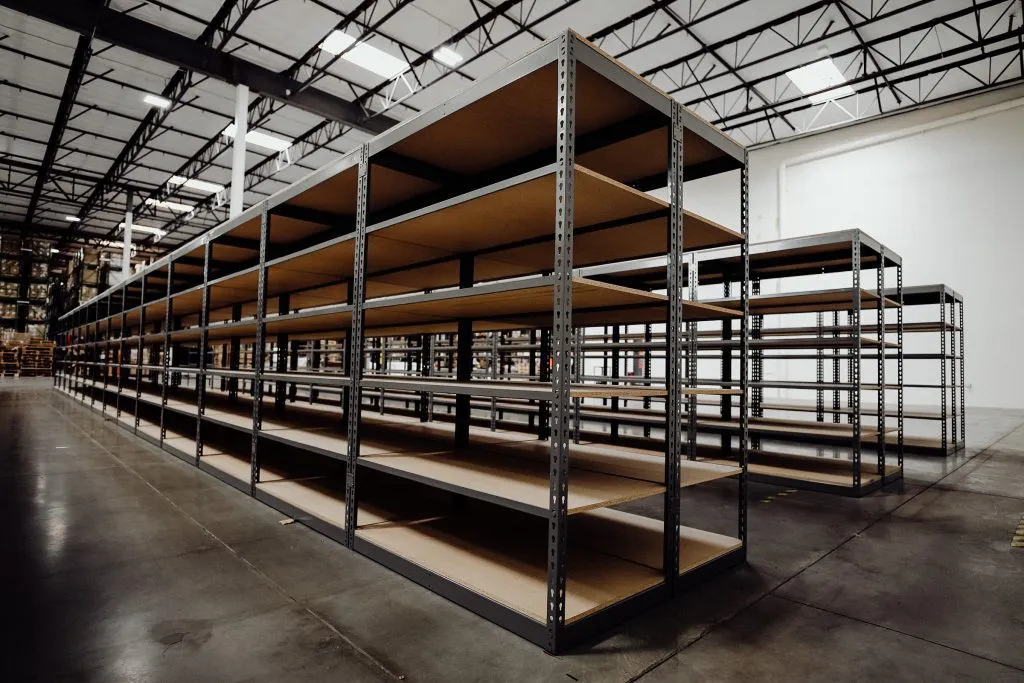
- Tool-Free, Fast Assembly: Most units can be assembled by one person in 30 minutes to an hour, often less. Just slot the pieces together, click, lock, and you’re done.
- Flexibility & Adjustability: Changing shelf heights is a breeze – often taking just seconds per shelf. Simply lift the shelf deck, move the support beams to new slots or holes, and drop the shelf back down. Reconfigure your layout whenever the mood strikes.
- Budget-Friendly: Generally the most affordable option upfront.
- Portable: Disassembly is as quick and tool-free as assembly. Ideal if you move frequently, like to rearrange your garage seasonally, or need a temporary storage fix.
Angle Steel Shelving vs. Rivet Shelving vs. Boltless Shelving Comparison
| Feature | Angle Steel Shelving | Rivet Shelving | Boltless Shelving |
|---|---|---|---|
| Max Weight Capacity | Very High (1000+ lbs per shelf) | High (500-2500+ lbs per unit) | Low-Medium (200-800 lbs per unit) |
| Durability & Build | Excellent (Thickest Steel, Welded/Bolted) | Very Good (Sturdy Steel, Riveted/Bolted) | Good (Thinner Steel, Snap-Together) |
| Ease of Assembly | Difficult (Welding/Heavy Tools, Complex) | Moderate (Tools Required, Plan for 2-4 Hours) | Very Easy (Tool-Free, Under 1 Hour) |
| Adjustability | Low (Fixed/Custom Design) | High (Easy Shelf Height Changes) | Very High (Instant Shelf Changes) |
| Cost | Highest (Significant Investment) | Medium (Best Value for Strength) | Lowest (Most Budget-Friendly) |
| Stability | Excellent (Rock-Solid, No Wobble) | Very Good (When Properly Anchored) | Good (Can Wobble, Anchoring Recommended) |
| Best Suited For | Extreme Heavy-Duty, Workshops, Lifelong Installations | General Heavy-Duty, Bins, Tires, Tools, Value + Strength Combo | Light/Medium Duty, Boxes, Seasonal Gear, Renters, Quick Fixes |
Picking Your Garage Storage Champion
Shelving depends entirely on your specific garage, what you store, and your priorities. Here’s how to make the final call:
For the Workshop Pro: If your garage doubles as a workshop and houses engine blocks, heavy machinery, or you simply demand the strongest, most rigid solution, Angle Steel Shelving is your champion. Embrace the assembly project and investment for unparalleled performance.
For the Organized with Heavy Stuff: If you need reliable, robust storage for heavy bins, tires, tools, and automotive supplies, want the flexibility to adjust shelves or expand later, Rivet Shelving is your ideal workhorse. It offers the best compromise of strength, value, and adaptability for most garages with significant storage needs.
For the Light-Duty or Renter: If your storage consists of boxes, holiday decorations, sports equipment, or lighter tools, you value getting organized fast with minimal hassle, need to move or reconfigure easily, or have budget constraints, Boltless Shelving is your clear winner.
Garage Shelving Safety Tips
Installing shelving wrong can be dangerous. Follow these essentials:
- Anchor to Wall Studs: This is paramount, especially for Rivet and Boltless shelving over 4-5 feet tall, or ANY shelf holding substantial weight. Use heavy-duty shelving anchors or brackets screwed directly into solid wall studs.
- Start Level: Ensure the floor where the base sits is level. Use shims under the uprights if necessary. An unlevel base makes the whole structure unstable.
- Weight Distribution: Always place the heaviest items on the lowest shelves. Center weight between the uprights whenever possible. Avoid overloading the very top shelves – keep the center of gravity low.
- Limits: Never, Ever exceed the manufacturer’s stated weight capacity per shelf or per unit. Those ratings exist for safety.
Combat Garage Grime & Rust:
- Opt for galvanized or powder-coated finishes where possible.
- In damp climates, consider a dehumidifier or moisture absorber.
- Wipe down shelves periodically and clean up spills (oil, chemicals) promptly.
- Inspect periodically for signs of rust, especially at connection points.
conclusion
Garage chaos doesn’t have to be inevitable. By understanding the core strengths and trade-offs of Angle Steel, Rivet, and Boltless shelving, you’re equipped to make the perfect choice for your space, your stuff!


