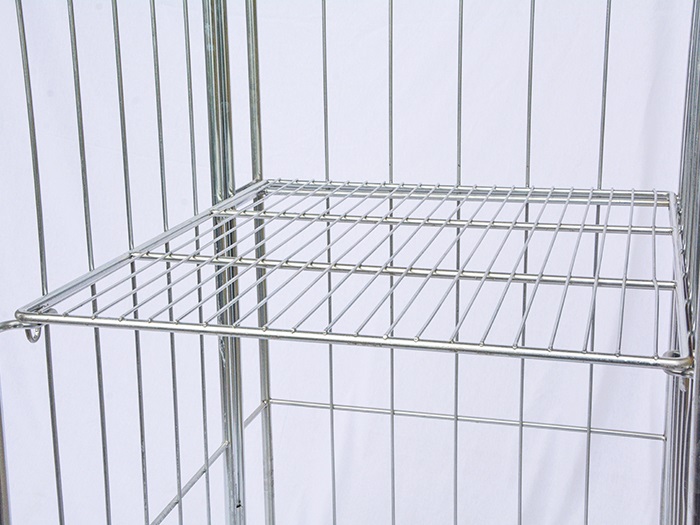
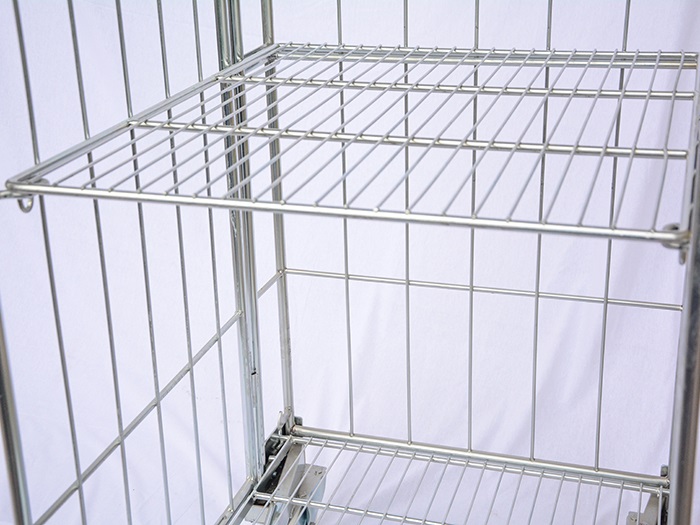


A logistics trolley is an industrial material handling equipment widely used in warehouse logistics systems, manufacturing plants, retail distribution centers, and e-commerce fulfillment operations. It is designed to transport goods efficiently over short distances inside indoor environments, reducing manual labor intensity and improving operational workflow efficiency.
Compared with forklifts or pallet jacks, logistics trolleys are more flexible, cost-effective, and suitable for high-frequency daily operations where fast material movement is required.
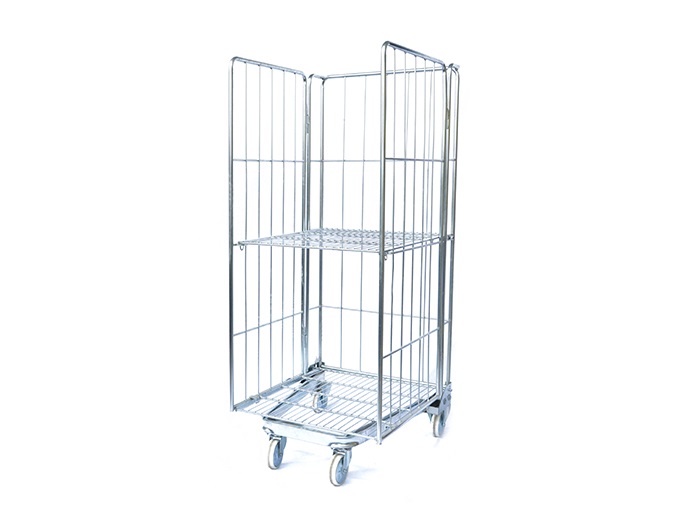
In modern supply chain systems, logistics trolleys act as a key connection tool between receiving areas, storage zones, picking stations, packing areas, and shipping docks. Typical equipment types also include Roll Containers, which are widely used for order picking, retail replenishment, and returnable logistics handling due to their foldable structure and high maneuverability.
Importance in Modern Warehousing
Logistics trolleys play a critical role in improving warehouse efficiency. As global supply chains become faster and more complex, manual material handling systems must also evolve to support higher throughput.
By reducing manual lifting tasks, logistics trolleys significantly improve worker safety, reduce fatigue, and increase overall productivity in warehouse operations.
They also help eliminate bottlenecks in material flow by enabling continuous movement of goods between different operational zones without relying on heavy lifting equipment.
Types of Logistics Trolleys
Logistics trolleys are not a single product but a product family designed for different industrial applications and load requirements.
Selecting the correct type is essential for optimizing warehouse efficiency and ensuring long-term durability in daily operations.
- Platform Trolley – Flat steel deck for bulk goods
- Folding Handle Trolley – Space-saving flexible design
- Mesh Cage Trolley – Enclosed structure for safe transport
- Heavy Duty Trolley – Reinforced industrial load system
- Multi-tier Trolley – Sorting and picking optimization
Platform Trolley
Platform trolleys are the most commonly used type in industrial environments. They feature a flat steel surface supported by a reinforced frame structure.
They are widely used for transporting cartons, bulk goods, and heavy materials in warehouses, supermarkets, and manufacturing facilities.
Their simple structure and high load capacity make them one of the most reliable material handling tools in industrial logistics.
Folding Handle Trolley
Folding handle trolleys are designed for environments where space optimization is important. The foldable handle allows easy storage when not in use.
This makes them ideal for small warehouses, delivery centers, and flexible logistics operations where storage space is limited.
Mesh Cage Trolley
Mesh cage trolleys are equipped with steel wire enclosure panels that prevent goods from falling during transportation.
They are widely used in e-commerce warehouses and sorting centers where mixed or loose items need to be transported safely.
Heavy Duty Industrial Trolley
Heavy duty logistics trolleys are engineered for high-load industrial environments. They typically support load capacities ranging from 800kg to over 1500kg.
These trolleys use reinforced steel frames, thickened materials, and industrial-grade wheels to ensure durability under continuous heavy use.
Technical Specifications
The performance of a logistics trolley depends on its structural design, material selection, wheel system, and load distribution capability. Industrial-grade trolleys are engineered to maintain stability under continuous heavy-duty operations.
| Load Capacity | 100kg – 1500kg+ |
| Frame Material | Carbon Steel / Stainless Steel / Reinforced Alloy |
| Surface Treatment | Powder Coating / Galvanized / Anti-rust Finish |
| Wheel Types | PU / Rubber / Nylon / Anti-static Wheels |
| Wheel Diameter | 100mm / 125mm / 150mm / 200mm |
Structural Engineering Design
The structural design of a logistics trolley determines its load-bearing capacity, stability, and long-term durability. Reinforced steel frames are commonly used to ensure deformation resistance under heavy industrial loads.
Key engineering elements include frame welding strength, cross-beam reinforcement, load distribution geometry, and vibration resistance during movement.
In warehouse environments where trolleys operate continuously, structural fatigue resistance becomes a critical performance factor affecting service life.
Material Selection and Surface Treatment
Material selection directly impacts durability and load performance. Most industrial logistics trolleys are manufactured using carbon steel due to its strength and cost efficiency.
For corrosion resistance environments such as cold storage or humid warehouses, stainless steel is commonly used to extend service life.
Surface treatment options include powder coating, electro-galvanization, and anti-rust coating, which improve durability and appearance while preventing oxidation.
Wheel System and Mobility Performance
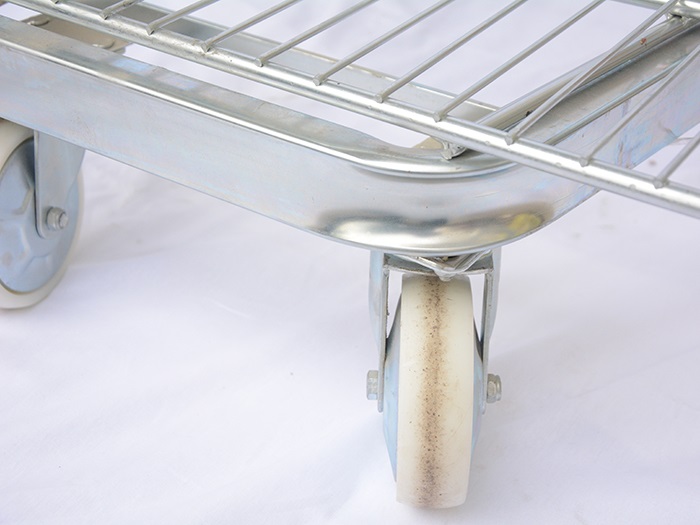
The wheel system is one of the most critical components of a logistics trolley, directly affecting mobility, noise level, and load capacity.
PU wheels are widely used in warehouse environments due to their balance between durability and floor protection. Rubber wheels provide better shock absorption, making them suitable for uneven surfaces.
Nylon wheels are preferred in heavy-duty industrial applications due to their high load resistance, while anti-static wheels are used in electronic manufacturing environments.
Wheel diameter selection also affects performance, with larger wheels providing smoother movement over obstacles and heavier loads.
Performance and Industrial Reliability
Industrial logistics trolleys are designed for continuous operation in demanding environments. Their performance depends on the combination of structural strength, wheel system quality, and material durability.
A well-engineered trolley system improves warehouse workflow efficiency by ensuring stable movement, reduced downtime, and consistent load handling capability.
Industrial Applications of Logistics Trolley
Logistics trolleys are widely used across multiple industries due to their flexibility and cost-effectiveness in internal material handling systems. They support efficient short-distance transportation of goods in different operational environments.
Warehouse & Distribution Centers
In warehouse environments, logistics trolleys are used for carton transport, order picking, inventory movement, and staging operations. They help improve workflow efficiency between storage zones and packing stations.
E-commerce Fulfillment Centers
In e-commerce logistics, trolleys are essential for batch picking, order sorting, and parcel movement. Multi-tier designs are often used to handle multiple orders simultaneously.
Retail & Supermarket Backrooms
Retail logistics depends heavily on fast replenishment cycles. Trolleys are used to move stock from storage areas to shelves efficiently, especially during peak hours or night restocking.
Manufacturing Plants
In manufacturing environments, logistics trolleys support production line feeding, tool transport, and semi-finished product movement between workstations.
Key Advantages of Logistics Trolley
Logistics trolleys provide a practical and cost-effective solution for internal material handling compared to automated systems or heavy machinery.
- Improved Efficiency – Reduces manual carrying and increases material flow speed
- Lower Labor Intensity – Minimizes physical strain on workers
- Cost-Effective Solution – No power system required, low maintenance cost
- High Flexibility – Can be used in different warehouse layouts
- Durability – Industrial-grade steel structure ensures long service life
Logistics Trolley vs Other Material Handling Equipment
Logistics Trolley vs Hand Truck
Logistics trolleys offer higher stability and multi-item transport capability compared to hand trucks, which are mainly designed for single-item lifting and short-distance movement.
Logistics Trolley vs Pallet Jack
Pallet jacks are designed for palletized loads, while logistics trolleys are more flexible and suitable for cartons, tools, and mixed goods transport.
Logistics Trolley vs Conveyor System
Conveyor systems are fixed installations, while logistics trolleys offer mobile flexibility and lower investment cost, making them suitable for dynamic warehouse environments.
Why Logistics Trolleys Are Essential in Modern Supply Chains
As global supply chains become faster and more complex, logistics trolleys play an essential role in ensuring smooth internal material flow. They bridge the gap between storage systems, production lines, and shipping operations.
Their simplicity, flexibility, and low cost make them a foundational tool in warehouses that prioritize efficiency and scalability.
Customization Options for Logistics Trolley
In industrial applications, standard logistics trolleys may not meet all operational requirements. Therefore, customization plays an important role in adapting the product to different warehouse layouts and workflows.
Structural Customization
The size, height, and platform structure can be customized based on operational needs. Reinforced frames and multi-layer configurations are available for specific industrial use cases.
Load Capacity Customization
Load capacity can be adjusted from light-duty models to heavy-duty industrial versions exceeding 1500kg depending on material thickness and frame reinforcement.
Wheel System Customization
Different wheel types such as PU, rubber, nylon, and anti-static wheels can be selected according to floor conditions and application environments.
Surface Treatment Options
Surface finishes include powder coating, galvanization, and anti-rust treatments to improve durability and environmental resistance.
Manufacturing Capability & Factory Strength
A professional logistics trolley manufacturer ensures stable production capacity, consistent quality control, and reliable delivery schedules for global B2B clients.
Modern production facilities typically include CNC cutting systems, automated welding lines, powder coating workshops, and assembly lines for large-scale industrial output.
Strong manufacturing capability ensures that bulk orders can be delivered efficiently without compromising product quality or structural performance.
Quality Control System
Quality control is essential in ensuring the safety and durability of logistics trolleys used in industrial environments.
Load Testing
Each trolley undergoes static and dynamic load testing to ensure structural stability under real working conditions.
Welding Inspection
Weld joints are inspected to ensure structural integrity and resistance to long-term stress and vibration.
Surface Inspection
Coating thickness and anti-rust performance are tested to ensure durability in different environmental conditions.
Frequently Asked Questions (FAQ)
What is a logistics trolley used for?
It is used for transporting goods, cartons, tools, and materials within warehouses, factories, and distribution centers.
What is the load capacity of a logistics trolley?
Load capacity typically ranges from 100kg to over 1500kg depending on structure and material selection.
Can logistics trolleys be customized?
Yes, they can be customized in terms of size, load capacity, wheel type, and surface treatment.
Which wheel type is best for warehouse use?
PU wheels are most commonly used due to their balance of durability, noise reduction, and floor protection.
How long is the service life?
With proper use and maintenance, industrial logistics trolleys can last 5–10 years or longer.
Get Your Custom Logistics Trolley Solution
We provide OEM & ODM manufacturing services for logistics trolleys, supporting bulk orders, customized designs, and global shipping.
Contact us to get a quotation within 24 hours.