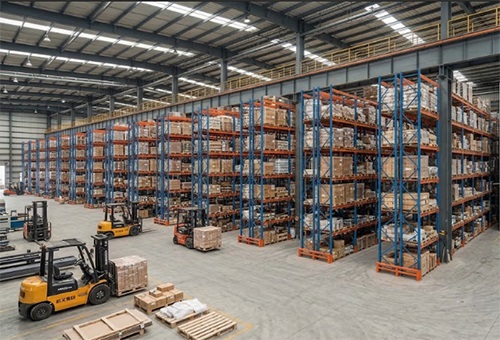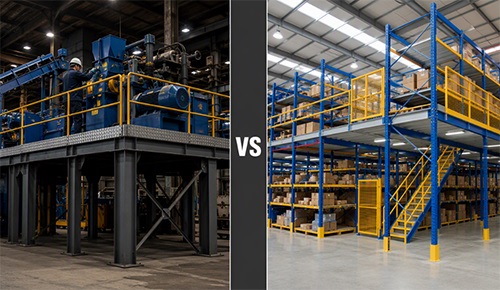


A pallet shuttle racking project is not only a rack investment. A wrong decision in the design stage can affect warehouse efficiency for the next 10 years. Pallet shuttle racking systems have become a core solution for high-density, semi-automated storage in the Middle East, Europe, and North America. They are widely used in food & beverage, cold chain, FMCG distribution, manufacturing, and e-commerce fulfillment centers.
However, many warehouse projects fail not because the technology is weak, but because of poor procurement decisions in the early stage. Choosing the wrong system design, supplier, or specifications can lead to low efficiency, unexpected maintenance costs, and poor long-term performance.
Below are 6 critical mistakes international buyers frequently make—and why they matter across different markets.
What is a Pallet Shuttle Racking System?
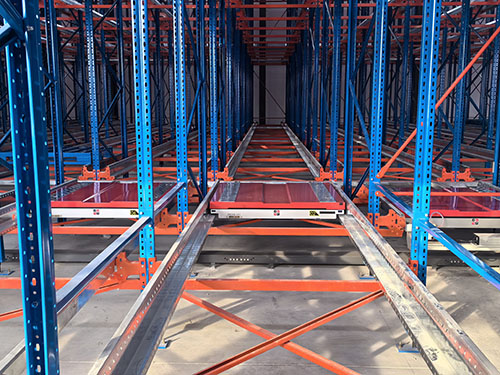
Pallet shuttle racking is a high-density semi-automated storage system that uses an electric shuttle cart to move pallets inside deep storage lanes. Unlike traditional drive-in racking systems, forklifts do not need to enter the rack structure, which improves warehouse safety, storage density, and operational efficiency.
A typical pallet shuttle racking system includes:
- Shuttle carts
- Storage rails
- Heavy-duty rack structures
- Remote control systems
- Optional WMS/WCS integration
The system is especially suitable for warehouses that require high storage capacity and frequent pallet movement, including cold storage facilities, food & beverage warehouses, FMCG distribution centers, and large logistics hubs.
Compared with conventional storage solutions, pallet shuttle racking provides better space utilization while reducing forklift operation inside rack lanes.
1. Focusing Only on Storage Density, Not Throughput Performance
One of the most common misconceptions is:
“The more pallets I store, the better the system.”
In reality, mature markets like Germany, the Netherlands, the UAE, and the US prioritize throughput (pallets/hour in & out) over static capacity.
A system with maximum density but poor retrieval speed may lead to:
- Bottlenecks during peak dispatch hours
- Uneven workload across lanes
- Underperformance of upstream and downstream conveyors
In modern logistics operations, flow efficiency is often more valuable than simply increasing storage positions.
A successful pallet shuttle project should balance storage density with operational requirements, order frequency, and warehouse workflow.
2. Underestimating SKU Complexity and Picking Behavior
In European retail and North American e-commerce, SKU variety is extremely high. In the Middle East, distribution hubs often handle multi-brand imports with different product categories.
A common mistake is designing shuttle lanes without analyzing:
- SKU velocity (fast, medium, and slow movers)
- Seasonal demand changes
- Order-picking patterns
- Full pallet vs mixed pallet operations
This can result in:
- Fast-moving SKUs getting trapped in deep lanes
- Slow-moving products occupying high-value access positions
- Unbalanced shuttle utilization
Pallet shuttle systems should be designed around ABC classification logic and inventory flow, not just available warehouse space.
3. Ignoring Environmental Conditions (Cold Chain vs Desert Climate)
This is especially critical in cross-regional warehouse projects.
Different markets create different technical challenges:
Middle East (UAE, Saudi Arabia):
- High temperature
- Dust conditions
- High humidity in some areas
Europe:
- Cold storage applications (-25°C)
- Strict safety requirements
- Higher automation expectations
North America:
- Wide seasonal temperature variations
- Different warehouse operating conditions
Common failures include:
- Battery performance degradation in high-temperature warehouses
- Rail deformation caused by thermal expansion
- Sensor reliability issues under cold storage conditions
Pallet shuttle equipment must be specified according to the actual operating environment, not only standard catalog specifications.
Real Project Scenario: Why Application Conditions Matter
For example, a frozen food warehouse operating at -25°C requires different shuttle system considerations compared with a standard ambient warehouse.
The battery performance, electronic components, sensor reliability, and rack structure must all be evaluated according to the working environment.
Similarly, a high-volume distribution center handling hundreds of pallet movements per day may achieve better results by optimizing throughput instead of simply adding more storage locations.
These examples show that successful pallet shuttle projects depend on application analysis, not only equipment selection.
4. Treating Pallet Shuttle Racking as Standalone Equipment (Not a System)
A major mistake in emerging markets is purchasing pallet shuttle racking as a simple hardware product.
However, in advanced logistics systems, especially in European and North American warehouses, pallet shuttle racking should work together with:
- WMS (Warehouse Management System)
- WCS (Warehouse Control System)
- Conveyor and sorting systems
- ERP inventory management logic
Without proper integration:
- Inventory visibility becomes fragmented
- Manual intervention increases
- Automation benefits are reduced
Pallet shuttle racking is not just a storage product. It is an important part of a modern digital warehouse ecosystem.
5. Poor Structural and Load Path Design Decisions
Some buyers focus only on reducing initial costs and choose lighter structures, while others over-engineer the system.
Both approaches can create problems.
A proper pallet shuttle rack design should consider:
- Pallet weight variation (800kg, 1000kg, 1500kg+)
- Forklift entry and loading frequency
- Floor flatness requirements
- Seismic requirements in specific regions
- Long-term structural stability
Incorrect structural assumptions may lead to:
- Rack deformation
- Rail misalignment
- Reduced system efficiency
- Potential safety risks
Professional engineering evaluation is essential before manufacturing.
6. Choosing Based on Price Instead of Lifecycle Cost
In Europe and North America, warehouse investment decisions are increasingly based on Total Cost of Ownership (TCO), not only the initial purchase price.
A cheaper system may create additional costs through:
- Higher maintenance requirements
- More frequent downtime
- Shorter equipment lifespan
- Lower operational efficiency
- Limited upgrade flexibility
Over a 5–10 year operating period, the cheapest initial solution may become the most expensive option.
Smart buyers evaluate:
- CAPEX
- OPEX
- Downtime risk
- Maintenance requirements
- Future expansion possibilities
Aceally Engineering Experience in Pallet Shuttle Racking Projects
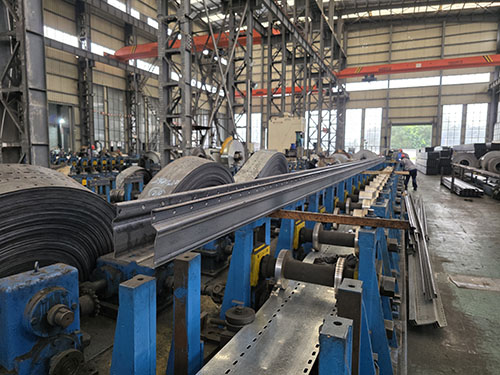
As a professional warehouse racking manufacturer, Aceally understands that successful pallet shuttle projects require more than producing rack structures.
Each project needs to consider:
- Warehouse layout
- Pallet specifications
- Storage density requirements
- Operational workflow
- Safety standards
- Future expansion plans
With more than 27 years of experience in warehouse storage solutions, Aceally provides customized racking designs for different industries, including food & beverage, cold storage, manufacturing, and logistics distribution.
Our engineering team helps customers analyze storage requirements, optimize rack structures, and develop reliable solutions based on real warehouse conditions.
From rack manufacturing to project support, Aceally focuses on providing practical storage systems that improve warehouse efficiency and long-term value.
Final Takeaway
Pallet shuttle racking is not just a storage solution—it is a core infrastructure investment in warehouse productivity.
Across the Middle East’s fast-growing logistics hubs, Europe’s precision-driven supply chains, and North America’s high labor-cost environments, successful projects share one thing in common:
They optimize the entire system, not just the equipment.
In simple terms:
“Good pallet shuttle systems don’t just store more—they move smarter, integrate better, and deliver long-term value.”
Frequently Asked Questions About Pallet Shuttle Racking
What is the difference between pallet shuttle racking and drive-in racking?
Pallet shuttle racking uses an electric shuttle cart to move pallets inside storage lanes, while drive-in racking requires forklifts to enter the rack structure.
Compared with drive-in systems, pallet shuttle racking usually provides better safety, faster operation, and higher efficiency for high-volume warehouses.
How much weight can a pallet shuttle rack hold?
The load capacity depends on pallet weight, rack structure, beam design, and project requirements.
Many pallet shuttle systems are designed for pallet loads ranging from 500kg to more than 1500kg per pallet position.
Is pallet shuttle racking suitable for cold storage warehouses?
Yes. Pallet shuttle systems are widely used in cold storage applications.
However, components such as batteries, sensors, and electrical systems should be selected according to low-temperature operating conditions.
What industries use pallet shuttle racking systems?
Common applications include:
- Food and beverage
- Frozen food storage
- FMCG distribution
- Pharmaceutical logistics
- Manufacturing warehouses
- E-commerce fulfillment centers
How should I choose a pallet shuttle racking supplier?
Buyers should evaluate:
- Engineering capability
- Rack manufacturing quality
- System compatibility
- Safety design
- Project experience
- After-sales support
The lowest initial price does not always represent the best long-term solution.