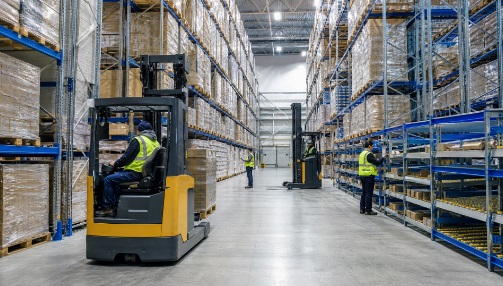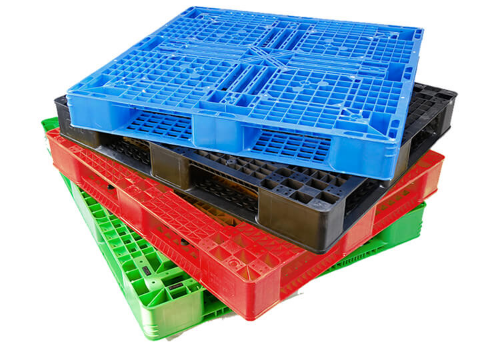


Choosing the right pallet racking dimensions is essential for making efficient use of warehouse space and ensuring safe material handling. Whether you are setting up a new warehouse or upgrading an existing storage system, understanding pallet racking standard sizes can help you select suitable equipment and avoid costly layout mistakes.
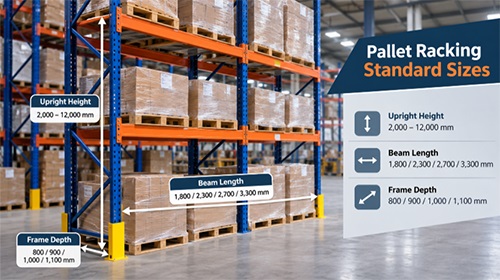
Pallet racking does not have one universal standard size. Common dimensions vary depending on pallet type, storage capacity, warehouse height and regional requirements. The three main measurements to consider are upright height, frame depth and beam length.
This guide explains common pallet racking dimensions, how they relate to different pallet sizes and what to consider when selecting a racking system for your warehouse.
What Are the Standard Dimensions of Pallet Racking?
Standard pallet racking dimensions vary between manufacturers and markets, but many selective pallet racking systems use similar size ranges.
The following table provides an overview of commonly available dimensions.
| Component | Common Dimensions (mm) | Description |
|---|---|---|
| Upright Height | 2,000–12,000 | Overall height of the racking system |
| Frame Depth | 800 / 900 / 1,000 / 1,100 | Supports pallets according to depth and orientation |
| Beam Length | 1,800 / 2,300 / 2,700 / 3,300 | Usable width of each storage level |
| Beam Section Height | 80–160 | Depends on beam profile and load requirements |
Technical Note: These dimensions are general industry references rather than mandatory standards. Actual sizes and load capacities depend on the manufacturer, rack configuration and structural design.
A warehouse storing European pallets may require different beam lengths and frame depths from a facility handling North American pallets. Pallet dimensions and storage requirements should therefore be confirmed before selecting a racking configuration.
Understanding the Three Main Pallet Racking Dimensions
Although pallet racks consist of several structural components, three dimensions have the greatest influence on the overall configuration.
Upright Height
The upright frame determines the total height of the pallet racking system. Common upright heights range from approximately 2,000 mm to 12,000 mm, although taller configurations may be available for specialized warehouses.
When choosing upright height, consider the warehouse’s clear ceiling height, sprinkler systems, lighting fixtures and forklift lifting capability.
A taller rack can increase vertical storage capacity, but sufficient clearance must be maintained for safe pallet handling and applicable fire protection requirements. The maximum usable storage height should be determined by the complete warehouse environment rather than ceiling height alone.
Frame Depth
Frame depth refers to the front-to-back dimension of the pallet racking upright assembly.
Common Frame Depths
900 mm
1,000 mm
1,100 mm
The appropriate depth depends primarily on pallet dimensions and how pallets are positioned on the beams.
For example, a 1,200 mm-deep pallet may be supported on a 1,100 mm-deep frame in a configuration that allows controlled pallet overhang at the front and rear.
However, the required frame depth must also account for load stability, pallet construction and the manufacturer’s design recommendations. Choosing a frame that is too deep or too shallow can affect pallet positioning and storage safety.
Beam Length
Beam length determines the width of each pallet storage bay and how many pallets can be accommodated on one level.
Common beam lengths include 1,800 mm, 2,300 mm, 2,700 mm and 3,300 mm, depending on the market and manufacturer.
For example, a beam pair with a nominal length of 2,700 mm is commonly used for two 1,200 mm-wide pallets, subject to the required handling clearances and rack configuration.
Key Factors When Selecting Beam Length
- Pallet width and loading orientation
- Number of pallets stored per level
- Required clearance between pallets and uprights
- Maximum load per beam level
- Beam profile and structural capacity
A longer beam does not automatically provide a higher load capacity. Beam capacity depends on its profile, material, span and manufacturer-rated configuration.
How Do Pallet Sizes Affect Racking Dimensions?
Pallet dimensions are one of the most important factors when determining suitable pallet racking sizes. Different regions use different pallet standards, which influence beam length, frame depth and warehouse layout.
| Pallet Type | Common Dimensions |
|---|---|
| European EUR Pallet | 1,200 × 800 mm |
| North American GMA Pallet | 48 × 40 inches (approx. 1,219 × 1,016 mm) |
| Industrial Pallet | 1,200 × 1,000 mm |
| Australian Standard Pallet | 1,165 × 1,165 mm |
European warehouses frequently handle 1,200 × 800 mm EUR pallets, while many North American distribution centers use 48 × 40-inch pallets. These differences affect the required beam span and supporting frame depth.
Pallet orientation also matters. A pallet may be placed with its longer or shorter side facing the aisle, depending on its design, handling requirements and the racking configuration.
Planning Tip: Always consider the actual loaded pallet dimensions, including goods extending beyond the pallet edges. Nominal pallet dimensions alone may not represent the total space required for safe storage.
How to Choose the Right Pallet Racking Size for Your Warehouse
Selecting pallet racking dimensions requires more than matching the rack to the pallet. Warehouse layout, handling equipment and load requirements must also be considered.
Measure Your Available Warehouse Space
Start by measuring the warehouse’s usable floor area and clear height. Identify building columns, doors, fire protection equipment and other obstacles that may affect rack placement. The layout should also account for forklift travel routes, loading areas and access to stored products.
Check Pallet Dimensions and Load Weight
Confirm the length, width, loaded height and maximum weight of the pallets being stored. These measurements determine the required beam length, frame depth and vertical spacing between storage levels. The racking system must be designed for the expected loads, including relevant uneven loading conditions.
Consider Forklift Type and Aisle Width
Different material handling equipment requires different operating clearances. Counterbalance forklifts generally need wider aisles than reach trucks, while very narrow aisle equipment can operate in more compact layouts when properly designed. Always refer to the handling equipment manufacturer’s specifications.
Plan for Future Storage Requirements
Warehouse storage needs can change as inventory volumes and product types develop. Consider whether additional storage levels, different pallet sizes or future warehouse expansion may be required. A well-planned system should support current operations while allowing reasonable flexibility.
Are Pallet Racking Standard Sizes the Same Worldwide?
Pallet racking dimensions are not identical worldwide. Different regions use different pallet sizes, measurement systems and structural design standards.
In Europe, pallet racking is commonly specified in millimeters and designed around widely used European pallet formats. In North America, rack dimensions are frequently expressed in inches, with configurations designed for 48 × 40-inch pallets and other regional pallet sizes.
Structural design requirements also vary by location. For example, EN 15512 is used for the structural design of adjustable pallet racking systems in Europe, while ANSI MH16.1 addresses industrial steel storage rack design in the United States.
Important: These standards address structural design requirements rather than prescribing one universal set of rack dimensions. International buyers should confirm local regulations, seismic requirements where applicable, and equipment compatibility.
Common Mistakes When Selecting Pallet Racking Dimensions
01. Choosing Beam Lengths Without Sufficient Clearance
Pallets need appropriate space between adjacent loads and upright frames. Selecting a beam based only on pallet width may leave insufficient handling clearance.
02. Ignoring Forklift Operating Requirements
A compact layout may increase theoretical storage capacity but create difficulties if forklifts cannot safely maneuver through the aisles.
03. Selecting Upright Height Based Only on Ceiling Height
Sprinklers, lighting, overhead equipment and forklift lifting limits can reduce the available storage height.
04. Overlooking Pallet Overhang and Load Dimensions
Goods extending beyond the pallet edges can interfere with adjacent pallets or rack components. Complete loaded pallet dimensions must be considered.
05. Assuming Standard Dimensions Guarantee Load Capacity
Two racks with identical external dimensions may have different load ratings. Upright profiles, beam sections, bracing and other structural details affect capacity.
Conclusion
Understanding pallet racking standard sizes is an important first step in planning an efficient warehouse storage system.
Upright height, frame depth and beam length are the three primary dimensions, but the correct configuration also depends on pallet size, load weight, forklift requirements and available warehouse space.
Although many manufacturers offer commonly used dimensions, there is no single pallet racking size suitable for every warehouse. By evaluating the complete storage environment and confirming structural load requirements, warehouse operators can select pallet racking that supports safe handling, efficient space utilization and long-term operational needs.