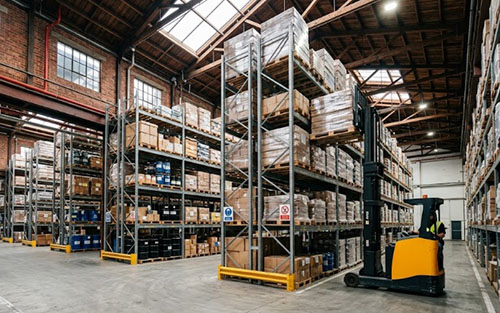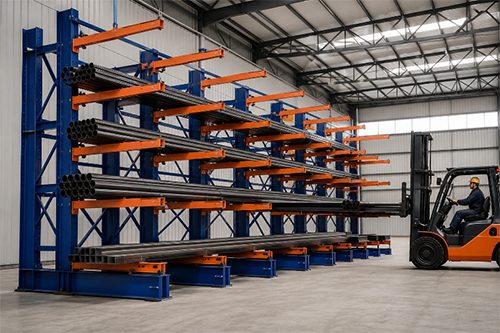


Steel storage racking must be designed to safely support stored loads while maintaining structural stability under normal warehouse conditions. AS 4084.1:2023 provides design requirements for steel storage racking in Australia, covering structural analysis, load considerations, stability, and testing.
For warehouse operators and racking manufacturers, understanding these requirements helps ensure that pallet racking is designed according to the actual storage conditions rather than based only on nominal load capacity.
What Is AS 4084.1:2023?
AS 4084.1:2023 is the Design part of the Australian Standard for steel storage racking. It establishes requirements for the analysis and design of steel racking structures, particularly adjustable static pallet racking.
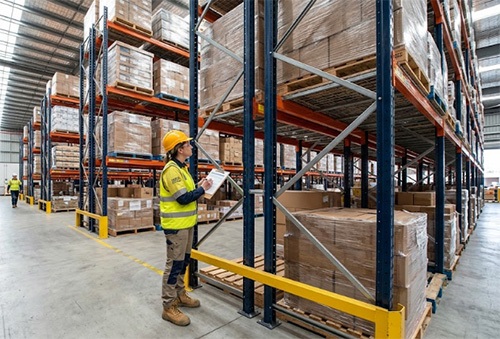
The standard considers racking as a complete structural system rather than simply a collection of individual components. Uprights, beams, bracing, connections, and other structural members all contribute to the overall performance of the system.
AS 4084.1:2023 should also be distinguished from AS 4084.2, which addresses the operation and maintenance of racking systems.
Key Requirements for Steel Storage Racking Design
Effective racking design starts with the loads and conditions expected in the warehouse. Important factors include pallet weight, pallet dimensions, storage height, beam levels, and racking configuration.
Structural design also considers the performance of major components such as:
- Upright frames supporting vertical loads
- Beams carrying pallet loads
- Bracing providing structural stability
- Connections transferring forces between components
In addition to vertical storage loads, the design may need to consider horizontal forces and other applicable actions depending on the project conditions.
Stability is another important consideration. The complete racking structure must be evaluated to ensure that it can perform safely under the intended loading and operating conditions.
Where required, testing and engineering verification can be used to confirm structural performance and support the design assumptions.
Applying AS 4084.1:2023 to Pallet Racking Projects
In a real warehouse project, racking design should be based on the specific application rather than a standard configuration.
A manufacturer or engineer may need to consider:
- Pallet size and maximum load
- Number of storage levels
- Rack height and bay configuration
- Forklift type and operating conditions
- Warehouse floor and building conditions
- Applicable project loads and environmental conditions
These factors can affect upright selection, beam capacity, bracing arrangements, connection design, and the overall rack configuration.
For Australian projects, providing appropriate engineering documentation and clearly defined load capacities is an important part of the racking design process.
Why AS 4084.1:2023 Matters When Choosing a Racking Manufacturer
For buyers, compliance should not be evaluated simply by asking whether a rack is “AS 4084 compliant.” The design needs to be suitable for the actual application and project conditions.
When selecting a manufacturer, consider whether they can provide:
- Project-specific structural design
- Clear load capacity information
- Technical drawings and specifications
- Appropriate engineering or testing documentation
- Racking solutions suitable for Australian requirements
AS 4084.1:2023 provides a structured basis for the safe and consistent design of steel storage racking. Working with an experienced manufacturer can help ensure that the selected pallet racking system is properly designed for its intended warehouse application.