

Sourcing storage infrastructure is a significant capital expenditure. If you are managing a warehouse, you aren’t just looking for a sticker price; you need to know the Total Landed Cost. Buying from China is the global standard for cost-efficiency, but the final Pallet Rack Cost involves much more than just the steel.
When you procure directly from manufacturers in China, you are navigating a complex matrix of raw material markets, freight volatility, international trade tariffs, and installation logistics. This guide breaks down every financial component you will encounter, ensuring you have the expertise to make a profitable decision.
Key Takeaways
- FOB Material Cost: The price of the steel beams, uprights, and wire decking at the factory gate.
- Tariffs & Duties: The most variable factor, dependent entirely on the destination country (US, EU, AU) and the country of origin (China vs. Vietnam).
- Logistics: Ocean freight, drayage, and port fees.
- Hidden Costs: Permitting, engineering, slab analysis, and fire suppression upgrades.
- Installation: Labor rates for erecting the system safely.
Part 1: Core Cost Factors of Pallet Racking Systems
Material Costs
The primary driver of Pallet Rack Cost is the price of steel (specifically hot-rolled coil and cold-rolled steel). Steel accounts for approximately 60-70% of the factory price.
- Quality Matters: High-quality racking uses Q235 or Q345 steel (equivalent to US A36 or Gr50). If a quote seems suspiciously low, the manufacturer might be using under-gauge steel or lower tensile strength materials, which compromises safety.
- Market Fluctuation: Steel prices change weekly. A quote you received three months ago is likely invalid today. You must lock in pricing with Aceally manufacturer quickly during volatile periods.

Tooling and Customization Costs
If your warehouse requires standard selective pallet racking, tooling costs are usually absorbed by the Aceally manufacturer. However, if you require custom drive-in systems, cantilevers with specific arm lengths, or automated shuttle racking components, you may face tooling fees.
- Standard Sizes: Using standard upright heights (e.g., 96″, 144″, 192″) and beam lengths (96″, 108″, 144″) keeps costs down.
- Custom Engineering: Unique punching patterns or specific powder coating colors (outside of standard safety orange and blue) can add 5-10% to the production cost.
Estimated Factory Cost Allocation (Per Pallet Position)
| Cost Component | Percentage of FOB Price | Influencing Factor |
|---|---|---|
| Raw Steel Material | 65% – 75% | Global Steel Index |
| Labor | 10% – 15% | Automation level of factory |
| Powder Coating/Finishing | 5% – 8% | Epoxy prices, Zinc (for galvanized) |
| Overhead & Profit | 10% – 15% | Order Volume (Economies of Scale) |
Part 2: Sea Freight and Import Taxes
40ft Container Freight Rates
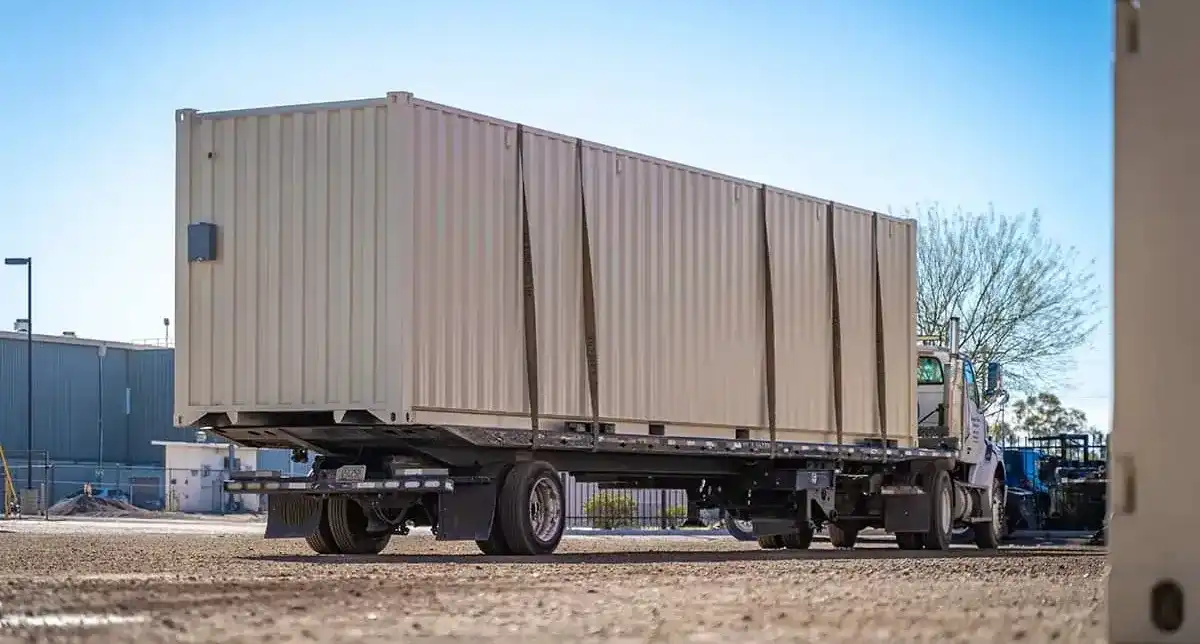
Racking is heavy and dense. You will typically ship using 40-foot High Cube (40HC) containers. The cost to ship a container fluctuates based on season (peak season is August-October) and global supply chain health.
- China to US West Coast: Ranges drastically. In stable times, it might be \$3,500 – \$5,000. During disruptions, it can spike to \$15,000+.
- China to Europe: Generally \$3,000 – \$6,000.
- China to Australia: Often cheaper due to proximity, roughly \$1,500 – \$3,000.
You need to calculate the “Cost Per Pallet Position” for freight. A 40HC container typically holds roughly 20-25 tons of racking. If you fit 200 pallet positions in a container, and freight is \$4,000, your shipping cost is \$20 per position.
Import Duties
The Pallet Rack Cost changes dramatically depending on where the steel is welded.
United States (The Anti-Dumping Reality)
If you import steel racking directly from China to the USA, you face massive Anti-Dumping Duties (ADD) and Countervailing Duties (CVD), which can exceed 140%, plus Section 301 tariffs (25%).
- The Solution: Aceally manufacturers have established factories in Vietnam or other Southeast Asian nations. Importing from Vietnam to the US significantly reduces duties, bringing the tax burden down to standard MFN rates (often 0% or low single digits).
Europe and Australia
- Europe: The EU also has anti-dumping measures against Chinese steel fasteners and certain racking components. It is vital to check the specific HS Code (usually under 7308.90).
- Australia: Generally has a free trade agreement with China (ChAFTA), making Chinese racking extremely cost-effective with 0% import duty, provided you have the correct certificate of origin.
Duty Impact Scenarios (Hypothetical Order of $50,000 FOB)
| Destination | Origin: China | Origin: Vietnam | Impact on Total Cost |
|---|---|---|---|
| USA | High ADD/CVD + 25% Tariff | Standard Duty (Low) | Buying from China is prohibitive; Buy from Vietnam. |
| Europe | Potential ADD (Check HS Code) | Standard Duty | Mixed, depends on specific ruling. |
| Australia | 0% (Free Trade Agreement) | 0% – 5% | Buying from China is highly recommended. |
Part 3: Installation Fees and Accessories
The steel has arrived at your dock. Now you have to build it. Do not underestimate this phase; it often represents 25-35% of your total project budget.
Labor and Professional Services
Installation rates vary by region.
- Union vs. Non-Union: In major US metro areas, union labor rates will drive costs up significantly compared to non-union crews.
- Efficiency: Experienced crews install faster. A typical crew might install 100-150 pallet positions per day, depending on the complexity (e.g., height, anchor requirements).
- Equipment Rental: You will need scissor lifts and forklifts. If you don’t own them, rental fees must be added to the budget.
Critical Safety Accessories
Your quote often covers just beams and frames. A functional warehouse needs more.
- Wire Decking: Essential for safety and fire code compliance. Adds roughly \$15-\$25 per beam level.
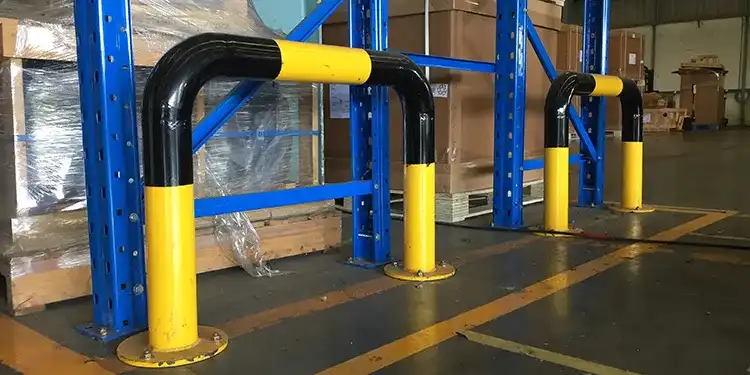
- Column Protectors: Bolted to the floor to protect uprights from forklift impact. A small investment (\$20-\$40 each) that saves thousands in damage repair.
- Row Spacers & Pallet Supports: Small hardware items that ensure stability and load integrity.
Part 4: Service Fees & Hidden Costs
Permitting and Engineering
- Design Fees: You need CAD drawings showing the layout, egress paths, and elevation.
- Seismic Calculations: In high-seismic zones (like California, Japan, or parts of New Zealand), you need a PE (Professional Engineer) stamped drawing verifying the rack can withstand earthquakes. This requires thicker steel and larger footplates, increasing material cost by 20-30%.
- Permit Fees: Local municipalities charge for building permits and high-pile storage permits.
Fire Suppression (Sprinklers)
This is often the most expensive “hidden” cost.
- High Pile Storage: If you store combustible items above 12 feet, you likely need upgraded fire suppression.
- In-Rack Sprinklers: If your ESFR (Early Suppression, Fast Response) ceiling system isn’t sufficient, you must install sprinklers inside the racking. This involves massive plumbing work and can cost as much as the racking itself.
Slab Analysis
Racks exert tremendous point loads (thousands of pounds per square inch) on your concrete floor. You may need a core sample analysis to ensure your concrete slab is thick enough (usually 6 inches minimum) and has the PSI rating to support the loaded racks. If the slab is weak, you will need larger footplates or concrete reinforcement.
Part 5: New vs. Used Pallet Racking
Is buying new from China actually cheaper than buying used domestically?
The Appeal of Used Racking
- Availability: It is available immediately. No shipping lead times.
- Price: Generally 30-50% cheaper than domestic new racking.
New Pallet Racking price VS Used Pallet Racking Price
| Component | New Price Range (Factory Direct) | Used Price Range (Market Avg) |
|---|---|---|
| Upright Frames (42″ × 16′) | \$70 – \$85 | \$50 – \$65 |
| Beams (96″ × 4″) | \$12 – \$13 | \$9 – \$10 |
| Wire Decking (42″ × 46″) | \$9 – \$10 | \$6 – \$7 |
| Row Spacers | \$2 – \$3 | \$1 – \$1.50 |
| Column Protectors | \$7 – \$9 | \$5 – \$6 |
For a more accurate calculation of net savings after deducting shipping and installation costs, please refer to our detailed analysis: How much can you save by using second-hand pallet racks?
Part 6: Cost Optimization Strategies
How do you get the absolute lowest Pallet Rack Cost without sacrificing safety?
1. Buy from Low-Tariff Countries
For buyers in the United States, this is the single most impactful cost-saving strategy.
- The Problem: Importing steel racking directly from China to the US triggers massive Anti-Dumping Duties (ADD) and Section 301 Tariffs, often doubling the cost.
- The Solution: Purchase from the manufacturer at Aceally factory
- The Result: By shipping from Vietnam, the import duty drops from potentially >100% down to standard MFN rates (often 0-6%). The steel quality is identical (often from the same raw material suppliers), but the geopolitical tax burden is removed.
2. Phased Implementation
If you are fitting out a 100,000 sq. ft. facility, you do not need to pay for 100% of the racking upfront.
- Cash Flow Management: Split the project into Phase 1 (receiving/shipping areas) and Phase 2 (deep storage).
- Testing: This allows you to test the workflow of the first phase and make design adjustments for the second phase without costly change orders.
3. Bulk Discounts and Container Optimization
Manufacturing efficiency relies on repetition.
- Run Size: Factories offer lower unit prices when they can run the roll-forming machines continuously for 3 days rather than 3 hours. Ordering 500 frames is significantly cheaper per unit than ordering 50.
- Container Utilization: “Shipping air” is expensive. Work with Aceally supplier to maximize the container load. If a 40HC container fits 22 tons of steel, and your order is 15 tons, you are paying a premium on freight. Adjust your quantity to fill the box.
Choose the Right Rack System for Your Needs
The type of system you choose dictates your density and cost. While Selective Racking is the cheapest per pallet position, it requires the most floor space (aisles). High-density systems cost more upfront but save massive amounts of money on building rent.
Table 4: System Cost vs. Storage Density Comparison
| Rack System Type | Est. Cost Per Pallet Position (Material Only) | Storage Density | Best Application |
|---|---|---|---|
| Selective Racking | \$40 – \$60 | Low (Many Aisles) | High SKU count, 100% accessibility needed. |
| Drive-In Racking | \$65 – \$85 | High (LIFO) | Low SKU count, high volume of same product. |
| Double Deep | \$50 – \$70 | Medium | Balance between density and accessibility. |
| Push Back Rack | \$90 – \$130 | High (LIFO) | High density, faster handling than Drive-In. |
| Pallet Shuttle | \$150+ | Very High | Automation ready, maximum cubic utilization. |
Conclusion
Determining How Much Does Pallet Rack Cost involves peeling back layers of material, logistics, and regulatory fees. While the FOB price from China might look incredibly low (often \$30-\$50 per pallet position for the steel), the Total Landed Cost will likely settle between \$60 and \$100 per pallet position, depending heavily on your location and seismic requirements.
Smart procurement isn’t about finding the cheapest steel; it’s about finding a partner who understands the supply chain, the tariff codes, and the engineering requirements to deliver a turnkey solution.
Ready to optimize your warehouse storage? Contact us today for a custom quote and a free layout design.
FAQ
1. What is the average cost per pallet position for racking?
A: For new racking imported from Asia, the landed cost typically ranges from \$50 to \$90 per pallet position, depending on steel prices and freight rates. Domestic or European manufactured racking can cost \$100 to \$150+ per position.
2. How much does it cost to install pallet racking?
A: Installation labor generally costs between \$15 and \$30 per pallet position, or roughly \$60-\$90 per man-hour. High-seismic zones or complex setups (like push-back rack) will cost more.
3. Is pallet racking from China safe?
A: Yes, if you purchase directly from the manufacturer. We use Q235/Q345 steel and can provide ISO certification or test reports proving that our factory meets RMI (Rack Manufacturers Association) or FEM standards.
4. What is the cheapest type of pallet racking?
A: Selective Pallet Racking (Roll-formed) is the most cost-effective system. It offers the lowest cost per pallet position and immediate access to all stock. Double-deep or Drive-in racking costs more per bay but provides higher density.
5. Do I need a permit for pallet racking?
A: Almost always. If your racking is over 8 feet high, most municipalities require a building permit. You will also likely need a “High Pile Storage” permit from the fire department. Neglecting this can lead to fines or being forced to tear down the racks.