

You’re running a warehouse, managing inventory. You need more storage, but the quotes for brand-new pallet racking are making your eyes water. Then you see it: an ad for used pallet racking promising massive savings.
The big question on your mind is simple: How much money are we really talking about? And is it worth it?
Yes, it is you can save a significant amount, often 40% to 60% off the cost of new materials. But this number, as attractive as it is, is just the beginning of the story. The real answer is more nuanced. Saving money by used racking isn’t just about the initial discount; more importantly, it’s about avoiding bigger and more expensive problems later on.
This guide will provide a detailed analysis of where the real savings lie, reveal the costs you must avoid, and help you determine whether buying used pallet racking is the right choice for your business.
The Upfront Savings
When you compare the material costs of new versus used pallet racking, the difference is undeniable. The steel itself—the upright frames, horizontal beams, and wire decking.
New Pallet Rack vs. Used Pallet Rack
Let’s imagine you need to outfit a section of your warehouse with a standard selective pallet rack system.
- Cost of New Racking Materials: For a basic setup, you might be looking at $25 – $50 per pallet position. For 200 pallet positions, that’s a material cost of $5,000 – $10,000.
- Cost of Used Racking Materials: Applying that 40-60% discount, the same materials could cost you $10 – $30 per pallet position. Suddenly, that 200-pallet-position project drops to $2,000 – $6,000.
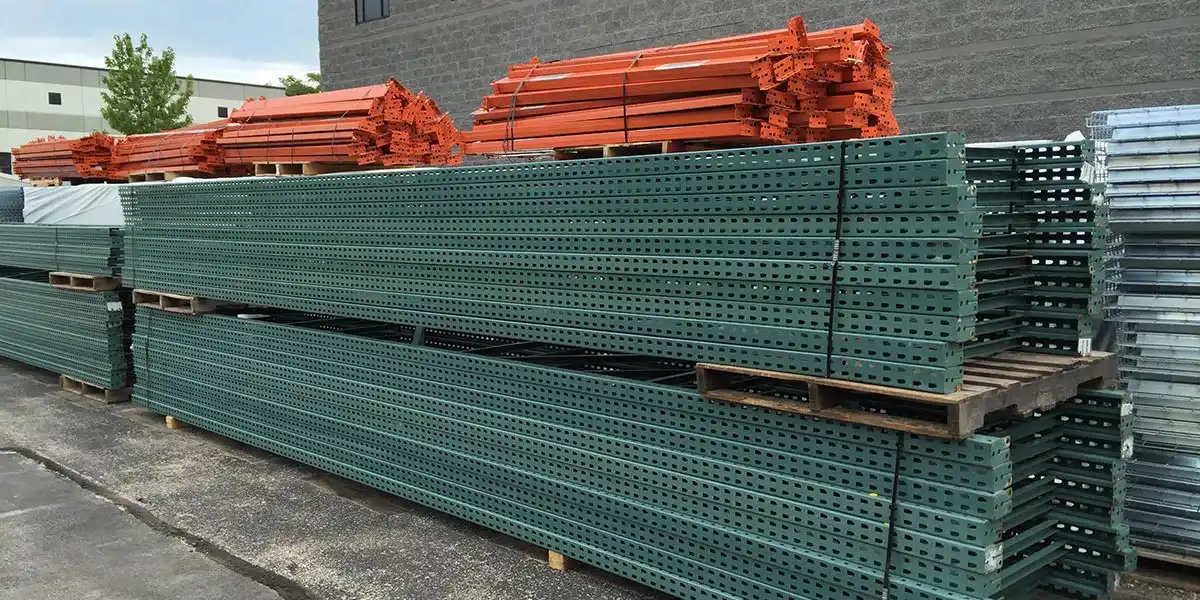
A potential saving of several thousand dollars is incredibly compelling. For large-scale projects, these savings can escalate into the tens of thousands. This initial discount is the primary driver for businesses exploring the second-hand racking market.
But wait. The material cost is only one piece of the puzzle. To understand the total savings, we need to look at the entire picture.
Analyzing the Total Cost of Ownership
That the purchase price is just the start. The true cost of any asset includes everything from shipping and installation to maintenance and potential risks. This is where the gap between new and used racking can sometimes shrink.
1. Shipping and Freight Costs
- New Racking: Often shipped directly from a manufacturer or a large distribution center. Shipping costs are usually straightforward and can sometimes be bundled into a deal.
- Used Racking: You might find a great deal, but it could be located across the country. The cost of freight to get it to your facility can eat into your savings. However, finding a local seller liquidating their warehouse can lead to minimal shipping costs and maximum savings.
2. Installation Costs
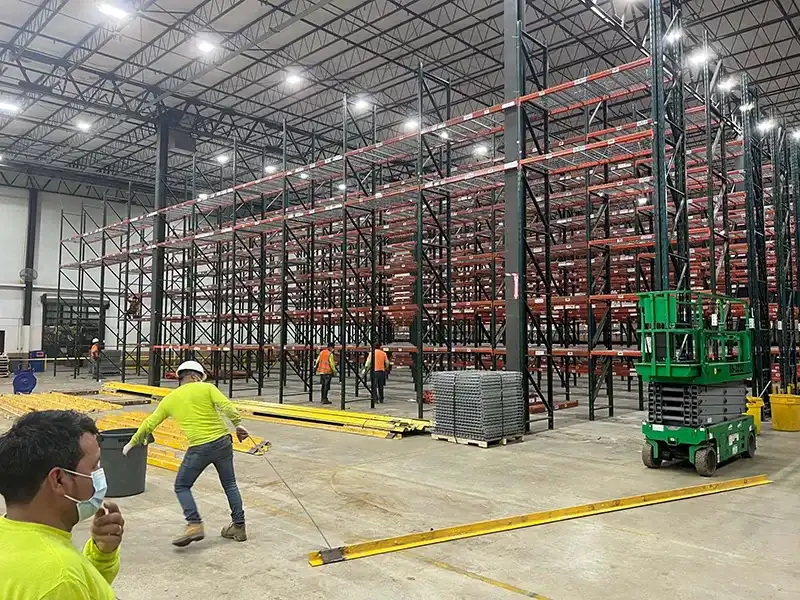
This is one cost that does not change. Whether your racking is new or used, it MUST be installed by a professional, certified team. They ensure it’s plumb, level, and anchored correctly according to local building codes.
Never, ever try to save money by having an inexperienced team install your racking. The risk of a collapse is far too great. Budget the same amount for professional installation, regardless of whether you buy new or used.
3. Engineering and Permitting
Here’s a critical and often-overlooked cost. Most municipalities require a permit for pallet rack installation. This process requires engineering drawings that prove the system’s design and load capacity are safe for your specific application and location (especially in seismic zones).
- New Racking: Comes with clear engineering specs and load ratings from the manufacturer. Getting permits is a standardized process.
- Used Racking: If you can’t identify the original manufacturer or find the load capacity plaques, you may need to hire a third-party engineer to inspect and certify the racking. This extra step costs money and can sometimes offset a portion of your initial savings.
4. Cost Your Time
Sourcing high-quality used pallet racking takes time and effort. You’ll be spending hours:
- Searching online listings.
- Calling suppliers.
- Traveling to inspect the materials in person.
- Negotiating the price.
Your time has value. While you won’t see this on an invoice, it’s a real cost to your business that should be factored into the equation.
New Pallet Racking vs. Used Pallet Racking
To make your decision easier, here is a clear, side-by-side comparison of the key factors:
| Factor | New Pallet Racking | Used Pallet Racking |
|---|---|---|
| Initial Cost | Higher upfront investment. Expect to pay full market price. | Significant Savings. Often 40-60% cheaper than new materials. |
| Condition & Safety | Guaranteed pristine condition. Meets all current safety standards. | Unknown history. Requires meticulous inspection for damage, rust, or weak welds. |
| Warranty | Comes with a full manufacturer’s warranty against defects. | Sold “as-is” with no warranty. You are responsible for any issues. |
| Engineering & Permitting | Clear load capacity ratings and specs provided, streamlining the permit process. | May lack original specs. Might require costly third-party engineering for permits. |
| Sourcing & Availability | Ordered directly from a distributor. Consistent and readily available for expansion. | Requires searching and sourcing. Availability can be inconsistent. |
| Customization | Can be fully customized to your exact specifications (height, color, capacity). | Limited to what is available on the market. No customization. |
| Time Investment | A relatively quick and straightforward purchasing process. | Requires significant time for searching, travel, inspection, and negotiation. |
| Installation | Requires professional installation for safety and compliance. | Identical Requirement. Professional installation is non-negotiable for safety. |
Hidden dangers of Used Pallet Racking
This is the most important section of this guide. A cheap deal on used racking can become astronomically expensive if you don’t know what to look for. The goal is to find a cost-effective solution, not a cheap liability.
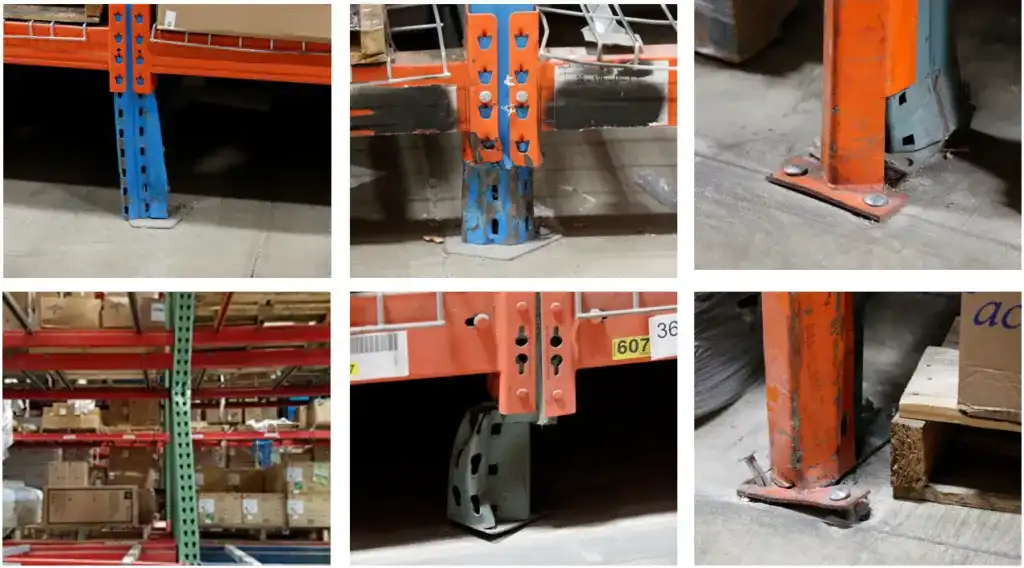
Risk 1: Damaged or Compromised Steel
The biggest risk with second-hand racks is their unknown history. Was the racking overloaded? Was it struck by a forklift? Even minor-looking damage can drastically reduce its load-bearing capacity. If a rack fails, your “savings” are instantly erased by:
- Lost Inventory: The value of the products destroyed in a collapse.
- Catastrophic Downtime: The cost of cleaning up, replacing the racking, and having a section of your warehouse out of commission.
- Injuries and Liability: The immense human and financial cost of a workplace accident.
Risk 2: Mismatched or Incompatible Components
A common mistake is buying used beams from one seller and used uprights from another. Even if they look similar, different manufacturers use proprietary designs and locking mechanisms. Forcing them together is a recipe for an unstable and unsafe system. Stick with one consistent brand and style for all components.
Risk 3: Lack of Warranty
New pallet racking comes with a manufacturer’s warranty. If a component fails due to a manufacturing defect, you’re covered. With used racking, you are buying it “as-is.” Once the deal is done, any issues are your problem to solve.
How to Maximize Your Savings & Guarantee a Safe Investment
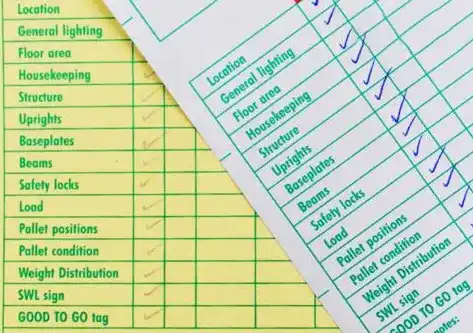
Your Essential Used Racking Inspection Checklist
- ✅ Upright Columns:
- Dents and Dings: Look down the length of the column. Any bend, dent, or crease compromises its strength.
- Rust: Surface rust can sometimes be cosmetic, but any deep, flaking, or pitting rust is a major red flag.
- Footplates: Ensure they are straight, solid, and the welds connecting them to the column are intact.
- ✅ Horizontal Beams:
- Straightness: Lay a beam on a flat floor. It should be perfectly straight. Any sagging or bowing means it has likely been overloaded and is no longer safe.
- Connectors and Safety Clips: Check the end connectors that slot into the uprights. Ensure the welds are solid and that the safety clips are present and functional. Missing safety clips are a common but dangerous issue.
- ✅ Welds:
- Inspect all weld points for cracks, fractures, or signs of amateur re-welding. Factory welds are clean and consistent.
- ✅ Consistency:
- Ensure all the components are from the same manufacturer and are the same style (e.g., all teardrop style).
Partner with a Reputable Used Racking Manufacturers
The safest way to buy used is to work with a reputable dealer who specializes in used warehouse manufacturer. These companies build their reputation on quality and safety.
- Inspect all incoming used inventory and discard unsafe components.
- Help you identify the manufacturer and provide load capacities.
- Offer a large, consistent inventory so you can get matching parts.
- Assist with layout design, engineering, and installation.
Is Used Pallet Racking the Right Choice for You?
Buying a used pallet rack might be a good option if the following conditions are met:
- You are on a tight budget, and the savings will make a real impact.
- You have the time and expertise to thoroughly inspect the materials yourself.
- You are working with a trusted, reputable dealer who stands by their product.
- Your storage needs are for a standard application, not a highly specialized or heavy-duty one.
You might be better off buying NEW pallet racking if:
- Your company has a strict “no used equipment” policy for safety and liability reasons.
- You are in a high-seismic zone requiring extensive engineering documentation.
- You need a highly customized or specialized racking system.
- Your number one priority is long-term peace of mind and a full manufacturer’s warranty.
Summary
The money you save with used pallet racking is directly proportional to the due diligence you put in. A quick, uninformed purchase can be a costly mistake. But a careful, well-inspected, and properly installed used racking system can be one of the smartest investments you make for your warehouse, delivering nearly all the performance of a new system for a fraction of the cost.
Frequently Asked Questions
1. How do you calculate pallet rack load capacity?
For used racking, you should never guess or assume the capacity. If original manufacturer labels are missing, the only safe methods are to work with a dealer who can identify the specs or hire a qualified structural engineer to inspect and certify the racking’s capacity.
2. Can I mix different brands of pallet racking?
No, you should never mix components from different manufacturers. Even if they look similar, subtle differences in design and engineering can create an unstable system that is at high risk of failure.
3. What is the life expectancy of pallet racking?
Pallet racking is made of steel and doesn’t have a fixed “expiration date.” Its lifespan depends entirely on its environment and how it’s used. A well-maintained rack in a clean, dry warehouse that is never overloaded or struck by forklifts can last for decades. The primary factors that shorten its life are damage from impacts and corrosion from moisture.