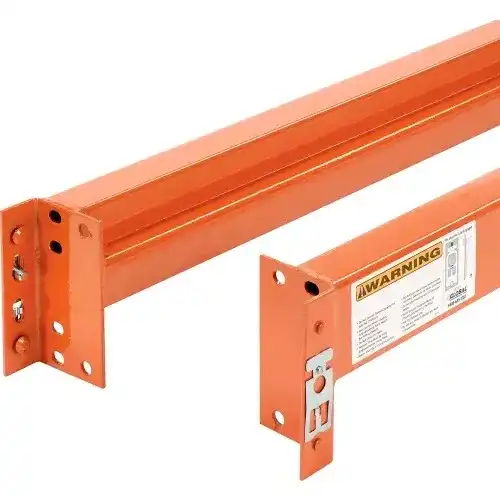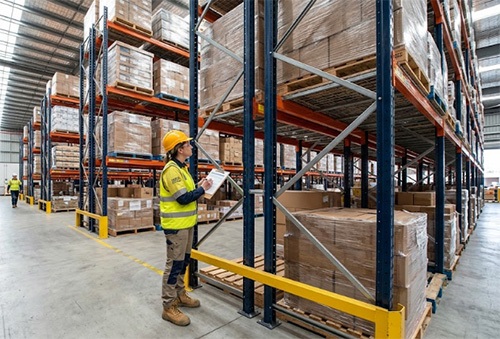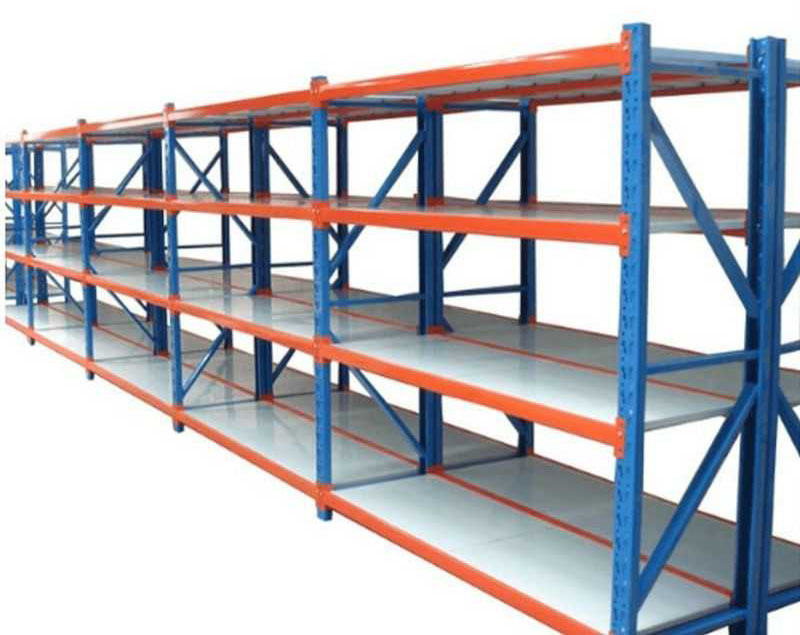


Buying warehouse racking is not just a standard purchasing decision—it is a high-stakes, long-term investment in your facility’s safety, operational efficiency, and cost control.
“Many buyers focus solely on upfront price or cosmetics while overlooking critical engineering and structural safety factors. This often leads to premature system failure, severe safety hazards, and exorbitant replacement costs.”
1
Choosing Racks Based Solely on the Lowest Price
One of the most catastrophic mistakes is selecting the cheapest racking system available. To achieve ultra-low prices, manufacturers are forced to compromise on structural integrity.
🛑 The Hidden Risks of Cheap Racking:
- •Thinner steel profiles: Reduced gauge thickness means less structural resistance.
- •Lower-grade raw materials: Non-standard steel is prone to fatigue and rapid micro-cracking.
- •Substandard welding: Weak weld points dramatically increase the risk of localized buckling under heavy loads.
💡 Actionable Strategy (Total Lifecycle Cost):
Always evaluate the Total Cost of Ownership (TCO). Factor in material grade, verified load capacity, durability coatings, warranty length, and the supplier’s technical engineering support.
2
Ignoring Real Load Capacity Requirements
Incorrect load calculation is a primary driver of warehouse collapses. Many buyers mistakenly look at the average weight of their inventory rather than the maximum weight of their heaviest pallets.
SEO Pro-Tip: Overloading a single bay or unevenly distributing weight can cause a progressive collapse, pulling down adjacent bays like dominoes.
💡 Actionable Strategy (The Triple Load Formula):
- Calculate calculations based on the maximum possible pallet weight, not the average.
- Confirm beam load, upright frame capacity, and shelf/wire decking load independently.
- Incorporate a 20% to 30% safety margin to account for uneven loading and forklift impact forces.
3
Selecting the Wrong Type of Racking System
Different fulfillment models require fundamentally different structural racking engineering. Implementing a mismatch will paralyze your warehouse throughput.
| Racking Type | Best Used For | Common Mismatch |
|---|---|---|
| Selective Racking | High SKU diversity & 100% accessibility | Bulk, low-SKU single items |
| Drive-In Racking | High-density, low-SKU (LIFO) | Multi-SKU picking operations |
| Push-Back / Flow | Medium-to-high turnover (FIFO/LIFO) | Light-duty, loose box storage |
💡 Actionable Strategy:
Audit your inventory profile (SKU count, pallet dimensions, and expiration model) before settling on a structure. Never force your operations to adapt to a poorly chosen rack type.
4
Flawed Warehouse Layout and Aisle Design
Even the strongest rack is a liability if it bottlenecks your traffic or sits in a blind spot. Poor aisle layout design restricts forklift movement and leads to high-velocity impacts.
⚠️ Critical Design Pitfalls to Avoid:
- Designing aisles tighter than the forklift’s real turning radius (Right-Angle Stack).
- Encroaching on or blocking fire exits, MEP lines, and building columns.
- Failing to allocate designated staging, receiving, and cross-docking zones.
💡 Actionable Strategy:
Consult your forklift specification sheet. Ensure your aisle widths match or exceed the minimum turning requirements, and leave dedicated clearance buffers around columns and fire suppression infrastructure.
5
Overlooking Floor Condition and Installation Engineering
Even premium-grade steel racks will fail if anchored to an uneven, structurally weak, or unverified concrete floor. Imbalances amplify stress on individual uprights.
⚠️ Major Structural Installation Hazards:
- Rack Tilting: Minor floor deviations create massive vertical leans at upper levels.
- Anchor Failure: Shoddily drilled anchor bolts sheared off by minor forklift bumps.
- Concrete Cracking: Lack of proper slab capacity checks leading to subfloor collapse.
💡 Actionable Strategy (The Installation Protocol):
Verify your warehouse slab flatness and load-bearing specs (PSI rating). Hire certified professional millwrights or racking installers, enforce proper floor anchoring, and conduct formal post-installation vertical alignments.
6
Failing to Plan for Future Scalability and Expansion
Many supply chain managers source racks based exclusively on today’s inventory volume. As business scales, proprietary, non-modular rack designs create costly bottlenecks.
SEO Insight: Sourcing low-volume, odd-spec racking styles from obscure suppliers leaves you trapped when parts are discontinued, forcing you to scrap the whole system to expand.
💡 Actionable Strategy:
- Opt for modular, adjustable-height universal racking designs (e.g., standard teardrop or structural profiles).
- Design current layouts with a built-in 15% to 30% expansion buffer.
- Secure a written guarantee from the supplier regarding component compatibility for the next 5 to 10 years.
7
Accepting Racks Without Structural Certifications
Uncertified racking is an unmitigated legal liability. If an accident occurs, insurance companies routinely deny claims for equipment lacking compliance documentation.
📋 The Non-Negotiable Documentation Checklist:
8
Vague Warranty Terms and Weak After-Sales Support
Many buyers assume a “10-year warranty” covers everything. Later, they discover it only applies to factory material defects, excluding labor, replacement logistics, or structural engineering evaluations.
💡 Actionable Strategy:
Get it in writing: demand a 5–10 year structural warranty on frames/beams, 2-5 years on surface finishes, and a clearly outlined Service Level Agreement (SLA) defining part replacement turnaround times.
📌 The Ultimate Warehouse Racking Procurement Checklist
Before signing any racking contract, verify that you have checked off every item below:
- ✓ Structural load design matches maximum pallet load, not average.
- ✓ Racking system configuration aligns seamlessly with your operational workflow.
- ✓ Floor slab capacity and flatness have been physically verified.
- ✓ Aisle widths accommodate your specific forklift turning radius with clear buffers.
- ✓ Vendor has provided engineering certifications and load capacity test data.
- ✓ Modular component expandability is mapped out for 15%-30% future growth.
- ✓ Structural warranty terms and replacement logistics are locked in in writing.
🚀 Secure Your Facility. Protect Your Operations. Optimize Your ROI.