

How to Load and Unload Push-Back Racks Safely and Efficiently
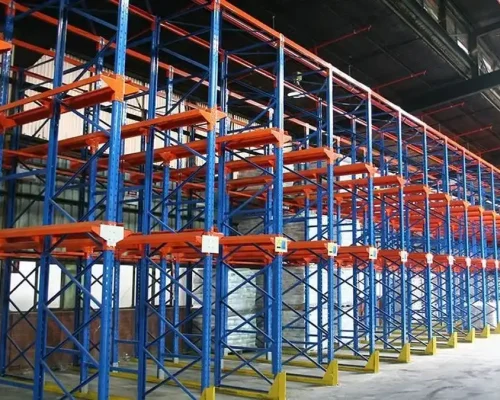
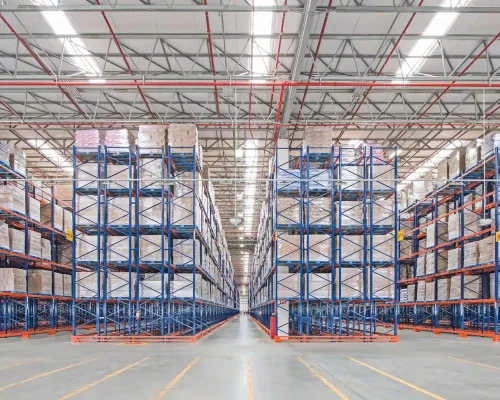
Push-back racking systems are an efficient, high-density storage solution widely used in warehouses to optimize space and streamline operations. Understanding the correct procedures for loading and unloading these systems, along with their benefits and maintenance requirements, is essential for ensuring safety, efficiency, and cost-effectiveness.
The correct steps for loading a push-back rack
1. Placing the First Pallet
Lift the pallet approximately 7-10 cm above the first cart and place it firmly on the shelf, ensuring it is centered. Then slowly lower it and gently pull it out to check for stability.
2. Loading Subsequent Pallets
Align the bottom of the second pallet with the first pallet. Gently push the previous pallet backward and place the new pallet on the next available cart. Repeat this process for the remaining pallets.
3. Ensuring Pallet Alignment
Each pallet must be perfectly centered. If a pallet is off-center or there is a gap in front of the cart, remove the pallet and readjust it to ensure proper alignment before continuing.
4. Placing the Final Pallet
After placing the final pallet on the end stop (if installed), ensure it is centered for smooth retrieval.
5. Purpose of the Stop
The stop, if installed, helps align the pallet and absorbs rearward thrust, enhancing loading stability.

Correct Procedure for Unloading Push-Back Racking
1. Removing the Front Pallet
Aim the forklift at the center of the pallet, lift the pallet approximately 7-10 cm to avoid obstructions, and then slowly pull it out, ensuring a smooth operation.
2. Controlling the Cart’s Movement Speed
As the following pallets automatically move forward, maintain a slow, controlled backward motion to prevent the cart from sliding or colliding.
3. Unloading One Pallet at a Time to an Empty Rack
Repeat the above steps, removing each pallet one by one, until the rack is completely empty.
The Importance of Push-Back Racking Inspections
Regular inspections of push-back racking are crucial for ensuring safe and efficient warehouse operations and extending the life of the equipment. Because these racking systems carry heavy loads and are frequently moved, they are susceptible to wear, misalignment, and hidden damage, potentially leading to structural failure.
Regular inspections can identify potential problems, such as frame deformation, loose connections, or overloading, before they develop into serious incidents or operational disruptions.
Regular maintenance also ensures compliance with the following regulatory requirements:
- Provision and Use of Work Equipment Regulations 1998 (PUWER)
Under PUWER, all work equipment must be maintained in good condition and fit for purpose. As work equipment, push-back racks require regular inspections to ensure safety and functionality.
- Health and Safety at Work Act 1974
These regulations require employers to provide a safe working environment. Neglecting rack maintenance could result in a breach of these regulations and increase safety risks.
By prioritizing inspections, businesses not only protect their employees and inventory, but also reduce costly repairs and ensure warehouses operate efficiently.
Comparison between push-back racking and other racking systems
Push-back racking is one of several deep-lane storage solutions. The table below compares it with pallet flow racking and shuttle racking, highlighting key differences and unique features:
| characteristic | Push-back Rack | Pallet Live Racking | Shuttle Rack |
|---|---|---|---|
| Storage density | high | middle | high |
| Operation | Single-aisle loading and unloading | Multi-aisle operation | Automated shuttle |
| Applicable Scenarios | High turnover inventory | Universal Storage | Automation requirements |

Cost-Effectiveness of Push-Back Racking
While the initial investment in a push-back racking system is higher, its high storage density significantly reduces storage costs per square meter. By reducing aisle space requirements, warehouses can store more pallets, optimizing space utilization.
Furthermore, reduced forklift travel distances not only lowers operating costs but also improves efficiency and reduces the risk of damage to racks and goods. This combination of high density and selective storage makes push-back racking a highly profitable investment in suitable applications.
Key Advantages of Push-Back Racking
1. Flexible Integration
Push-back racking can serve as the primary storage solution or be combined with other systems.
The single-aisle design makes it suitable for placement in corners or against walls, minimizing disruption to existing workflows and eliminating the need to modify existing handling equipment.
2. No Special Equipment Required
The system is compatible with standard forklifts, eliminating the need for additional specialized equipment. It’s suitable for warehouses already using standard pallet racking and forklifts.
3. High-Density Storage
Push-back racking increases storage capacity by up to 75% by reducing the number of aisles, making it ideal for storing large quantities of SKUs.
4. Safe and Efficient Loading and Unloading Process
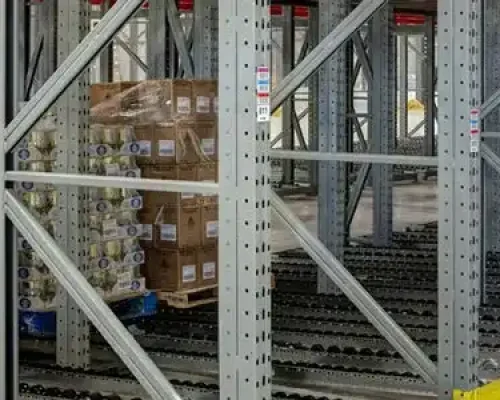
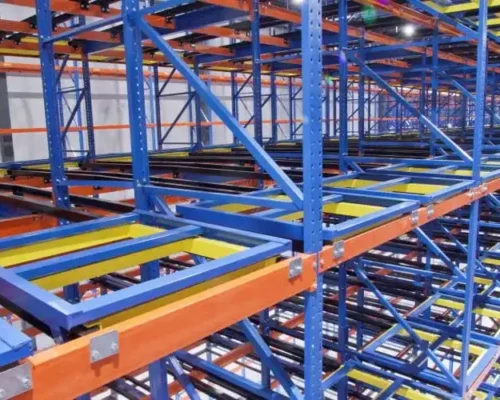
Pallets move smoothly on rails or rollers. When loading, new pallets push existing pallets deeper into the rack. When unloading, subsequent pallets automatically move forward, reducing the need for forklifts to reach deep into the rack.
This first-in, last-out (FILO) system improves operational efficiency while reducing the risk of collisions and damage.
5. Enhanced Safety
Single-aisle operation reduces forklift travel distances and mitigates the risk of collisions. Clear pallet visibility further enhances operational safety.
6. Save time and money
Fewer aisles means shorter pallet search times, optimized loading and unloading processes, lower labor costs, and improved production efficiency.
Push-back racking systems offer significant advantages to businesses seeking high-density, efficient storage solutions. If you’re looking to optimize warehouse space utilization, increase operational efficiency, and reduce costs, contact us to learn how you can transform your warehouse operations with push-back racking systems.