What is Selective Racking?
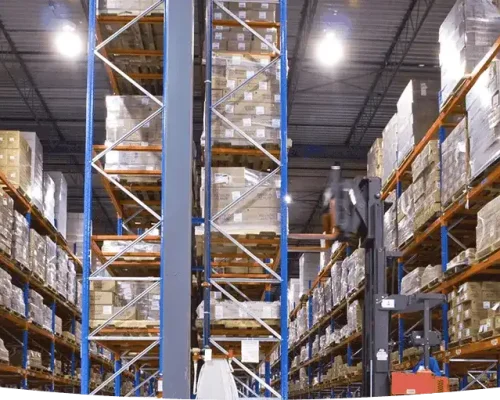
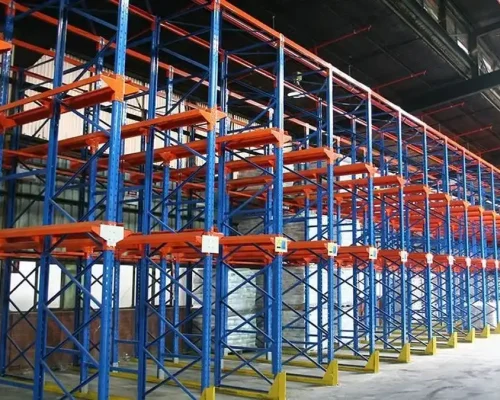
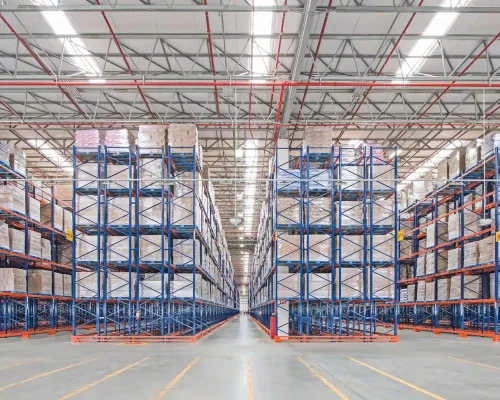
Selective racking is one of the most common warehouse storage systems. Its core feature is that each pallet position faces the aisle directly and can be accessed independently without moving other pallets or racks.
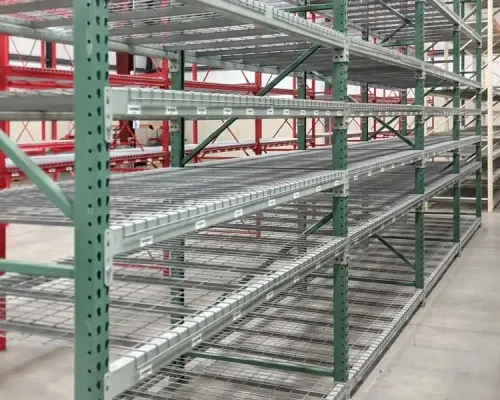
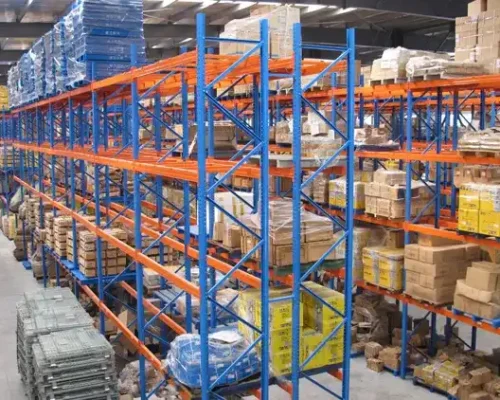
The structure consists of vertical rack columns and horizontal beams, forming multiple storage levels. Forklifts can drive directly into the rack aisle to reach any designated pallet position for storage or retrieval operations. Each pallet position is “selectable” and can be accessed instantly (plug-and-play).
You can imagine it like a library bookshelf: each book (pallet) has its own independent position, and you can directly walk to that position to take or return the book (pallet) you need without moving the books (pallets) in front of it.

Offers individual access to each and every pallet

High Stock Rotation

Economical use of floor space with low investment
Types of Selective Racking

Low-Density Selective Pallet Racking Systems
It is highly flexible and works with any type of forklift, so no specialized lift trucks are needed.
High-Density Selective Pallet Racking Systems
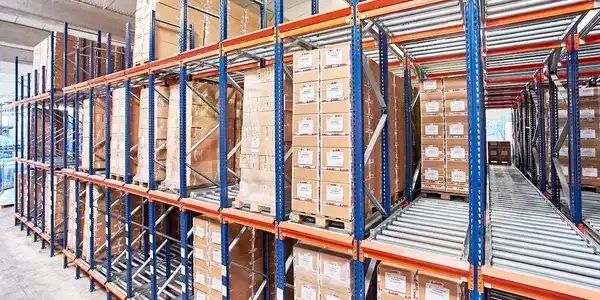
High-density storage pallet racking systems include:
- Double or triple-depth racks
- Drive-in/drive-through
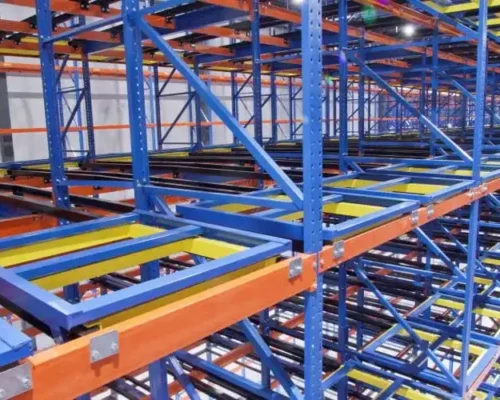
- Push back
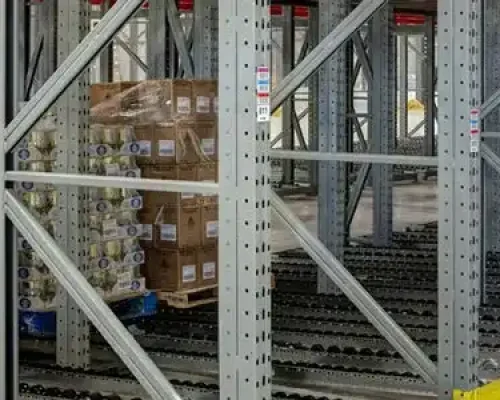
- Pallet flow
Advantages of Selective Pallet Racking
✔︎ Direct Access: Each storage location faces the aisle, allowing forklifts to directly access any palletized goods (SKU).
✔︎ High flexibility: There are no restrictions on the type, size, or turnover frequency of goods. Each storage location can store different types of goods and is compatible with both first-in-first-out (FIFO) and first-in-last-out (FILO) systems.
✔︎ Wide application: Due to its simplicity, flexibility, ease of access, and manageability, it is the most widely used storage method in warehouses, suitable for facilities with a large variety of SKUs that require frequent and random access to goods.


Key Features of Selective Pallet Rack
- High Selectivity: Access every pallet directly, perfect for quick item retrieval.
- Lower Density Trade-Off: Uses multiple aisles for high selectivity, reducing storage density.
- Double-Deep Option: Store pallets two rows deep to increase density while maintaining access.
- Pick Module Integration: Combine with other systems for a customized, efficient workflow.
- Standard Bay Size: Typically 96 inches wide by 42 inches deep, ideal for standard pallets.
- Customizable Bays: Adjust bay sizes to fit your specific inventory needs.
- Bolted Cross Bars: Ensure sturdy, safe pallet support.
- Wire Decking: Supports pallets, totes, or boxes for versatile storage.
Key Components of Selective Pallet Racks
Selective pallet racking systems are built with specific components tailored to handle the storage of various loads. Understanding these parts helps you optimize your warehouse storage for efficiency and safety. Below are the essential elements of selective pallet racking:

Upright Frames
Also referred to as upright columns, these are the vertical supports forming the backbone of the racking system. They ensure stability and structural integrity, determining the height and depth of your pallet racks to suit your storage needs.

Horizontal Beams (Load Beams)
These heavy-duty rails connect the upright frames, creating shelves for your pallets. They provide a stable surface for load placement, ensuring even weight distribution to support heavy items safely.

Clips (Safety Drop Pins, Beam Locks)
These small fasteners secure horizontal beams to upright frames. They play a critical role in safety, preventing beams from accidentally dislodging during loading or unloading processes.

Baseplates (Foot Plates)
Baseplates anchor the racking system to the floor, enhancing overall stability. They ensure your pallet racks remain firmly in place, even under heavy loads.
Choosing the Right Racking System for Your Warehouse
Selecting the perfect racking system for your warehouse is crucial for optimizing storage, improving efficiency, and managing costs. To help you make an informed decision, we’ve compared five popular racking systems based on key factors like storage density, cost, use cases, and space utilization. Use the table below to find the system that best fits your needs.
| Feature | Selective Racking | Drive-In Racking | Push-Back Racking | Pallet Flow Racking | Cantilever Racking |
|---|---|---|---|---|---|
| Storage Density | Low | High | Medium | High | Medium |
| Accessibility | Full, direct access to all pallets | Limited access (Last-In, First-Out) | Limited access (Last-In, First-Out) | First-In, First-Out access | Direct access to long or bulky items |
| Cost | Moderate | Lower upfront cost | Higher initial investment | High due to sophisticated systems | Varies depending on customization |
| Ideal For | Warehouses with diverse SKUs and fast-moving goods | Bulk storage of similar products | Moderate turnover with varied SKUs | High-turnover, uniform products | Long, heavy, or irregularly shaped items like lumber or pipes |
| Space Utilization | Needs more aisle space | Maximizes space with fewer aisles | More efficient than selective racking | Excellent space use with minimal aisles | Tailored for oversized items, varies by length |
4 Key Factors to Choosing the Perfect Racking System for Your Space
Selecting the right racking system for your warehouse or storage facility is a critical decision that can boost efficiency, maximize space, and ensure safety.
To help you make an informed choice, here are five key factors to consider when choosing the perfect racking system for your space.
1. Assess Your Storage Needs
First, evaluate the type, size, and weight of the items you plan to store. Are you handling heavy pallets, small cartons, or irregularly shaped goods like lumber? Understanding your inventory is crucial for selecting a racking system that meets your specific requirements.
For example, if you store perishable goods requiring quick turnover, a First-In, First-Out (FIFO) system like pallet flow racking is ideal. For high-density storage of similar products, consider drive-in or push-back racking for a Last-In, First-Out (LIFO) setup.
2. Analyze Your Warehouse Layout
Your warehouse’s layout plays a significant role in determining the best racking system. Measure your available floor space, ceiling height, and aisle widths to ensure compatibility with your material handling equipment, such as forklifts or reach trucks.
For warehouses with limited floor space, high-density systems like drive-in or mobile racking can maximize storage by reducing aisle space. If vertical space is abundant, consider taller racking systems or mezzanine platforms to utilize height effectively.
3. Safety and Durability
Safety is non-negotiable when selecting a racking system. Choose systems made from high-quality materials, such as steel, to withstand heavy loads and intensive use. Verify that the racking complies with industry safety standards and local regulations, including seismic requirements if applicable.
Check load capacities to ensure the system can handle your heaviest inventory without risk of collapse. Features like beam connectors, upright protectors, and anti-tip devices enhance safety.
4. Consider Your Cost
Cost is a key factor in choosing a racking system. While high-quality systems may have a higher upfront cost, they often save money in the long run by reducing maintenance and replacement expenses.
Compare the costs of new versus used racking systems, keeping in mind that used systems may require thorough inspections for wear or damage. Factor in installation, maintenance, and potential reconfiguration costs when planning your cost.
What Is Selective Racking? - FAQs
1. How Does Selective Racking Differ from Other Systems?
Selective racking stands out due to its direct access to all stored items, simplified loading and unloading processes, and affordability compared to other storage solutions. You can quickly retrieve products without moving other pallets, making it a practical choice for efficient warehouse operations.
2. What Are the Key Maintenance Needs for Selective Racking?
To keep your selective racking in top condition, replace any damaged parts promptly. Regular cleaning is essential, and you should avoid overloading the racks with excessive weight to ensure safety and longevity.
3. Which Products Are Ideal for Selective Racking?
Selective racking works best for businesses with fast-moving inventory, diverse product types, and varying item sizes. It’s particularly well-suited for industries like retail, e-commerce, and distribution centers, where flexibility and quick access are critical.
4. How Simple Is It to Install and Maintain Selective Racking?
You’ll find selective racking to be the easiest storage system to set up and maintain. Its installation costs are also lower than other racking systems, making it a budget-friendly option for your warehouse needs.