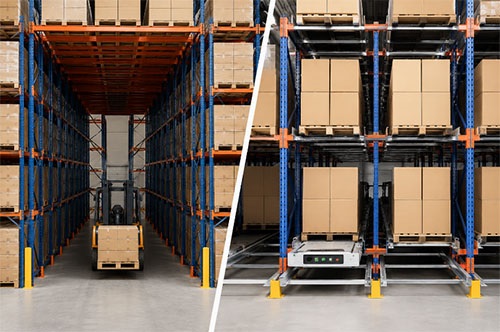


Slow picking speeds lead to delays, increased labor costs, and customer dissatisfaction, while streamlined processes can significantly improve productivity.
This guide explores 10 practical strategies to help you dramatically increase warehouse picking speeds. Whether you manage a small distribution center or a large logistics hub, these tips focus on layout optimization, technology integration, and smart workflows. You can expect throughput increases of 20% to 50%, depending on your specific setup.
Why Warehouse Picking Speed Matters in Today’s Logistics Landscape
Before jumping into the strategies, it’s worth understanding the stakes. Order picking accounts for up to 55% of warehouse labor time, according to recent logistics reports. Inefficiencies here ripple through the entire supply chain, inflating costs and eroding competitiveness. Factors like product variety, order volume, and facility constraints all play a role, but the real game-changer is intentional optimization.
Every movement counts. High-speed picking isn’t about rushing workers—it’s about creating an environment where efficiency flows naturally. From manual tweaks to full automation, the right approach can reduce travel time by 30%, minimize errors, and scale with your business growth.
10 Strategies to Accelerate Warehouse Order Picking
1. Design your warehouse according to logistics needs
A cluttered or poorly planned warehouse is like a traffic jam on the factory floor. Start by mapping your space with a focus on minimizing travel distances and maximizing accessibility. Divide the facility into intuitive zones: high-velocity items near packing stations, slow-movers in deeper storage, and buffer areas for overflow.
Adopting a U-shaped layout reduced picker travel by 25%. Incorporate wide aisles (at least 10 feet for powered equipment) and clear signage to guide movements intuitively.
Pro tip: Use simulation software to test layouts virtually before committing to changes. This foundational step sets the tone for all picking activities, ensuring operators spend less time navigating and more time fulfilling orders.
2. Select Storage Solutions Tailored to Your Inventory Profile
Not all storage is created equal, choosing the wrong system can bottleneck your picking process. Evaluate your SKUs by size, weight, turnover rate, and fragility. For high-density needs like perishables in grocery distribution, consider vertical racking with gravity flow lanes to enable FIFO (first-in, first-out) picking effortlessly.
In contrast, for diverse consumer goods, adjustable shelving offers flexibility. A beverage distributor we studied switched to push-back racking, boosting pick rates by 40% through easier access to multiple depths. Factor in your handling tools,forklifts demand different setups than hand carts,and always prioritize ergonomics to prevent fatigue-related slowdowns. The result? A storage ecosystem that supports rapid retrieval, directly fueling warehouse efficiency.

3. Implement effective picking methods
For low-volume, high-variety orders, wave picking,batching similar items across orders in timed waves,can consolidate trips and cut idle time. In high-volume scenarios, like electronics fulfillment, discrete picking with real-time order routing keeps things focused.
Implementing multi-order picking (toting multiple carts) lifted daily throughput by 35%. Tailor your approach to variables like order complexity and staff count,perhaps zone-based for large teams or discrete for precision work. Training sessions on these techniques ensure adoption, turning potential chaos into coordinated speed.
4. Digitise your warehouse operations
Manual checklists are relics; in 2025, warehouse management systems (WMS) are the backbone of error-free picking. These platforms use algorithms to assign optimal tasks, track inventory in real-time, and even predict surges based on sales data. Integrate with mobile devices for barcode scanning or RFID to verify picks instantly, slashing errors by up to 90%.
A retail giant reported a 28% speed increase after rolling out a cloud-based WMS that syncs with ERP systems. Beyond basics, look for features like voice-directed picking, where hands-free audio cues guide operators—ideal for gloved hands in cold storage. Digitization isn’t just tech; it’s a productivity multiplier that empowers your team to focus on value-added tasks.
5. Configure optimal pick paths
Wasted steps are the silent killer of picking speed. Advanced WMS tools generate dynamic pick paths using AI to calculate the shortest, safest routes, factoring in current traffic and stock locations. This “smart routing” can shave 15-20% off travel time alone.
Instead of zigzagging aisles, pickers follow optimized loops. Enhance this with the Labor Management System (LMS) add-ons, which analyze individual performance and suggest tweaks, like pairing slower routes with lighter loads. In one automotive parts facility, route optimization paired with LMS training yielded a 22% productivity spike. The key? Regular audits to refine paths as inventory shifts.

6. Track picking KPIs
Key performance indicators (KPIs) like lines picked per hour, error rates, and on-time fulfillment provide a dashboard for decisions. Aim for benchmarks: 50-100 lines/hour for manual picking, higher with aids.
Tools like supply chain analytics modules visualize trends, spotting bottlenecks such as peak-hour slowdowns. For instance, a fashion distributor used KPI tracking to redistribute staff during rushes, improving ship rates by 18%. Create a simple table to track progress:
| KPI | Target Benchmark | Current Average | Improvement Goal |
|---|---|---|---|
| Lines Picked/Hour | 75 | 55 | +25% |
| Picking Accuracy | 99% | 96% | 99.5% |
| Order Fulfillment | 98% | 92% | +5% |
7. Plan optimal slotting strategies
Static slotting leads to dynamic problems,products buried deep slow everything down. Periodically reassess locations based on ABC analysis: A-items (fast-movers) at eye level near exits, C-items in the back. Slotting software crunches historical sales, seasonality, and velocity to recommend shifts automatically.
A electronics wholesaler revamped slotting quarterly, relocating 20% of SKUs and boosting pick speed by 32%. Integrate with your WMS for seamless updates, and involve cross-functional teams (sales, ops) for holistic views. This proactive strategy ensures your layout evolves with demand, keeping picking fluid and fast.
8. Implement automated picking systems
Automation doesn’t mean full robots for everyone,start with user-friendly aids like pick-to-light (LED-guided shelves) or vision-assisted picking via smart glasses. These cue exact locations, reducing search time by 50% in tests.
Voice picking, meanwhile, frees hands for heavy lifts, perfect for bulk goods. A food service provider adopted pick-to-light across zones, achieving 45% faster cycles with zero training downtime. Layer these with your existing manual processes for quick wins, scaling to full automation as ROI justifies.
9. Automate internal goods transport
Why make pickers walk miles when tech can deliver? Goods-to-person systems, like automated shuttles or conveyor feeds, bring items directly to stations, cutting travel by 60-70%. Autonomous mobile robots (AMRs) navigate dynamically, using sensors to avoid collisions and adapt to layouts.
In a book distribution center, AMRs handled intra-warehouse moves, freeing pickers for core tasks and lifting output by 40%. Pair with vertical lifts for multi-level access. These innovations not only speed picking but enhance safety, reducing injury risks from repetitive walking.
10. Install automated storage systems
For peak performers, automated storage and retrieval systems (AS/RS) like pallet shuttles or mini-load cranes deliver non-stop access. These handle thousands of retrieves hourly, feeding pick stations via integrated conveyors.
A global retailer installed AS/RS with conveyor networks, surging cycle times by 55% during holidays. Connectivity is crucial,link to your WMS for end-to-end orchestration. While initial costs loom, the long-term savings in labor and space make it a cornerstone for high-volume operations.
A Quick Comparison of Picking Approaches
To illustrate potential gains, here’s a bar chart concept (imagine this rendered in your analytics dashboard):
- Manual Picking: Baseline speed – 40 lines/hour
- With WMS & Routing: +30% uplift – 52 lines/hour
- Semi-Automated Aids: +50% – 60 lines/hour
- Goods-to-Person + AS/RS: +70% – 68 lines/hour
Strategies for faster picking
Mastering warehouse picking speed is about synergy: No single tip works in isolation. Combine layout smarts with digital oversight and targeted automation for transformative results. In an era of just-in-time delivery, these enhancements not only accelerate orders but build resilience against disruptions.
Conclusion
If you’re planning a complete warehouse overhaul, consulting with Aceally, a racking manufacturer, can lead to a customized solution tailored to your unique needs. Ready to boost your operational efficiency? Explore customized solutions today. What’s your first step?