

When evaluating steel pallet racking alongside structural pallet racking, the decision comes down to understanding exactly how your facility operates, the weight of your typical inventory, and the frequency of your forklift traffic. You need a system that withstands daily operational wear while safely supporting your specific load requirements.
This comprehensive guide breaks down the engineering, durability, and load capacity differences between these two primary warehouse storage systems to help you make an informed investment.
Key Takeaways
- Manufacturing Differences: Steel pallet racking is cold-rolled and shaped into profiles, whereas structural pallet racking is hot-rolled into solid C-channel steel.
- Durability: Structural pallet racking systems offer significantly higher resistance to forklift impacts and harsh warehouse conditions compared to standard roll-formed steel pallet racking.
- Load Capacity: Structural pallet racking handles much heavier weight limits, making it the required choice for high-density, extreme-weight inventory.
- Cost Factor: Roll-formed steel pallet racking provides a lower initial capital expenditure, while structural pallet racking options offer higher upfront costs but lower long-term maintenance in heavy-duty applications.
- Suitability: Steel pallet racking suits general warehousing and e-commerce, while structural pallet racking is essential for cold storage, beverage distribution, and heavy manufacturing.
Understanding the Core Manufacturing Processes
Steel Pallet Racking
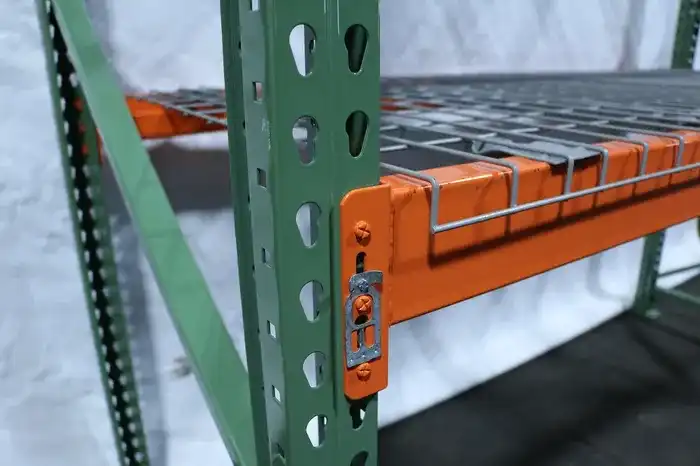
Steel pallet racking, frequently referred to as roll-formed pallet racking, is manufactured through a cold-roll process. Coils of flat sheet steel are fed through a machine at room temperature, which shapes the metal into specific profiles, typically a teardrop or slotted tubular shape.
This process allows the steel to be highly customizable and relatively lightweight. The teardrop design allows you to easily adjust beam levels without the need for specialized hardware, creating a highly adaptable storage environment. However, because it is formed from thinner sheet metal, its structural integrity is inherently different from solid steel beams.
Structural Pallet Racking
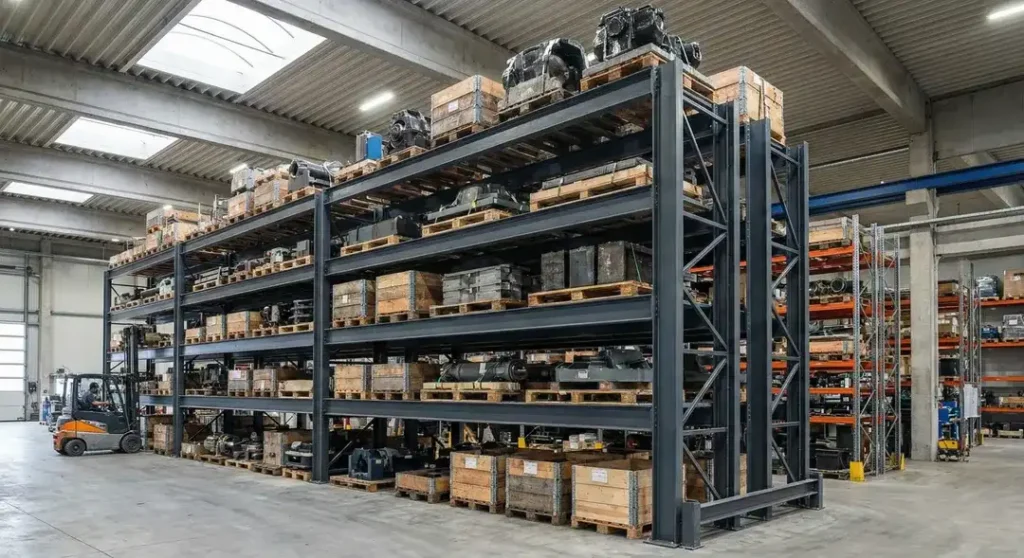
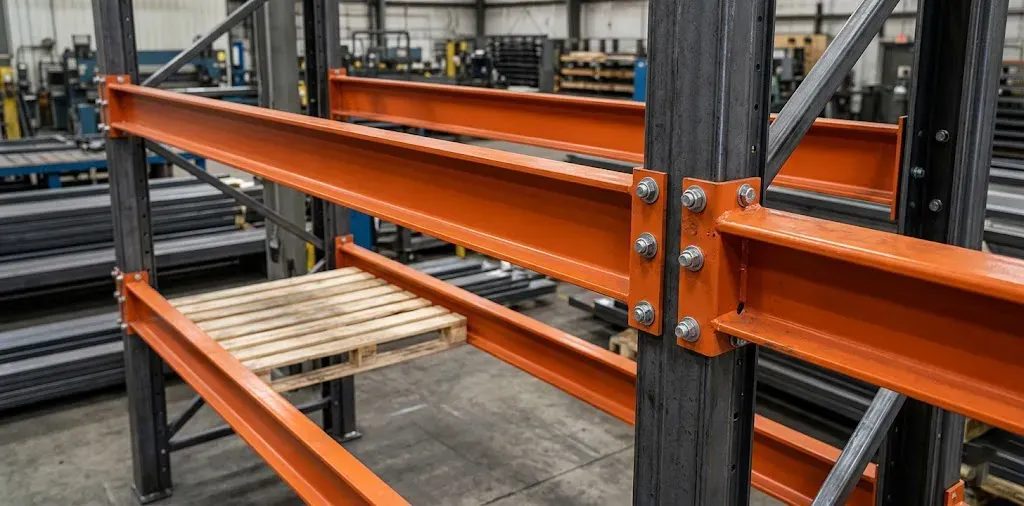
Structural pallet racking is created using a completely different method. It is hot-rolled at a steel mill, where molten steel is continuously extruded into thick, solid C-channel shapes. This process creates a much denser, heavier, and thicker steel component.
Instead of relying on teardrop punch holes and clips, structural pallet racking components are bolted together. High-strength bolts connect the load beams to the upright frames. This rigid connection creates a unified structure that resists twisting and shearing forces far better than clip-in mechanisms.
Pallet Racking Durability in Heavy-Duty Environments
Durability in a warehouse setting primarily translates to how well the pallet racking system can absorb and deflect impact without compromising the safety of the structure.
Impact Resistance in High-Traffic Warehouses
If your facility utilizes heavy forklifts moving at a fast pace, accidental collisions with rack uprights are inevitable. Steel pallet racking is susceptible to denting, bending, or buckling upon significant impact. When a roll-formed pallet racking upright is compromised, the structural integrity of the entire bay is at risk, often requiring immediate unloading and replacement of the damaged section.
Structural pallet racking is engineered specifically for abuse. The thick, hot-rolled steel can withstand severe forklift impacts that would instantly destroy a roll-formed pallet racking upright. The solid C-channel design absorbs the kinetic energy of a collision, minimizing the risk of a catastrophic collapse. For facilities with extremely tight aisles or high-turnover inventory where forklift interaction is constant, the durability of structural pallet racking is a non-negotiable safety requirement.
Maintenance and Long-Term Lifespan
When you factor in maintenance, the durability gap widens. Roll-formed pallet racking systems in high-traffic areas often incur high ongoing maintenance costs due to the need for frequent upright replacements and the installation of aftermarket column protectors.
Structural pallet racking systems require significantly less maintenance. While you should always install heavy-duty guards, the inherent strength of the material means you will spend far less time and money replacing damaged frames. Over a 10-to-20-year operational span, the resilience of structural pallet racking components often offsets their higher initial purchase price.
Structural Pallet Racking Load Capacity vs Steel Pallet Racking
Load capacity is the most critical metric when designing your warehouse layout. Overloading a rack system leads to immediate safety hazards.
Weight Distribution and Limit Thresholds
Steel pallet racking is highly capable for general retail, e-commerce, and lightweight manufacturing. Depending on the gauge of the steel and the profile design, a standard roll-formed pallet racking upright frame can typically support between 15,000 to 40,000 pounds.
Structural pallet racking is designed for extreme loads. The solid steel construction and bolted connections allow these systems to routinely support upwards of 50,000 to 100,000 pounds per upright frame. The bolted beams create a stiffer moment connection, meaning the weight is distributed more efficiently down the column to the concrete slab.
| Feature/Metric | Steel Pallet Racking | Structural Pallet Racking |
| Manufacturing Method | Cold-rolled sheet metal | Hot-rolled solid C-channel |
| Connection Type | Teardrop / Rivet (Clip-in) | Heavy-duty bolted connections |
| Average Frame Capacity | 15,000 – 40,000 lbs | 50,000 – 100,000+ lbs |
| Forklift Impact Resistance | Low to Moderate | Extremely High |
| Adjustability | High (Quick to reconfigure) | Moderate (Requires unbolting) |
| Best Suited For | E-commerce, 3PL, general retail | Cold storage, heavy manufacturing |

Cold Storage and Seismic Zones
You must also consider environmental stressors on load capacity. In freezing temperatures, such as cold storage or freezer facilities, standard thin-gauge steel can become brittle and more susceptible to failure upon impact. Structural pallet racking is the industry standard for cold storage because its thick mass retains its integrity and impact resistance even in sub-zero environments.
Furthermore, if your facility is located in a high seismic zone, the rigid bolted connections of structural pallet racking systems offer superior resistance to lateral forces caused by earthquakes, keeping your heavy loads secure when the ground shifts.
Which type of shelving to choose
Choosing between the two depends entirely on what you are storing and how quickly you move it. If your inventory consists of standard pallets of consumer goods, electronics, or clothing, steel pallet racking provides the necessary load capacity while keeping your capital expenditure low. It gives you the flexibility to easily adjust beam heights as your SKU profiles change seasonally.
Conversely, if you are storing heavy engine blocks, bulk liquids, raw building materials, or dense food and beverage products, you must utilize structural pallet racking. The risk of a roll-formed pallet racking system failing under the immense static weight of these goods is too high.
As you finalize your heavy-duty storage infrastructure, it is also highly beneficial to look into comprehensive warehouse safety protocols. Implementing routine damage assessments directly ties into maintaining the load capacities discussed here. For further guidance on maintaining an incident-free environment, you might consider exploring how to establish a daily pallet racking inspection checklist to protect your workforce.
Conclusion
Whether your operational data points toward the adaptable efficiency of standard steel pallet racking or the uncompromising brute strength of structural pallet racking components, you need a partner who understands the strict engineering tolerances required for your specific industry.
As a premier pallet racking manufacturer, Aceally engineers both high-grade roll-formed pallet racking and heavy-duty structural pallet racking systems tailored to your exact facility dimensions and load requirements. We oversee the entire process, from metallurgical quality control in our factory to final capacity engineering, ensuring your warehouse operates at peak efficiency. Contact our engineering team today to schedule a comprehensive structural analysis of your warehouse and let us help you build a safer, more profitable storage environment.
Frequently Asked Questions (FAQ)
What is the difference between roll-formed pallet racking and structural pallet racking?
Roll-formed pallet racking is made by cold-rolling flat steel into tubular shapes and uses clip-in connections. Structural pallet racking is manufactured from hot-rolled solid C-channel steel and uses bolted connections, making it significantly heavier and more resistant to impact.
How much weight can a structural pallet racking system hold?
Structural pallet racking uprights can safely support load capacities ranging from 50,000 to over 100,000 pounds, depending on the specific engineering, beam spacing, and the structural integrity of the concrete floor slab.
Is structural pallet racking more expensive than standard steel pallet racking?
Yes, structural pallet racking has a higher initial upfront cost because it utilizes more raw steel and requires a more labor-intensive manufacturing and installation process. However, it often results in lower long-term maintenance costs in heavy-duty environments.
Why is structural pallet racking better for cold storage environments?
In sub-zero temperatures, standard thin-gauge steel can become brittle, increasing the risk of collapse if hit by a forklift. The thick, dense mass of structural hot-rolled steel maintains its impact resistance and structural integrity in extreme cold.
Can you mix structural pallet racking and roll-formed pallet racking in the same warehouse?
Yes, many warehouses use a hybrid approach. It is common to install structural pallet racking in high-traffic, heavy-impact lower levels or end-caps, while using standard roll-formed steel pallet racking for the higher, lighter-load elevation levels to optimize costs.