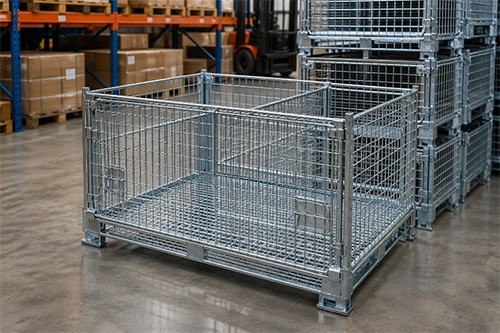


I. Why Slotted Angle Shelving Is Important in Industrial Warehousing
Slotted angle shelving—a modular, heavy-duty storage solution—is revolutionizing the way everything from garage tools to warehouse inventory is organized. With a 50% higher load capacity than wire shelving and unmatched customization, it’s the top choice for durability and flexibility. In this guide, you’ll learn:
- How to maximize space with adjustable designs.
- Cost-saving DIY assembly tricks.
- Safety protocols for heavy loads.
- Pro tips for commercial and home use.
II. What is Slotted Angle Shelving?
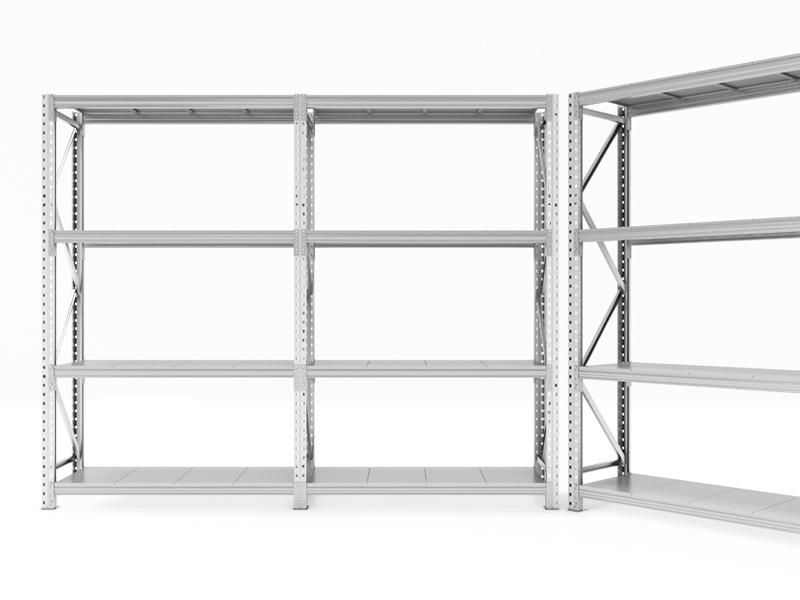
Slotted angle shelving consists of pre-punched steel angles (uprights and beams) that bolt together, supporting wooden, metal, or particle board shelves.
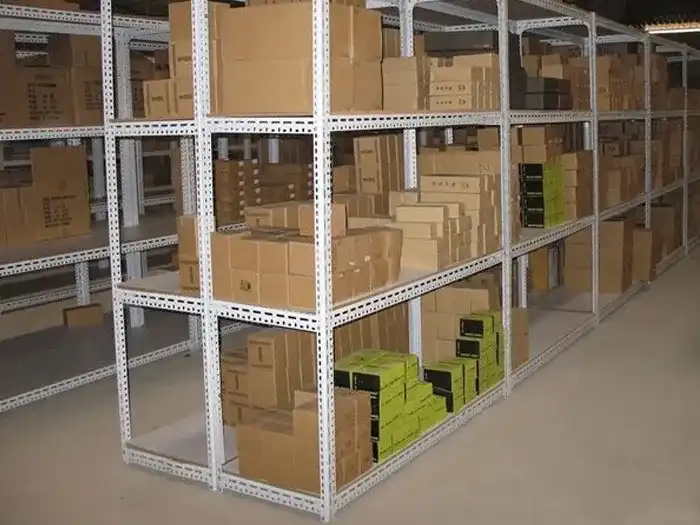
Key components:
- Uprights: Vertical posts with slots for height adjustment.
- Beams: Horizontal bars slotting into uprights.
- Shelves: Custom-cut boards (e.g., plywood) or steel panels.
- Hardware: Bolts, nuts, and braces for stability.
Takeaway: A modular system offering infinite reconfiguration—no welding needed.
III. Top 5 Benefits
✅ Durability
- Supports 1,000–5,000 lbs per shelf (vs. 300 lbs for plastic units).
- Powder-coated steel resists rust, chemicals, and impacts.
✅ Customization
- Adjust shelf spacing in 1-inch increments for odd-sized items.
✅ Cost-Effective
- Start small; expand later. A 4-tier unit costs under $300 (materials only).
✅ Easy Assembly
- Assemble in under 2 hours with basic tools (wrench, rubber mallet).
✅ Space Efficiency
- Use vertical dead space (e.g., garage ceilings, narrow corners).
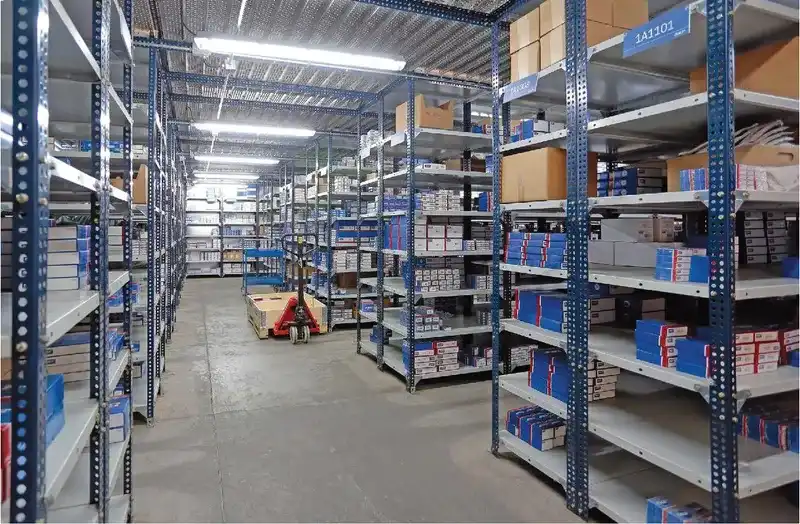
IV. Slotted Angle Shelving Applications
| Setting | Use Case | Recommended Setup |
|---|---|---|
| Garages | Storing tools, tires, bins | 18″ deep shelves; 72″ height |
| Warehouses | Pallet storage, bulk inventory | Steel shelves; 5,000-lb capacity |
| Retail | Backstock, display units | 24″ depth |
| Home Workshops | DIY projects, paint supplies | Adjustable tiers; pegboard backs |
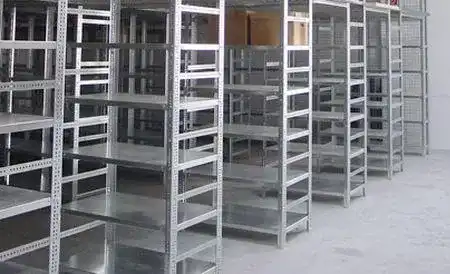
V. Choosing Your System: 4 Critical Factors
① Load Capacity Needs
- Light-Duty (500–1,000 lbs): Home/office use.
- Heavy-Duty (2,000–5,000 lbs): Industrial machinery storage.
② Material Choices
- Steel: Best for warehouses (resists bending).
- Aluminum: Lightweight for mobile units.
③ Dimensions
- Standard depths: 12″, 18″, 24″, 36″.
- Height: 48″–84″ (taller units need cross-bracing).
④ Accessories
- Casters for mobility.
- Dividers or bin rails for small parts.
Takeaway: Match shelf depth to your largest item (e.g., storage bins).
VI. DIY Assembly in 6 Simple Steps
Tools Needed: Wrench, level, measuring tape, rubber mallet.
- Layout Components: Sort uprights, beams, shelves, bolts.
- Attach Base Plates: Secure to floor for stability.
- Connect Uprights: Bolt vertical posts to base plates.
- Insert Beams: Slide into slots at desired heights.
- Add Shelves: Place boards/panels onto beams.
- Reinforce: Install diagonal braces for heavy loads.
⚠️ Safety First: Wear gloves and goggles. Never exceed weight limits!
VII. Maintenance & Safety Checklist
- Monthly: Tighten bolts; check for rust.
- Annually: Reload shelves evenly; inspect for cracks.
- Danger Zones:
- ❌ Overloading beyond capacity.
- ❌ Shelves > 36″ deep without center supports.
- ❌ Ignoring wall anchoring in seismic zones.
VIII. Conclusion
Slotted angle shelving merges industrial strength. Whether storing car parts or warehouse inventory, its adaptability saves space, money, and time.
This isn’t just shelving—it’s a long-term investment in efficiency.