


Inventory management is very similar to managing a kitchen. Ingredients are constantly moving in and out, while shelf space is limited, requiring everything to be arranged efficiently. In logistics and inventory management, how products are stacked determines efficiency, cost, and sometimes even tax burden.
You may have heard of the term Last-In, First-Out (LIFO). But what exactly is it? Is it merely an accounting technique, or a practical storage strategy?
If you’re struggling to increase storage density, understanding LIFO is essential. In this guide, we’ll explore the concept of LIFO from a practical perspective.
What is the LIFO Method?
The core of LIFO is: the last item put into inventory is the first item taken out.
LIFO is an inventory management system ideally suited for goods with long shelf lives and large inventory volumes. The LIFO method allows for more efficient stacking of goods, resulting in a faster and more economical process.
In a business context, LIFO applies in two distinct ways: Physical Warehousing and Financial Accounting.

Physical LIFO (Warehouse Operations)
In the warehouse, LIFO is a storage strategy. It dictates how forklifts interact with racking systems. Drivers load goods into a lane and retrieve them from that same entry point. The newest pallet blocks access to the older pallets behind it. This is strictly about logistics and space optimization.
Financial LIFO (Accounting)
In accounting, the LIFO method assumes that the costs of the most recent products purchased (which are usually higher due to inflation) are the first to be expensed as Cost of Goods Sold (COGS). This lowers your reported profit and, consequently, your taxable income.
Types of LIFO Storage Systems
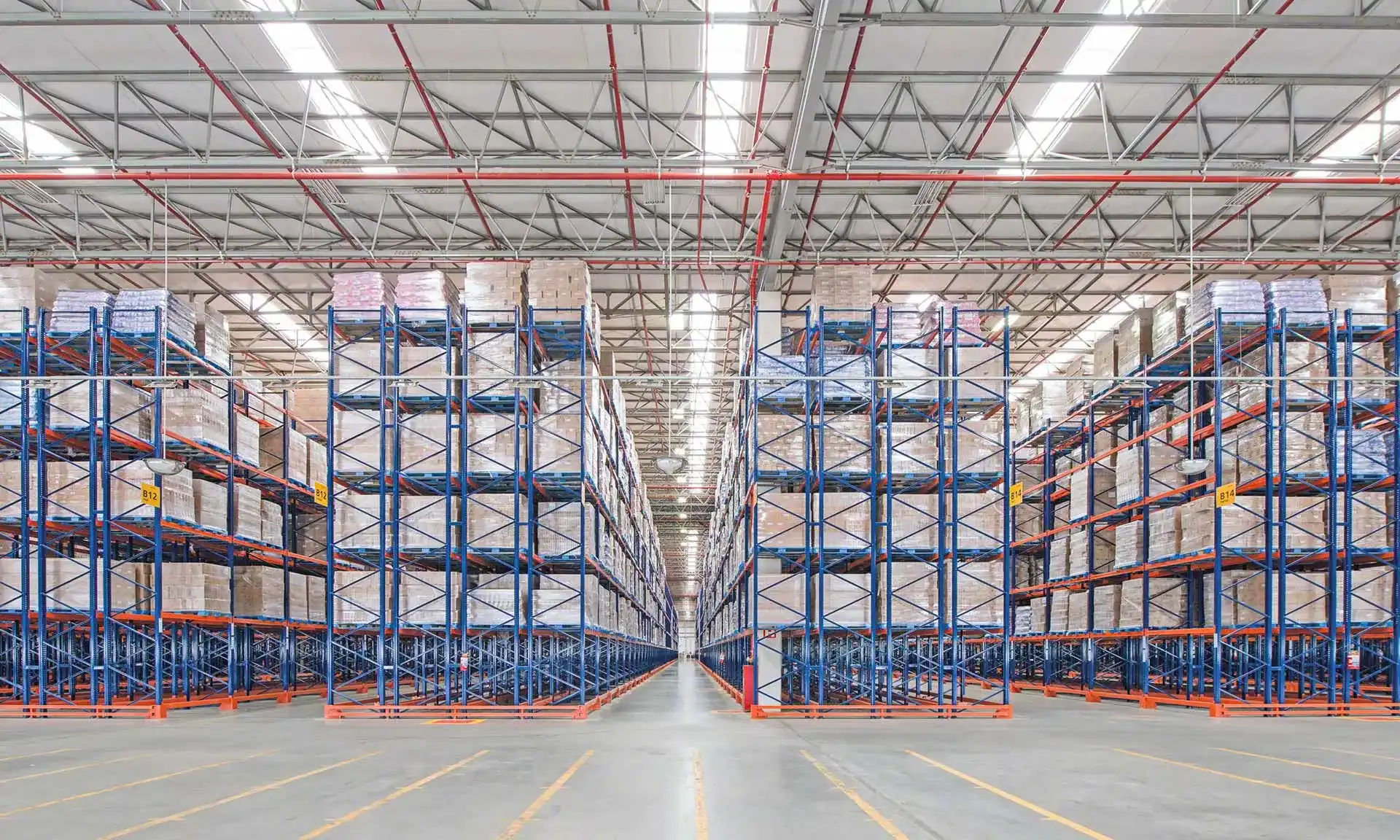
If you decide that a Last-In, First-Out approach suits your inventory, You need the right infrastructure. LIFO storage systems are designed to maximize storage density, allowing you to store more pallets in less space by eliminating unnecessary aisles.
1. Push-Back Racking Systems
This is the standard for LIFO storage. Push-back racking uses a system of nested carts on inclined rails.
How it works: When a forklift driver places a pallet onto the rack, they place it on the top cart. When the next pallet comes in, the driver uses that pallet to “push back” the first one, exposing a second cart. When you remove the front pallet, gravity takes over, and the rear pallets gently roll forward to the pick face.
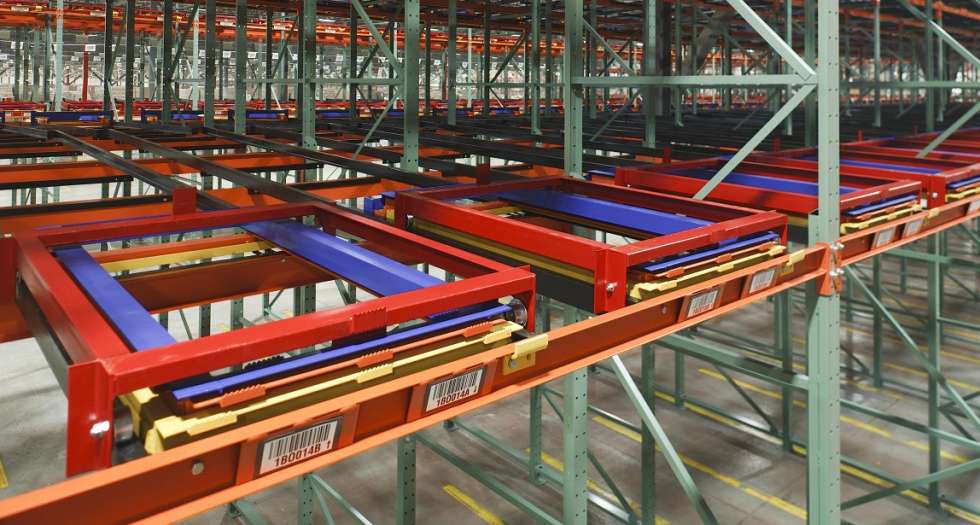
Why choose it? It offers a great balance between density and selectivity. You can typically store 2 to 6 pallets deep. It is faster than drive-in racking because the forklift stays in the aisle.
2. Drive-In Racking
If maximizing every cubic inch of your warehouse is your goal, drive-in racking is a heavy hitter.
How it works: Unlike standard selective racking where you load from an aisle, drive-in racking requires the forklift to physically enter the rack structure. The racks are essentially long lanes with rails on the side to hold the pallets. You fill the lane from back to front. To get to the pallet at the back, you must remove everything in front of it.
Why choose it? It eliminates aisles almost entirely. It is perfect for storing huge quantities of the same SKU (Stock Keeping Unit). However, it requires skilled forklift drivers to avoid damaging the uprights.
3. Double Deep Racking
This is a simpler, lower-cost entry into LIFO storage.
How it works: Standard selective racking is one pallet deep. Double deep is, unsurprisingly, two pallets deep. You need a specialized forklift with a literal “reach” mechanism (like a pantograph) to grab the rear pallet.
Why choose it? It increases your storage capacity by as much as 50% compared to standard racking without the high investment cost of push-back systems.
When to Use the LIFO Method?
The LIFO method is not for everyone. It is a strategic choice that works brilliantly in specific scenarios and fails miserably in others.Here is when you should consider implementing LIFO in your operations:
1. You Have Non-Perishable Goods
If your products have an expiration date, do not use LIFO. You will end up with spoiled stock at the back of your racks.
LIFO is ideal for:
- Building materials (bricks, lumber, stone).
- Hardware and tools.
- Coal, sand, or gravel.
- Plastic commodities.
These items do not lose value or spoil over time. A brick made six months ago is just as good as a brick made yesterday.
2. You Have High-Volume, Homogenous Inventory
If your warehouse stores 500 pallets of the exact same product (e.g., Red Widget Model X), LIFO is perfect. Since every item is identical, it doesn’t matter which specific box you ship to the customer. You just need a box. LIFO allows you to pack these identical items densely.
3. Space is Your Biggest Constraint
Real estate is expensive. If your warehouse is bursting at the seams and you cannot afford to move to a bigger facility, switching to a high-density LIFO system (like Drive-In or Push-Back) can increase your storage capacity by 30% to 75% by removing aisles.
4. Inventory Rotation Isn’t Critical
In some industries, “stock rotation” is just a buzzword that adds labor costs without adding value. If your product doesn’t age, rotating it is a waste of time and forklift fuel. LIFO lets you ignore rotation and focus on speed.
Advantages of LIFO Storage

- High-Density Storage Optimization
The most immediate physical benefit is space utilization. Standard FIFO (First-In, First-Out) systems usually require an aisle between every rack so you can access both sides. LIFO systems, like drive-in racking, allow you to butt racks against a wall or back-to-back. You are storing product, not air. - Increased Productivity
In a properly designed LIFO system (specifically Push-Back or Double Deep), the forklift driver loads and unloads from the same aisle. They don’t have to drive around the block to the back of the rack to load and then drive to the front to pick. This reduction in travel time adds up to significant labor savings over a year. - Lower Equipment Maintenance
Less travel time means less wear and tear on your forklifts. While it seems minor, reducing the mileage on your material handling equipment extends its lifespan and reduces battery charging or fuel intervals. - Potential Tax Benefits (The Financial Angle)
While this article focuses on storage, we must mention the accounting advantage. In an economy with rising prices (inflation), the LIFO method allows you to report lower profits because you are “selling” your most expensive inventory first. Lower reported profit means a lower tax liability.
Note: This is highly dependent on your country’s tax laws (e.g., allowed in the USA under GAAP, but generally banned under IFRS).
Disadvantages of LIFO Storage
Despite the efficiency gains, LIFO is not a magic bullet. It comes with significant risks that can hurt your bottom line if not managed correctly.
- The Risk of Obsolescence
This is the biggest danger. The inventory at the back of the rack (the “First In”) might sit there for months, or even years. If you change packaging, or if the product design updates, that old stock becomes “dead stock.” You might end up with a “honeycombing” effect where old product occupies valuable slots but can’t be sold. - Not Suitable for Perishables
This cannot be stressed enough. If you deal in food, beverages, pharmaceuticals, or chemicals with a shelf life, LIFO is dangerous. You run the risk of sending out fresh product while the old product rots at the back of the rack. For these industries, FIFO (First-In, First-Out) is mandatory. - Reduced Selectivity
In a standard selective rack, you have 100% selectivity—you can grab any pallet you want. In a LIFO system like Drive-In racking, your selectivity might drop to 20% or less. If a customer orders a specific batch number that is buried three pallets deep, your team has to move three pallets to get to it. This is called “double handling,” and it kills productivity. - Forklift Operator Skill Requirements
Systems like Drive-In racking require skilled operators. Driving a heavy forklift inside a narrow rack tunnel requires precision. Rack damage is more common in these systems than in standard layouts, which can lead to safety hazards and repair costs.
Conclusion
The LIFO method is a powerful tool in the arsenal of inventory management, but it is a double-edged sword. It prioritizes density and current-cost accounting over stock rotation and product aging.
If you are managing a warehouse full of non-perishable, high-volume goods like raw materials or hardware, LIFO storage systems like push-back or drive-in racking can revolutionize your space efficiency. You will store more product in less space and potentially lower your operational costs.
However, if your inventory has a shelf life, or if your product lines change frequently, the LIFO method could lead to obsolete stock and operational headaches.
Before you invest in new racking or change your accounting practices, look at your data. Analyze your SKU velocity and the nature of your goods. The best inventory method is the one that aligns with your specific business goals, not just the one that saves the most floor space.
FAQ
Q1. What is the main difference between FIFO and LIFO?
The main difference lies in the order of processing. FIFO (First-In, First-Out) moves the oldest stock first, ensuring rotation (great for food). LIFO (Last-In, First-Out) moves the newest stock first, prioritizing storage density and potential tax benefits (great for non-perishables).
Q2. Can I use the LIFO method for food storage?
Generally, no. Using LIFO for food increases the risk that items will expire before they are shipped. Food warehouses almost exclusively use FIFO (or FEFO – First Expired, First Out) to maintain freshness.
Q3. Is the LIFO method legal for accounting?
It depends on where you are located. In the United States, LIFO is permitted under GAAP (Generally Accepted Accounting Principles). However, international accounting standards (IFRS) strictly prohibit the use of LIFO. You must consult with a CPA or tax professional in your jurisdiction.
Q4. Does LIFO storage save money?
Yes, in two ways. First, it reduces warehousing costs by maximizing storage density (less rent per pallet). Second, in inflationary markets, the accounting application of LIFO can reduce tax liabilities by matching high current costs against revenue.
Q5. What racking system is best for LIFO?
Push-back racking is often considered the best balance. It offers high density (LIFO) but allows for better access and speed compared to drive-in racking. However, if cost is the primary concern, drive-in racking or double-deep racking are cheaper alternatives.


