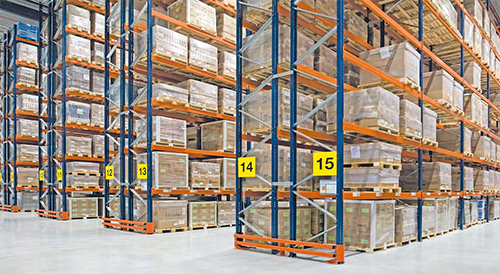


You aren’t just looking for “compliance” to tick a box; you are looking to protect your people and your bottom line. Whether you are following OSHA requirements for warehouse racking or International Safety Codes, the logic is the same: preventative maintenance is always cheaper than emergency repairs.
This guide breaks down exactly how to manage your racking inspections using the industry-standard “Three-Tiered” approach, ensuring your facility runs.
Key Takeaways
- Three-Tier Defense: Implement the standard Immediate (Staff), Regular (Supervisor), and Expert (Annual) inspection protocol.
- The “Traffic Light” System: Learn to categorize risk into Green (Surveillance), Amber (Repair Soon), and Red (Immediate Offload).
- Prevent vs. Repair: Routine inspections can reduce long-term maintenance costs by up to 20% by catching stress fractures early.
- Manufacturer Insight: Why “technically competent” engineers (like ours) spot metallurgical issues that general safety inspectors miss.
- Zero Tolerance: Understand why missing safety clips or loose anchors are non-negotiable fixes.
Stay on Top of Your Racking Inspection
Why should you care about a dent that’s barely visible? Because in the world of high-density storage, structural integrity is binary: it works, or it fails.
Most warehouse managers I talk to underestimate the daily stress their racks endure. We aren’t just talking about the obvious forklift collisions. We are talking about the silent stressors: pallet loads shifting over time, floor slab settling, or even the vibration from nearby heavy machinery.
When we designed our heavy-duty pallet racks using Q235B and Q355B high-tensile steel, we engineered them to handle specific static loads. However, once a column is bent, its load-bearing capacity doesn’t just drop linearly—it plummets.
Here is the reality based on data we’ve analyzed from hundreds of client sites:
- ROI on Safety: Regular inspections allow you to replace a single upright leg rather than an entire bay frame. This targeted maintenance of storage racks approach helps our clients reduce their annual MRO (Maintenance, Repair, and Operations) budget by roughly 20-30%.
- The “Domino Effect”: A single compromised upright can reduce the load-bearing capacity of an entire bay by 40%, putting adjacent racks at risk of a progressive collapse.
Immediate Warehouse Racking Inspection
This is your first line of defense. It implies a culture of safety, not just a procedure. It relies on the people who know your warehouse best: your forklift operators and warehouse staff.
They are the ones on the floor 8 hours a day. They are the ones who hear the “crunch” when a pallet hits a frame. The goal here is to encourage immediate reporting without fear of reprimand.
What your staff must look for daily:
[lr_layout image=”/wp-content/uploads/2026/01/Damaged-Racking-Upright-Column-Impact.webp” alt=”Damaged-Racking-Upright-Column-Impact”]
- Impact Damage: Any visible dents, twists, or buckles on the uprights and bracing. Pay special attention to the bottom 3 feet (1 meter) of the rack, which is the “impact zone.”
- Missing Safety Clips: Beam connectors (safety pins) prevent beams from being accidentally dislodged by an upward force from a forklift. If a beam has no clip, it is unsafe. Period.
- Floor Anchors: Are the bolts tight? Is the concrete cracked? A loose anchor means the rack has lost its seismic and impact resistance.
- Debris & Obstructions: Pallet fragments or shrink wrap obstructing the flue space or base plates can hide structural damage.
We advise our clients to install Rack End Protectors and Column Guards. In our own impact testing labs, we found that these simple additions absorb over 85% of the kinetic energy from low-speed forklift impacts, preserving the structural integrity of the uprights behind them.
Regular Warehouse Racking Inspection
While immediate checks are reactive, regular inspections are proactive. These should be conducted weekly or monthly by a nominated Person Responsible for Racking Safety (PRRS).
This isn’t a casual walk-through. This is a documented audit. At Aceally, when we train client teams, we emphasize using a standardized checklist. You need to be measuring, not just looking.
The Weekly/Monthly Technical Checklist:
- Verticality Check (The Plumb Test): Use a level or a laser line. The general tolerance for an upright lean is 1/200 of its height.
- Example: For a 20-foot (6000mm) upright, the maximum safe lean is roughly 1.2 inches (30mm). Anything beyond this places critical stress on the beam connectors.
- Beam Deflection Analysis: Under full load, a beam will naturally bow slightly. However, the maximum allowable deflection is 1/200 of the beam length.
- Real-world Test: If you see a “smile” (permanent deformation) in the beam even when the pallets are removed, the steel has yielded (passed its elastic limit). It must be replaced.
- Detailed Connector Inspection: Check for hairline cracks in the welds between the beam and the connector claws. This is common in warehouses that frequently overload their racks.

we recently audited a high-density VNA (Very Narrow Aisle) warehouse for an auto parts distributor. Their internal team conducted visual checks but lacked precision tools. By using laser verticality sensors, we identified that 15% of their uprights in the heavy-load zone had a lean of over 1 inch (25mm) caused by floor slab settling—an invisible structural risk that could have triggered a progressive collapse under their 2-ton pallet loads.
Expert Warehouse Racking Inspection
Industry standards and insurance policies typically require an Expert Inspection at least once every 12 months. This must be conducted by a “technically competent person.”
Why is this different from your weekly check? Because an expert looks at the System, not just the components. This uses the industry-standard Traffic Light System to classify risk.
The Traffic Light Risk Classification:
🟢 Green (Surveillance): Damage is within allowable limits (e.g., a dent less than 3mm on a specific gauge steel).
- Action: No immediate repair needed. Record the location and monitor it during future inspections to ensure it doesn’t worsen.
🟡 Amber (Action Required): Damage exceeds safe limits but is not critical. The safety factor is reduced, but the rack can still hold its current load temporarily.
- Action: Isolate the bay. No new loads can be placed here. You have roughly 4 weeks to repair or replace the damaged component. If ignored, it becomes a Red risk.
🔴 Red (Critical Risk): Severe structural damage. The upright is buckled, split, or the beam is detached.
- Action: Immediate Offload. Cordone off the area immediately. Do not use under any circumstances until the component is replaced.
Why Trust a Direct Warehouse Racking Manufacturer for Audits?
[lr_layout image=”/wp-content/uploads/2026/01/Pallet-Racking-Manufacturing-Factory-Steel-Process.webp” alt=”Pallet-Racking-Manufacturing-Factory-Steel-Process”] Unlike general safety consultants, as a dedicated Warehouse Racking Manufacturer processing thousands of tons of Q235B steel annually, we understand the metallurgy behind the system. A generic inspector might see a dent; but as a direct factory, we analyze how that dent affects the tensile strength of the cold-rolled steel profile. We know exactly when a 3mm deflection becomes a failure point because we’ve tested these scenarios in our own QC labs. [/lr_layout]Full Service From Aceally
Inspections are useless if you don’t have a concrete plan to fix the problems found. This is where Aceally steps in—not just as a vendor, but as a strategic partner.Our journey started 18 years ago as a humble OEM processing facility. Today, having served clients in over 60 countries and holding multiple patents in racking structural design, we offer a “Close the Loop” service.
1. Custom Fabrication & Replacement Many warehouses use older racking systems where the original manufacturer has gone out of business. As a specialized Heavy-Duty Racking Factory, we control the entire production chain, we can reverse-engineer and fabricate compatible replacement beams and uprights for your existing system, saving you the cost of a full overhaul.
2. Load Capacity Recalculation Changed your inventory mix? If you are moving from storing light consumer goods to heavy automotive parts, your old load notices are invalid.
- Our Solution: Our engineering team uses CAD simulations to recalculate your system’s Safe Working Load (SWL). We then issue updated, certified Load Notice signs to keep you compliant.
3. Installation, Repair & Verification We don’t just ship steel; we ensure it stands up. Our installation teams follow strict protocols:
- Laser Leveling: Ensuring base plates are perfectly level to prevent future leaning.
- Torque Verification: Every anchor bolt is torqued to spec.
- Final Audit: We perform a final “Green Light” inspection before handing the site back to you.
Ready to secure your warehouse? Don’t wait for a beam to buckle. Contact Us for a comprehensive racking assessment or to discuss upgrading your safety protocols with our heavy-duty solutions.