

For growing companies, this process is often overwhelming. You have to balance competing priorities: being close enough to customers to offer competitive shipping speeds, while staying far enough away from prime real estate zones to keep overheads manageable. It is a complex puzzle involving geography, economics, and human resources.
This guide moves beyond the basics to explore the deep strategic criteria you need to evaluate to ensure your new facility supports your business goals for the next decade.
Key Takeaways
- Proximity to Market: Balancing delivery speed with inventory placement.
- Labor Availability: Assessing workforce skills, wages, and competition.
- Transportation Access: Connectivity to highways, ports, and intermodal rails.
- Real Estate Costs: Analyzing lease rates versus total cost of occupancy.
- Tax Incentives: Leveraging government programs to offset startup costs.
- Building Suitability: Ensuring the facility specs match your operational flow.
- Risk Mitigation: Evaluating environmental hazards and zoning laws.
1. Proximity to Customers and Suppliers
This reality makes proximity to your customer base the single most influential factor when choosing a warehouse location. If your warehouse is located hundreds of miles from your core market, you are essentially paying a distance tax on every single shipment that leaves your dock.
However, simply being close isn’t enough. You need to analyze your customer density data to find the geographic center of gravity for your network. For many businesses, this involves a trade-off. Locating right in the heart of a major metropolitan area puts you minutes away from customers but comes with exorbitant rent and traffic congestion. A smarter approach often involves selecting a site in a secondary market, essentially a hub location that sits on the periphery of major cities. This allows you to service high-density areas with next-day ground shipping without paying downtown premium lease rates.
You must also consider the inbound side of the equation. If you rely heavily on raw materials or imported goods, distancing yourself too far from your suppliers or ports can skyrocket your inbound freight costs. The goal is to find the sweet spot that minimizes the total miles traveled for both inbound supply and outbound distribution.
2. Transportation Infrastructure and Accessibility
A warehouse is only as good as the roads that lead to it. You could have a state-of-the-art facility, but if trucks have to navigate narrow backroads or sit in gridlock traffic for hours to reach the interstate, your efficiency metrics will crumble. When evaluating a potential site, you need to audit the transportation infrastructure with a critical eye.

| Transport Mode | Priority Level | Key Site Attribute to Verify |
| Highway / Truckload | Critical | Direct access to Interstate on-ramps without navigating residential zones. |
| Intermodal Rail | High | Proximity to rail yards to reduce drayage costs for heavy/bulk goods. |
| Maritime Port | Medium/High | Distance to container terminals helps avoid detention and demurrage fees. |
| Air Cargo | Specialized | Within 60 minutes of a major international airport for time-critical electronics or pharma. |
3. Labor Availability and Workforce Demographics
Real estate is often the first thing companies look at, but labor is usually the bigger line item on the P&L. You can fix a building, but you cannot fix a broken local labor market. When choosing a warehouse location, you are investing in the community’s workforce. You need to ensure that the area has a sustainable pool of blue-collar talent to staff your operations, not just for today, but for future growth.
Low unemployment rates in a region might sound like a positive economic indicator, but for a warehouse operator, they can signal danger. A tight labor market means you will struggle to fill positions for forklift operators, pickers, and inventory clerks. You may find yourself in a bidding war with neighboring facilities, constantly raising wages just to retain staff. Conversely, an area with slightly higher unemployment might offer a deeper, more eager talent pool.
It is also vital to look at the skill depth of the area. Does the local workforce have experience in modern logistics? If you are deploying advanced automation or robotics, you will need technicians and skilled operators, not just general laborers. Investigating local technical colleges and training programs can give you insight into the long-term pipeline of skilled workers in the region.
4. Total Occupancy Costs and Economic Incentives
There is a significant difference between the lease rate and the total cost of occupancy. Many decision-makers get fixated on the base rent per square foot—for example, seeing $6.00 psf vs. $7.00 psf—and assume the cheaper option is the winner. This is a dangerous oversimplification. You must look at the complete financial picture, which includes taxes, insurance, utilities, and maintenance (often bundled as NNN or triple net charges).
In some states, inventory taxes can be a dealbreaker. Some jurisdictions tax the value of the inventory sitting in your warehouse effectively penalizing you for holding stock. Others have no inventory tax at all. This single factor can outweigh the difference in base rent. Similarly, utility costs for lighting, heating, and cooling a massive industrial space can vary wildly depending on the local energy provider and climate.
This is where government incentives come into play. Local economic development councils are often eager to attract logistics businesses because of the jobs they create. You should aggressively inquire about tax abatements, job creation grants, and fee waivers. These incentives are not just nice to have; they are substantial financial tools that can offset your moving costs and capital expenditures during the first few years of operation.
5. Building Suitability and Expansion Potential
You also need to think about the future. One of the most common mistakes companies make is selecting a facility that fits their current needs perfectly but leaves no room for growth. Moving a warehouse is incredibly expensive and disruptive. Ideally, you want a site that offers scalability—either the ability to knock down a wall and expand into an adjacent unit or a site with extra land where you can build an addition.
Optimizing Warehouse Workflow: From Loading Dock to High-Bay Racking
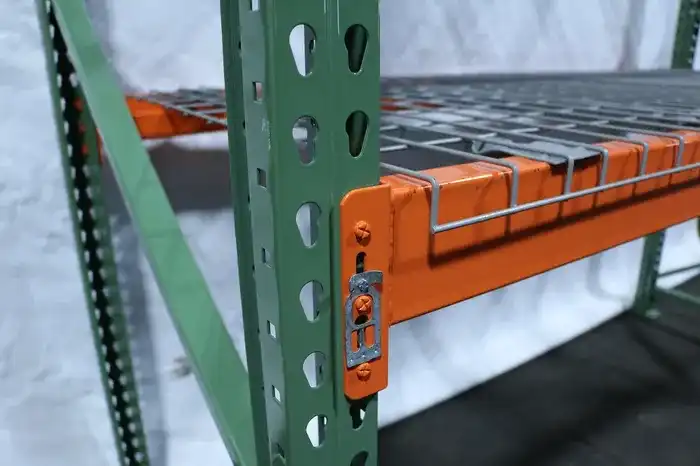
Check the column spacing as well. Odd column placements can ruin your racking layout and create dead zones where forklifts can’t maneuver safely. Inspect the number of dock doors; a low ratio of docks to square footage can create bottlenecks during peak shipping seasons, leaving trucks idling in the yard while they wait for a door to open.

6. Regulatory Environment and Risk Factors
Every location comes with its own set of rules and risks. Zoning regulations are the most immediate hurdle. You need to verify that the property is zoned for your specific type of operation. Some industrial zones permit general storage but prohibit light assembly, kitting, or the storage of hazardous materials. Never assume that because a building looks like a warehouse, you can legally do whatever you want inside it.
Beyond regulations, you must assess environmental risks. Supply chain resilience is a hot topic for a reason. Is the prospective site located in a flood zone? Is it in an area prone to hurricanes, tornadoes, or wildfires? While you can buy insurance to cover financial losses, insurance cannot replace the reputation damage caused when you miss deliveries for two weeks because your warehouse is underwater. Analyzing historical weather data and geological risks is a necessary step in your due diligence process to ensure business continuity.
7. The Competitive Landscape and Saturation
Finally, take a hard look at who your neighbors would be. There is a concept in logistics called clustering, where similar businesses group together. There are advantages to this: the roads are built for trucks, and support services (like pallet vendors and equipment repair) are likely nearby. However, there is a tipping point where a cluster becomes saturated.
If you move next door to a massive fulfillment center run by a retail giant, you are walking into a difficult labor battle. They often have the resources to offer signing bonuses and wages that smaller or mid-sized operations cannot match, draining the local talent pool. You want to be in a location that supports industrial activity but isn’t so overcrowded that you are fighting for every inch of road space and every available worker.
How to Compare Warehouse Locations
The process of choosing a warehouse location is a balancing act between cost, speed, and risk. It requires you to look beyond the brochure and dig into the data. By systematically evaluating these seven criteria—from the commute times of your future workforce to the stability of the local tax code—you can identify a location that doesn’t just store your inventory, but actively accelerates your business growth.
This is not a decision to be rushed. Take the time to model different scenarios. Compare the total landed costs of a rural site versus an urban one. The effort you put into this analysis now will pay dividends in operational efficiency for years to come.

Frequently Asked Questions
What are the primary factors to consider when choosing a warehouse location?
How does location impact supply chain costs?
Why is labor availability critical for warehouse selection?
What is the difference between lease rate and total cost of occupancy?
How do government incentives affect warehouse site selection?
Summary
Choosing a warehouse location is a fundamental business decision that dictates the operational rhythm of your entire company. It is not merely about finding available square footage; it is about positioning your assets to minimize transportation overhead, secure a reliable workforce, and guarantee service continuity. A well-placed facility acts as a competitive advantage, protecting your margins and ensuring you can meet customer demands without friction. Conversely, a poor location can become a financial drain that limits your ability to scale.
By rigorously applying the seven criteria discussed in this guide, you transform site selection from a guessing game into a calculated strategy. The goal is to identify a location that balances cost efficiency with operational resilience. Once the lease is signed, your focus should immediately shift to optimizing the internal layout and design to maximize the potential of your new space.
If you are ready to validate your location strategy or need expert guidance to ensure your next facility drives profitability, our team is ready to assist. Contact us today to discuss your project, or follow our latest updates on social media for more insights into supply chain optimization and warehouse management.