

Are your pallets stacked haphazardly, ceiling height wasted, and are you constantly worried about your warehouse collapsing? Choosing the right heavy-duty racking supplier or wholesale manufacturer is crucial.
So, which heavy-duty rack manufacturer is the best for bulk orders and custom warehouse solutions? The answer depends on your specific load requirements and budget. However, distinguishing a middleman from a direct heavy-duty rack factory is crucial for your bottom line.
In this guide, examine the critical factors that define a wholesale storage supplier, and help you choose a partner that ensures your inventory is safe.
Key Takeaways
Before we dive deep, here is a quick summary of what you need to know when selecting a manufacturer:
- Diverse Product Portfolio: The best manufacturers don’t offer a “one-size-fits-all” solution; they provide specific systems like Drive-in, Shuttle, or Selective racking.
- Certified Load Capacity: When sourcing from rack suppliers, look for verified weight ratings ranging from 500kg to 5000kg per level, backed by high-tensile steel and third-party test reports.
- Customization Capabilities: Your warehouse is unique; your racking should be too. Suppliers offer tailored dimensions and configurations.
- Global Compliance: Never compromise on safety standards. ISO 9001, CE, and SEMA certifications are non-negotiable.
- Proven Track Record: A list of the top manufacturers globally to help you start your search.
Product Types and Application Scenarios
When you start evaluating a heavy-duty rack manufacturer for wholesale procurement or OEM partnerships, the first thing to assess is their catalog and production capacity.A manufacturer might be excellent at making light-duty shelving, but that doesn’t mean they can handle the industrial-grade systems you need. The “best” manufacturer is one that understands the nuance between different storage methodologies and can recommend the right tool for the job.
To help you understand which system fits your specific operational needs, we have compared the four most common heavy-duty configurations below:
Comparison of Heavy-Duty Racking Systems
| Feature | Selective Pallet Racking | Drive-In Racking | Gravity (Live) Racking | Radio Shuttle Racking |
|---|---|---|---|---|
| Storage Density | Low (Requires many aisles) | High (Eliminates aisles) | Very High (Deep lanes) | Very High (Deep lanes) |
| Access Speed | Fast (Direct access) | Slow (Drive into lanes) | Fast (Gravity feed) | Very Fast (Automated) |
| Stock Rotation | Flexible (FIFO or LIFO) | LIFO (Last-In, First-Out) | FIFO (First-In, First-Out) | Flexible (FIFO or LIFO) |
| Space Utilization | ~40% | ~75% | ~80% | ~80-85% |
| Best For | High SKU count, low volume per SKU | Low SKU count, high volume per SKU | Perishable goods (Food/Bev) | High volume, semi-automated needs |
| Cost Per Pallet | Low | Low-Medium | High | Medium-High |
Selective Pallet Racking
This is the most common system you will encounter. It offers 100% direct access to every single pallet. It’s ideal if you have a high number of SKUs (Stock Keeping Units) but low volume per SKU. A competent manufacturer will design this for flexibility, allowing beam adjustments as your inventory changes.A manufacturer will design this for flexibility, allowing beam adjustments as your inventory changes. This is often the most cost-effective warehouse storage solution for businesses needing immediate stock access.
Drive-in Racking
If maximizing space is your priority and you deal with LIFO (Last-In, First-Out) inventory, you need a manufacturer skilled in Drive-in Racking. This system eliminates aisles, allowing forklifts to drive directly into the rack structure. It requires precision engineering because the forklift interacts directly with the structure, increasing the risk of impact. To understand the differences between similar systems, read our comparison guide: Drive-In vs. Drive-Through Pallet Racking.
Gravity Racking (Live Pallet Racking)
This utilizes a FIFO (First-In, First-Out) system. Pallets move on inclined rollers from the loading side to the unloading side due to gravity. It’s perfect for perishable goods with expiration dates. The engineering here is complex; the manufacturer must ensure the braking rollers control the speed perfectly so pallets don’t crash.
Radio Shuttle Racking
This represents the modern era of high-density storage. A semi-automated shuttle cart runs on rails inside the rack channels to retrieve pallets. If you are looking for efficiency and reduced forklift travel time, ask your potential supplier about their Shuttle Racking capabilities.
If you are unsure which system fits your warehouse layout, explore our Radio Shuttle Racking System solutions or learn more about Selective Pallet Racking options.
Load Bearing Capacity as a Core Selling Point
The definition of “heavy-duty” is where many buyers get confused. A professional heavy-duty rack manufacturer is transparent about load limits. We aren’t talking about holding a few boxes of office supplies; we are talking about tons of industrial weight.
Understanding Weight Limits: What to Ask Your Rack Supplier Before Placing Bulk Orders
You should look for manufacturers who explicitly state their capacity ranges. Standard heavy-duty expectations usually fall into these brackets:
- Medium-Heavy Duty: 500kg – 1000kg per level.
- Standard Heavy Duty: 1000kg – 3000kg per level.
- Ultra-Heavy Duty: 3000kg – 5000kg+ per level.For detailed load calculations and real-world examples, check out our guide: How Much Weight Can a Pallet Rack Hold?
Material Quality: High-Tensile Steel
The secret to this capacity isn’t just the thickness of the steel, but the quality. The best manufacturers use Q235B or Q355B high-tensile steel. This allows the rack to absorb the stress of heavy loads without permanent deformation. When you send an inquiry, specifically ask: “What grade of steel do you use for your uprights and beams?” If they can’t answer immediately, walk away.
Comparison of Steel Grades in Racking
| Steel Grade | Yield Strength | Application Suitability |
|---|---|---|
| Q235B | 235 MPa | Standard pallet racking, medium loads. Cost-effective. |
| Q345B / Q355B | 345/355 MPa | High-bay racking, heavy loads (3000kg+), seismic zones. |
| Cold Rolled Steel | Variable | Common for beams and uprights, offers good finish and durability. |
General Promises of Customized Services
You rarely find a warehouse that is a perfect square with no obstructions. That’s why working with a flexible rack factory offering OEM/ODM services is crucial for tailored solutions. Columns, varied ceiling heights, and specific forklift turning radii mean that off-the-shelf products often fail.
Tailored Dimensions and Configurations
A technically capable heavy-duty rack manufacturer acts more like a consultant than a shopkeeper. They should be willing to customize:
- Height: Maximizing your vertical space up to your ceiling limits (often 10m-12m).
- Depth: Adjusting frame depth to match your specific pallet dimensions (e.g., Euro pallets vs. ISO pallets).
- Beam Length: Customizing lengths to accommodate 2 or 3 pallets per bay.For an in-depth look at customization options and engineering specifications, visit our Heavy-Duty Pallet Racks Guide.
Color and Branding
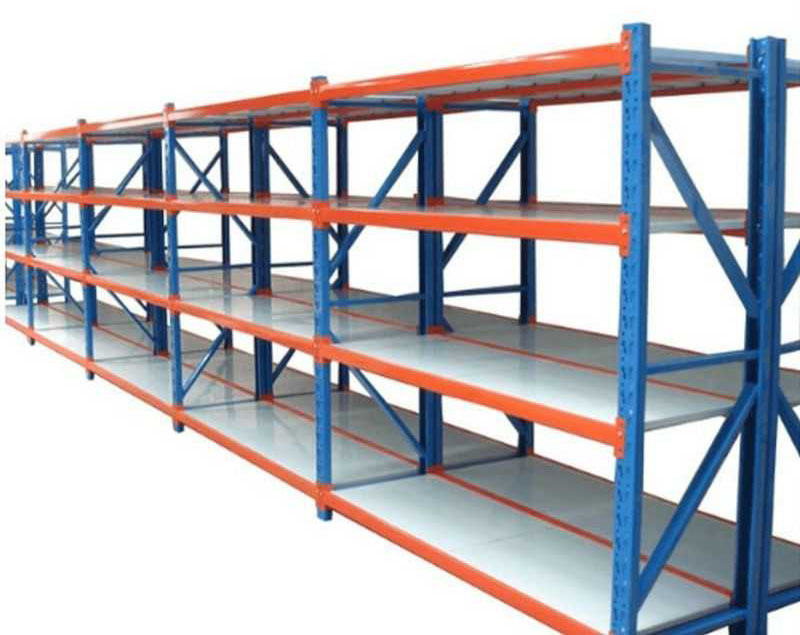
While it seems cosmetic, color coding is a safety feature. Customizing beam colors (commonly orange) against upright colors (commonly blue) helps forklift operators visualize levels clearly. Some manufacturers will even match your corporate branding colors.
Quality Certification and Standard Compliance: What Buyers Must Verify Before Signing with a Rack Manufacturer
This is the most critical section for risk management. In the world of industrial storage, a collapse can be fatal. Therefore, the qualified manufacturer is always a certified one. You need proof that their engineering calculations have been verified by third parties.
Essential Certifications
When vetting a supplier, request copies of the following:
- ISO 9001: This certifies their Quality Management System. It guarantees consistency in manufacturing.
- CE Marking: Essential if you are in or trading with Europe. It indicates conformity with health, safety, and environmental protection standards.
- SEMA (Storage Equipment Manufacturers’ Association): A UK-based standard that is respected globally.
- RMI (Rack Manufacturers Institute): The key standard for the US market.
- AS 4084-2012: The standard for steel storage racking in Australia.
If a manufacturer claims their racks meet industrial standards but cannot produce these physical certificates, their engineering data is unverified. For a comprehensive overview of safety protocols, refer to our detailed Pallet Rack Safety Guidelines.
Manufacturer Ranking / Recommendation List
So, who are the big players? If you’re comparing rack manufacturers for your next warehouse project, here’s a vetted list to help you shortlist suppliers and request quotes. While we believe in our own capabilities, a transparent market view helps you make the best decision. Here is a look at some of the globally recognized names in the industry, categorized by their primary market strengths.
Top 5 Global Heavy-Duty Rack Manufacturers
1. Mecalux (Spain/Global) Mecalux is a giant in the industry. They are renowned not just for racking but for warehouse automation software.
- Best For: Companies looking for fully automated warehouse solutions and high-tech integration.
- Pros: Massive global presence, advanced technology.
- Cons: Can be expensive for smaller, simpler projects.
2. SSI SCHAEFER (Germany) German engineering at its finest. SSI SCHAEFER is often considered the benchmark for quality and durability.
- Best For: Large-scale logistics centers requiring extreme precision and longevity.
- Pros: Incredible product durability and vast product range.
- Cons: Premium pricing and longer lead times for custom orders.
3. Aceally (China/Global) Based in Xiamen, Aceally specializes in bridging the gap between high-grade manufacturing and cost-efficiency. We focus heavily on heavy-duty customized solutions.
- Best For: Businesses seeking high-tensile steel racking (Selective, Drive-in, Cantilever) at competitive pricing without sacrificing safety certifications (ISO/CE compliant).
- Pros: Excellent customization options, fast response times, and strong structural integrity.
- Cons: Direct logistics coordination required for international shipping (though usually handled by the team).
4. Dexion (Europe/Global) One of the oldest names in the business (inventors of the slotted angle). They have a strong reputation across Europe and Australia.
- Best For: Standard pallet racking and office shelving solutions.
- Pros: immense brand heritage and widespread distributor network.
- Cons: Product innovation has sometimes lagged behind the tech-focused competitors.
5. Jungheinrich (Germany) While famous for their forklifts, they produce excellent racking systems designed to work perfectly with their material handling equipment.
- Best For: Customers buying forklifts who want a turnkey solution.
- Pros: Seamless integration between trucks and racks.
- Cons: Racking is often a secondary focus compared to their vehicle division.
Comparison of Manufacturer Strengths
| Manufacturer | Core Strength | Price Point | Customization Level |
|---|---|---|---|
| Mecalux | Automation & Software | High | High |
| SSI SCHAEFER | Durability & Engineering | Very High | Medium |
| Aceally | Cost-Efficiency & Customization | Competitive | Very High |
| Dexion | Legacy & Distribution | Medium-High | Medium |
| Jungheinrich | Equipment Integration | High | Low-Medium |
How to Verify a Manufacturer Before Buying
Choosing from a list is easy, but verifying their production capabilities is hard. Before you sign a contract with any heavy-duty rack manufacturer, take these steps to validate their claims against your specific project needs.
equest a Mill Certificate
This is a document from the steel mill that supplied the raw material to the rack manufacturer. It proves the chemical composition and yield strength of the steel. If they use Q235 or Q345 steel, the certificate will prove it.
Ask for a Sample
Don’t just look at photos. Ask for a small sample of the upright and beam section. Check the welding quality.
- Are the welds smooth and consistent?
- Is the powder coating even, or is it flaking?
- Is the steel gauge (thickness) consistent with what was quoted?
Check Reference Projects
Ask the manufacturer: “Have you exported to my country before?” A manufacturer experienced in shipping to the USA understands different logistical challenges than one who only ships domestically. Ask for photos of installed projects that are at least 3-5 years old to see how the racks hold up over time. Additionally, understand your legal obligations by reading: Are Racking Inspections a Legal Requirement?
For more insights on evaluating suppliers, you can refer to resources like the ThomasNet Supplier Discovery Platform which vets industrial suppliers.
Summary
Finding the “best” heavy-duty rack manufacturer is about balancing three pillars: Safety, Efficiency, and Cost. You need a partner who uses certified high-tensile steel, understands the specific logistics of your industry (whether that is drive-in or selective racking), and holds the necessary ISO and CE certifications to ensure you pass local safety inspections. While giants like Mecalux and SSI Schaefer offer premium automated solutions, manufacturers like Aceally provide a compelling blend of rigorous quality standards, deep customization, and competitive pricing for businesses that need reliable heavy-duty storage.
If you are ready to transform your warehouse operations. Aceally is ready to provide you with a free consultation and a detailed CAD design of your warehouse layout. Don’t risk your inventory with unverified suppliers. Contact us today to discuss your load requirements and get a wholesale quote with MOQ details that fits your budget and safety needs. Ready to place a bulk order? Request a factory audit report now.
FAQ
Frequently Asked Questions
How do I choose a rack manufacturer?
What is the best pallet racking?
Who are the top 5 rack manufacturers?
How much weight can a heavy duty rack hold?
What is the MOQ (Minimum Order Quantity) for heavy-duty racks?
How do I audit a rack factory before placing a large order?