

In warehouse management, pallet rack installation is not as simple as just assembling steel.
Installation time directly affects warehouse downtime and operational efficiency.
While everyone wants an exact time, the answer usually depends on the size of the pallet racking system, its complexity, and the readiness of the site.
This article will provide a detailed time estimation guide based on industry standards and delve into how to shorten the construction period by optimizing processes.
I. Factors Influencing Pallet Rack Installation Time
1. Size of the Pallet Racking System
Small Systems: For example, pallet racks used for small warehouses or retail storage rooms typically take just a few days to complete. This involves assembling a small number of pallet racks and placing them in position.
Medium Systems: Installation for a medium-sized warehouse may take one to two weeks. This involves assembling and placing multiple pallet racks, often requiring different configurations to maximize space utilization.
Large Systems: Large distribution centers or massive warehouse facilities may take several weeks. As the quantity of pallet racks increases, configurations become more complex, and space optimization demands rise, the difficulty and time of installation increase accordingly.
2. Rack Type and Complexity
Not all steel is equal. The type of pallet racking system you choose is the primary factor affecting installation time.
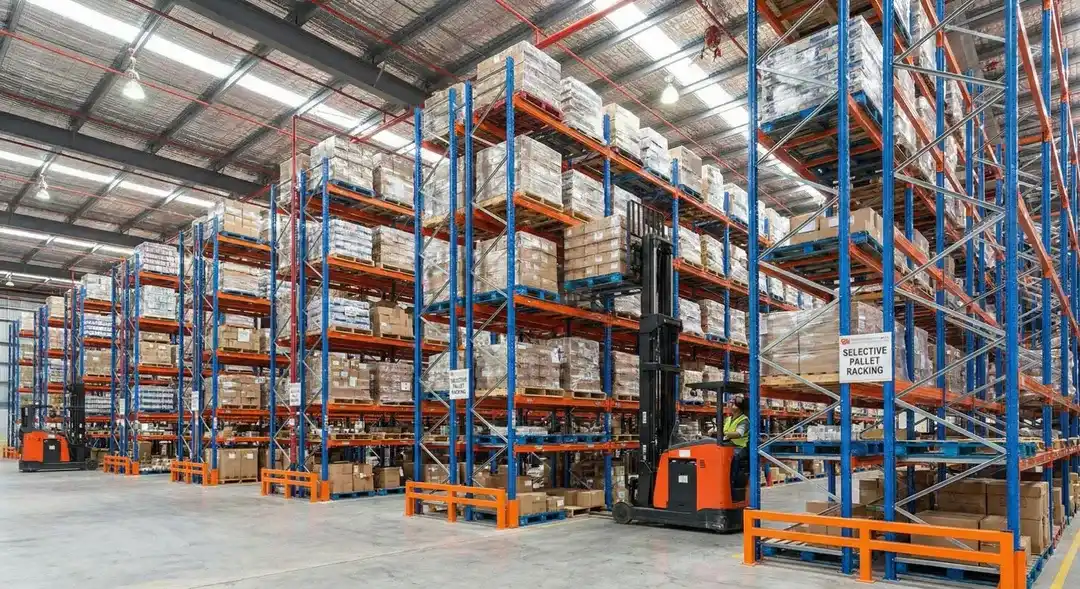
- Selective Pallet Racking: This is the most basic rack type. Due to its open structure and high adaptability, it has the fastest installation speed.
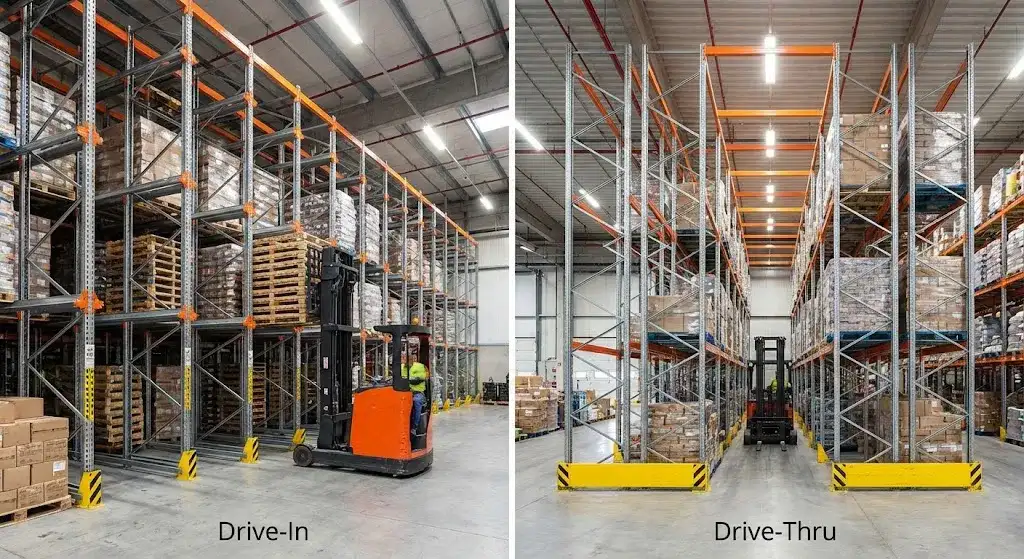
- Drive-In/Drive-Thru Pallet Racking: Expect installation times to be 30% to 50% longer than selective pallet racking. Since forklifts drive inside the pallet racks, the margin for error is almost zero. Installers must spend extra time ensuring every upright is perfectly aligned to prevent accidents.
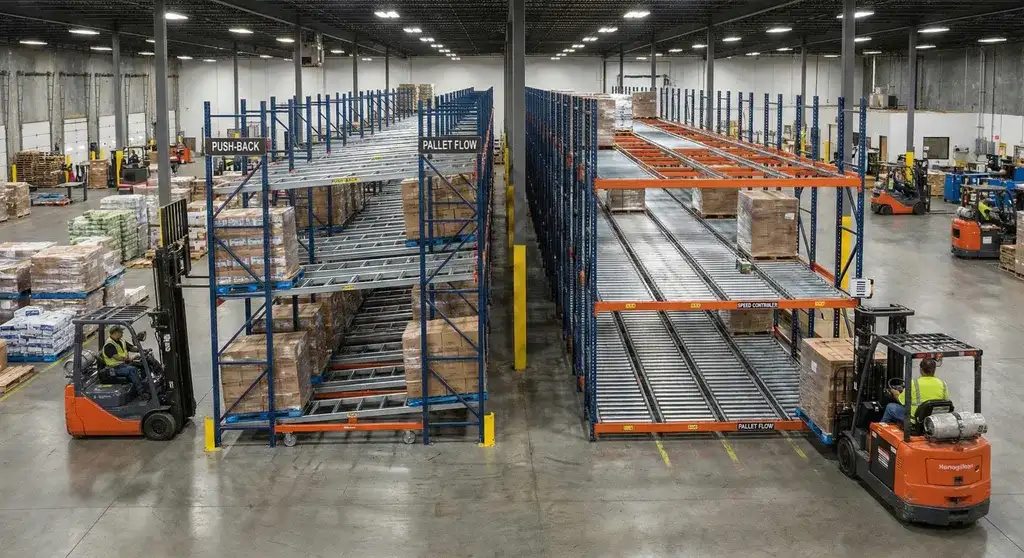
- Push-Back and Pallet Flow Racking: The installation time for these racking systems can be double that of standard pallet racks. They require the installation of dynamic components such as gravity rollers, inclined rails, and brakes. Every rack lane needs to be precisely leveled and tested to ensure smooth pallet flow.
3. Vertical Height and Equipment
Installing a 12-foot high pallet racking system is vastly different from installing a 30-foot high system.
Low Clearance: Installers can usually work from the ground or using small ladders.
High-Bay Facilities: Scissor lifts are required. Moving materials up and down via lifts creates bottlenecks, naturally slowing down installation speed.
4. Floor Condition
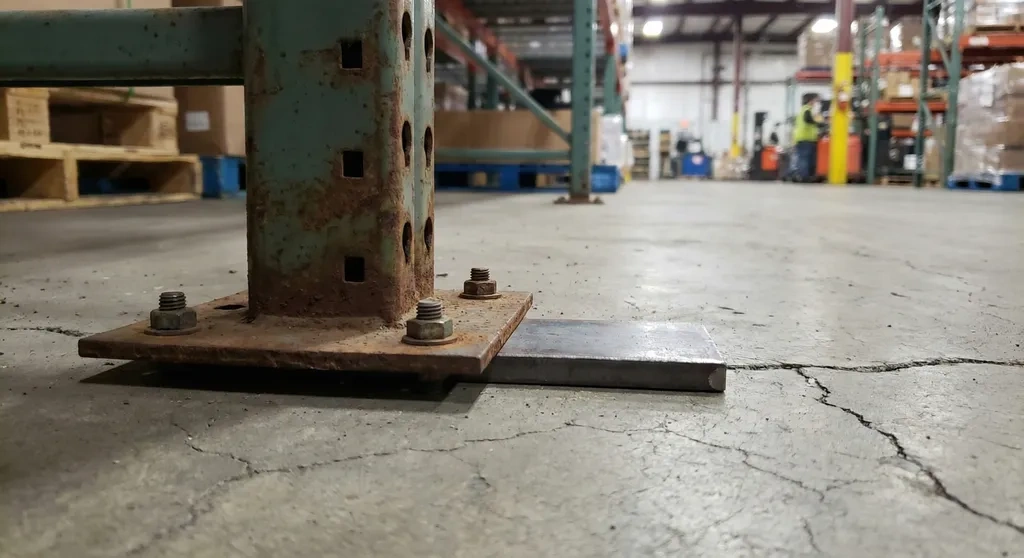
If your warehouse floor is uneven, the installation team cannot bolt the pallet racks directly. They must place shims (metal plates) under the upright bases to adjust the level. If the floor condition is particularly bad, shimming every upright can extend the construction period by several days.
5. Complexity of the Project
Simple Projects: Installations using standard pallet racking with no special requirements can be completed relatively quickly.
Complex Projects: Projects involving custom pallet racking solutions, mezzanines, or integration with automation systems require more time. Custom designs necessitate precise measurements, specialized equipment, and more extensive planning.
6. Site Preparation
Site Readiness: A site that is cleared, has a level floor, and ample space can significantly speed up installation. Floor issues or structural obstructions will cause delays.
Permits and Inspections: Depending on local regulations, obtaining necessary permits and passing inspections can add time costs. It is crucial to handle all paperwork before the pallet rack installation begins.
7. Experience of the Installation Team
Experienced Teams: Professional installation teams are familiar with common challenges and know how to overcome obstacles, completing the work more quickly and efficiently.
Inexperienced Teams: Teams unfamiliar with specific pallet racking systems or potential issues may spend significantly longer.
II. Installation Time Estimates
| Project Size (Sq. Ft.) | Estimated Installation Time | Typical Configuration | Key Time Variables |
|---|---|---|---|
| Small Pallet Racking System (1,000 – 5,000 sq. ft.) | 2 – 4 Days | Small amount of beam racking, used as a storage room or small warehouse. | Is floor cleaning thorough? Did materials arrive all at once? |
| Medium Pallet Racking System (5,000 – 20,000 sq. ft.) | 1 – 2.5 Weeks | Multiple rows of pallet racking, containing a few special configurations (e.g., flow rails). | Is interleaved work required (warehouse still operating)? Are forklift aisles clear? |
| Large Pallet Racking System (20,000+ sq. ft.) | 3 – 8 Weeks | Complex distribution centers, containing Drive-In pallet racks or automation integration. | Is delivery phased? Coordination progress with fire sprinkler systems. |
Five-Step Installation
Step 1: Site Planning
Develop a plan; don’t just look at drawings. Before the installation team enters, use a chalk line on the ground to mark the exact position of all uprights. This helps detect in advance if columns are blocking fire hydrants or if aisle widths meet the forklift turning radius. Finding problems before installation costs zero; finding them after incurs double the cost.
Step 2: Site Preparation
Clean the site. Do not pile all materials together; classify and arrange upright frames, beams, and accessories according to the installation sequence. Avoid having installers wandering around the warehouse looking for parts. Statistics show that chaotic material stacking wastes 15-20% of labor hours.
Step 3: Sectional Assembly and Erection
Assemble the pallet racks. For standard pallet racking, construction crews typically assemble the upright frames first (if bolted) and then begin erecting the rack units. Usually, upright frames are assembled on the ground (if they are the bolted type) and then erected in batches. Never lock the ground anchor bolts until all beams are installed and the verticality (plumb) is calibrated.
Step 4: Anchoring and Safety First
Drilling is the dustiest part of the process. Using a hammer drill with a vacuum function can reduce cleanup time. Ensure every beam has safety pins installed. This is key to preventing beams from being accidentally dislodged during forklift operations and is a focus of OSHA inspections.
Step 5: Final Inspection & Labeling
Monitor progress; the end of installation does not mean completion. You must post Load Plaques in conspicuous places on the pallet racks, indicating the maximum weight capacity. Pallet racks without load signage are non-compliant in safety audits, and redoing these signs generates extra administrative time.
Common Issues and Strategies
1. Permit Delays
The pallet racks have arrived, the installation team is here, but the work permit from the fire department hasn’t been issued. Start applying for permits at the same time you order the pallet racks; it typically takes 3-6 weeks.
2. Missing Parts/Damage
Installing until the end only to find 5 base anchor bolts are missing. Conduct a detailed inventory count immediately upon cargo delivery; do not wait until installation day to check.
3. Warehouse Operation Conflicts
Forklifts are still operating in the installation area. Strictly divide the “Construction Zone” and “Operation Zone” using caution tape for isolation. Mixing traffic is not only dangerous but will also greatly reduce pallet rack installation speed.
Summary
Professional installation brings higher storage efficiency and safety. Although we all hope for the fastest installation possible, safety is the number one priority.
By choosing an experienced team and following the deep preparation work mentioned above, you can compress a project that might originally need 3 weeks into 2 weeks, allowing your warehouse to become operational and profitable sooner.
Frequently Asked Questions (FAQ)
Q: Do I need a permit to install pallet racking?
A: Definitely. In most cities, pallet racking is considered part of the building structure. You may need to apply for a “High Pile Storage” permit. Note: Permit approval can take 4-6 weeks. Do not wait until the installation date to apply, or your installers will have nothing to do.
Q: Can I install the pallet racks myself to save time?
A: We strongly advise against self-installing industrial pallet racking. Professional installers possess specialized tools (heavy-duty hammer drills, laser levels) to complete the installation quickly. More importantly, incorrect anchoring or insufficient plumbness can lead to pallet rack collapse. Hiring certified professionals also ensures your warranty remains valid.
Q: How does ceiling height affect installation time?
A: Working at heights slows down installation. Installing a standard 12-foot pallet racking system is fast. Installing a 30-foot high Very Narrow Aisle (VNA) system requires scissor lifts and stricter safety protocols, which naturally reduces assembly speed.
Q: What is the installation cost per rack unit?
A: The market price for standard selective pallet racking is usually between $75 and $150 per bay. The specific price varies depending on the seismic zone (requiring more anchor points), rack height (requiring lifts), and installation location (whether union labor is used).