


Custom Warehouse Racking for Lean Manufacturing: Solving 6 Core Warehouse Efficiency Problems
Industrial-grade lean warehouse optimization system designed for high-efficiency manufacturing and logistics operations
In modern industrial manufacturing and warehouse operations, inefficiencies are often not immediately visible but accumulate into significant operational waste over time. Poor warehouse layout design, excessive material handling movements, inaccurate picking processes, and low space utilization all contribute to increased operational costs and reduced production efficiency.
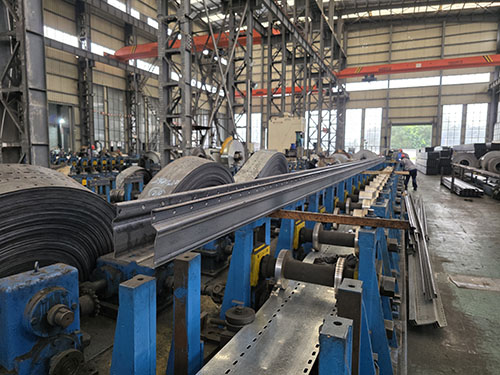
As production systems shift toward lean manufacturing and Just-in-Time (JIT) delivery models, warehouses are required to become more structured, more responsive, and more integrated with production workflows. Traditional racking systems are often unable to meet these requirements due to their fixed structure and lack of workflow adaptability.
A custom warehouse racking system is designed specifically to solve these challenges. Instead of using a one-size-fits-all structure, it is engineered based on real operational data, SKU characteristics, material flow paths, and production rhythm. This allows manufacturers to significantly improve efficiency while reducing waste across the entire storage and handling process.
Aceally provides customized racking solutions for global manufacturers across automotive, electronics, machinery, and logistics industries in more than 36 countries and regions, supporting long-term warehouse optimization based on lean principles and value stream mapping methodologies.
What Is Custom Warehouse Racking?
Custom warehouse racking refers to a fully engineered storage system that is designed based on specific warehouse operations rather than standardized rack dimensions. It is developed by analyzing warehouse layout, product types, inventory turnover rates, and material handling processes.
Unlike conventional shelving systems that prioritize uniformity, custom racking prioritizes operational efficiency. It is commonly integrated with FIFO (First-In-First-Out) systems, JIT production requirements, and automated or semi-automated picking technologies to ensure seamless material flow.
In lean manufacturing environments, custom racking acts as a structural foundation for eliminating non-value-added activities such as unnecessary movement, overprocessing, waiting time, and excess inventory storage.
1. Insufficient Picking Capacity & Inventory Waste
Problem: Many warehouses operate without structured picking zones, resulting in chaotic SKU placement, frequent stock misalignment, and inefficient replenishment cycles. This leads to production delays and excess safety stock accumulation.
Solution: Custom racking introduces zoned storage architecture based on production stages and SKU turnover rates. High-frequency items are placed in optimized picking zones, while slow-moving inventory is stored in secondary areas, improving retrieval efficiency.
Result: Warehouses achieve up to 45% reduction in downtime caused by material shortages and significantly improved inventory accuracy and traceability.
2. Fragmented Picking Process & High Error Rate
Problem: Without standardized picking guidance systems, operators rely heavily on manual identification, increasing the likelihood of incorrect SKU selection and repeated walking paths within the warehouse.
Solution: Integration with pick-to-light systems, barcode scanning zones, and visual warehouse guidance significantly improves operational standardization and reduces reliance on human memory or estimation.
Result: Picking error rates are reduced by up to 60%, while overall picking efficiency improves by approximately 30%, reducing labor waste and improving order fulfillment speed.
3. Fixed Rack Size & Low Space Utilization
Problem: Standard racking systems are designed with fixed dimensions that do not align with real warehouse SKU diversity. This leads to inefficient use of vertical storage space and frequent empty or overfilled storage sections.
Solution: Custom racking is engineered according to product dimensions, weight characteristics, and handling requirements, enabling precise space allocation for small parts, bulk materials, and WIP goods.
Result: Warehouse space utilization improves by up to 52%, significantly increasing storage capacity without expanding physical warehouse footprint.
4. Unreasonable Layout & Disrupted Material Flow
Problem: Poorly designed warehouse layouts often create unnecessary transportation distances between receiving, storage, picking, and dispatch areas, leading to inefficient material handling and increased labor cost.
Solution: Custom racking systems are designed based on value stream mapping (VSM), ensuring that warehouse layout follows a logical production flow: receiving → storage → picking → WIP staging → dispatch.
Result: Material handling distance is reduced by up to 38%, improving operational speed and reducing internal logistics cost significantly.
5. Poor Scalability & Limited Expansion Capability
Problem: Traditional fixed racking systems lack flexibility, making it difficult for warehouses to adapt to production growth, SKU changes, or operational restructuring.
Solution: Modular custom racking systems are designed for scalability, allowing sections to be expanded, relocated, or reconfigured without disrupting ongoing warehouse operations.
Result: Warehouses achieve long-term adaptability, supporting continuous lean improvement (Kaizen) and evolving production requirements.
6. Standard Racking Limits Lean Workflow Design
Problem: Conventional racking systems are not designed to support lean manufacturing workflows such as kitting stations, FIFO lanes, or line-side feeding systems, resulting in inefficiencies in production support.
Solution: Custom racking is developed through production rhythm analysis, ensuring alignment between warehouse structure and manufacturing takt time requirements.
Result: Operational process matching efficiency improves by up to 40%, enabling smoother integration between warehouse and production lines.
Applications of Custom Warehouse Racking Systems
Custom warehouse racking systems are widely applied across industries that require structured material flow, high inventory accuracy, and lean operational efficiency. Typical applications include automotive manufacturing plants where parts must be delivered in sequence, electronics assembly factories with high SKU complexity, machinery production workshops handling heavy components, e-commerce fulfillment centers requiring fast order processing, cold storage logistics environments with strict handling constraints, and industrial distribution centers managing large-scale inventory movement.
Why Choose Custom Racking Solutions
Custom racking systems are not just storage equipment but an integrated part of lean warehouse design. By combining value stream optimization, JIT production support, modular engineering, and waste reduction strategies, they transform traditional warehouses into efficient, scalable, and highly responsive logistics systems.
This approach allows enterprises to reduce operational waste, improve labor productivity, and align warehouse operations directly with production requirements, ensuring long-term competitiveness in fast-changing industrial environments.
Frequently Asked Questions (FAQ)
What is custom warehouse racking? It is a tailored storage system designed based on warehouse workflow, SKU characteristics, and production requirements rather than fixed standard dimensions.
Can custom racking improve warehouse efficiency? Yes. It improves space utilization, reduces picking errors, optimizes material flow, and significantly enhances overall operational efficiency.
Is custom racking suitable for lean manufacturing systems? Yes. It is specifically designed to support lean principles such as FIFO, JIT, and continuous improvement (Kaizen).
Can the system be expanded in the future? Yes. Modular design allows flexible expansion, reconfiguration, and relocation based on future operational needs.
Need a Custom Warehouse Racking Solution?
Contact us for a professional warehouse layout design tailored to your production flow, inventory structure, and operational requirements.


