



You walk onto the warehouse floor, and it feels claustrophobic. Pallets are sitting in the middle of aisles, forklifts are struggling to maneuver around corners, and your picking team is wasting valuable minutes, sometimes hours, hunting for inventory that isn’t where it’s supposed to be.
Your first instinct might be to call a real estate agent and look for a bigger building. Expanding your footprint is a massive, expensive undertaking that involves moving costs, new leases, and operational downtime. The reality is often surprisingly different: you likely don’t have a space shortage; you have a warehouse space utilization problem.
Before you commit to a costly move, you need to dig into the data. Effective space utilization isn’t just about cramming more boxes onto shelves until they buckle; it’s about maximizing the cubic volume of your current facility while maintaining efficient workflow and safety. This guide will show you exactly how to calculate your current utilization and, more importantly, how to optimize it to save money and maximize warehouse efficiency.

Key Takeaways
- Definition: Warehouse space utilization is a metric that reveals how much of your available storage capacity is actually being used effectively versus how much is wasted air.
- The “85% Rule”: The sweet spot for utilization is roughly 85%. Going beyond this leads to congestion, while falling below it means you are paying for empty space.
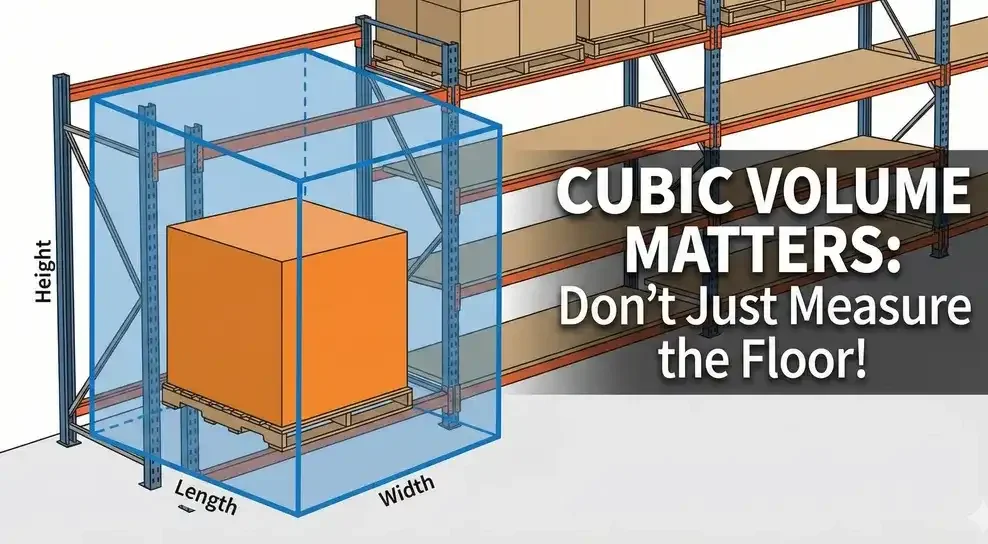
- The Cube Matters: You must calculate based on cubic volume (Length × Width × Height), not just square footage.
- Strategic Optimization: Solutions range from simply narrowing aisles and removing obsolete stock to installing mezzanines and updating your slotting strategy.
- Expert Partners: As a dedicated warehouse racking manufacturer, Aceally can help you deploy custom storage solutions to unlock hidden potential in your facility.
What Is Warehouse Space Utilization?
Warehouse space utilization is a critical Key Performance Indicator (KPI) that tracks how effectively you are using the storage capacity of your facility. It answers the fundamental question: “Are we getting our money’s worth out of this building?”
Many facility managers make the rookie mistake of looking only at the floor footprint. They see a floor covered in pallets and assume the warehouse is full. However, in logistics and warehousing, we live in a three-dimensional world. True utilization looks at the cube—the length, the width, and the height of your storage area.
If you have a warehouse with 30-foot ceilings but you are only stacking pallets 10 feet high, your utilization is actually quite poor, even if your floor is completely covered. You are paying rent for that empty air above your racks. Space utilization measures the ratio of the physical space occupied by inventory to the total storage capacity available, giving you a realistic picture of your efficiency.
Warehouse Space Utilization Explained
Why does this metric matter so much? Because in the world of warehousing, space is currency.
When your utilization is too low, you are essentially burning money. You are paying for rent, utilities, insurance, and taxes on square footage that is generating absolutely no revenue for your business. It’s like booking a hotel room and only using the closet; the cost is the same, but the value you get is minimal.
Conversely, there is a dangerous flip side. If your utilization is too high—approaching 100%—your efficiency will plummet. This is often referred to as “warehouse congestion.” When a warehouse is 100% full, movement stops.
Receiving teams have nowhere to put new stock, so it piles up on the dock. Picking paths become blocked by overflow inventory. Labor costs skyrocket because workers have to move three pallets just to get to the one they actually need. Understanding this delicate balance is critical for maintaining a lean, profitable supply chain.
How to Calculate Warehouse Space Utilization and Capacity
To fix your space issues, you first need to quantify them. You cannot manage what you cannot measure. Here is the comprehensive, step-by-step process to calculate your utilization accurately.
The Basic Formula:
Warehouse Space Utilization = Physical Inventory VolumeTotal Storage Capacity × 100
Step 1: Calculate Total Storage Capacity
First, determine the total usable space in your racks and floor stack areas. It is crucial that you do not include non-storage areas such as shipping docks, administrative offices, restrooms, or battery charging stations.
- For Racking Systems: Measure the internal dimensions of your rack bays (Width × Depth × Height). Multiply this volume by the total number of bays in your facility.
- For Floor Storage: Multiply the Length × Width of the designated floor storage area by the maximum safe stacking height allowed by your safety regulations and equipment.
Step 2: Calculate Inventory Cube
Next, you need to calculate the volume of the inventory currently sitting in the warehouse. This can be tricky if you have irregular items.
- Multiply the cubic footage of your pallets (or individual SKUs) by the total count of those items.
- If a pallet is only half full but takes up a full pallet position, you need to decide if you count that as “utilized” (because the space is taken) or “waste” (because the air is empty). For pure capacity planning, usually, the occupied footprint is what matters.
Step 3: Result
Let’s look at a hypothetical scenario to make this clear.
| Metric | Measurement | Calculation Context |
|---|---|---|
| Total Rack Capacity | 500,000 cubic feet | This is the total volume available in your racking system if every slot were filled. |
| Current Inventory Volume | 350,000 cubic feet | The actual volume of goods currently stored. |
| Calculation | (350,000 / 500,000) × 100 | Divide inventory by capacity. |
| Utilization Rate | 70% | You have 30% available space for growth. |
If your calculation returns a number over 85%, you are in the danger zone. You need to implement the optimization tips listed later in this article immediately before your operations gridlock.
Note: If you are struggling to define your storage capacity because your current setup is disorganized, you might want to explore our warehouse racking solutions to establish a solid baseline for your facility.
Warehouse Space Utilization Considerations
Before you start moving beams or changing layouts, you need to consider several variables that are unique to your operation. Ignoring these can lead to a layout that looks good on a spreadsheet but fails miserably on the warehouse floor.
Pallet size
Are your pallets standard GMA (48″ x 40″), or do you handle oversized loads? This is a common oversight. If your racking is designed for standard pallets but you frequently store custom sizes, you are likely creating “dead space” within the rack bays.
For example, putting a small 30″ x 30″ pallet into a slot designed for a 48″ x 40″ pallet wastes nearly half the slot’s potential. Consistent pallet sizing—or racking designed to accommodate variable sizes—is crucial for high utilization.
Total number of pallets
You need an accurate count of your average, peak, and low-season inventory levels. Designing a warehouse for your “average” inventory level will lead to disaster during peak season (like Q4 or holiday rushes).
Your utilization plan must be built to handle your maximum expected capacity. If you design for the average, you will run out of space the moment sales pick up, forcing you to store overflow in aisles, which creates safety hazards.
Vertical space
Are there 5, 10, or even 15 feet of empty air above your top shelf?
If your sprinkler system and building fire codes allow it, expanding upward is almost always cheaper than expanding outward. Adding beam levels or extending uprights can increase your capacity by 20-30% without changing your floor plan at all.

Inventory turnover
Fast-moving goods (high turnover) need to be accessible. You shouldn’t bury your best-sellers in the back corner of the warehouse or on the very top rack where they take longer to retrieve.
Your utilization strategy must account for velocity. High-turnover items should be near the shipping docks and at ground level to minimize travel time. Storing them inefficiently effectively reduces your operational “space” by clogging up travel lanes with unnecessary long-distance traffic.
Receiving and shipping zones
Never sacrifice dock space for storage space. It is tempting to put racks in the staging area when you are tight on space, but this is a fatal error.
If your receiving dock is clogged because you added extra racks there, you create a bottleneck that slows down the entire building. You need sufficient clear space to unload, stage, and inspect cargo before it is put away.
Warehouse layout
Does your current flow make sense? A U-shaped or flow-through layout is typically best for preventing traffic jams.
A chaotic layout increases travel time, which is a hidden cost of poor space management. If aisles are dead-ends or require forklifts to drive effectively in circles to reach a destination, you are wasting space on travel paths that could be used for storage.
Warehouse Space Utilization Challenges
There are real-world hurdles that prevent warehouses from running perfectly. Here are the most common challenges our clients face before coming to Aceally for a solution.
Poor layout design
Many warehouses grow organically rather than strategically. You started with ten racks, then bought five more, then added some shelving in a corner.
Over time, this creates a “Frankenstein” layout with mismatched aisle widths, dead ends, and inefficient traffic patterns. This lack of a master plan results in massive amounts of wasted square footage that becomes unusable due to poor access.
Overstocked inventory
Procurement teams often buy in bulk to secure lower unit costs, but they fail to account for the carrying costs of storing that excess product.
Holding onto obsolete stock or buying three years’ worth of product to save pennies on the dollar will choke your warehouse capacity. If 20% of your warehouse is filled with product that hasn’t sold in a year, you are artificially reducing your available space.
SKU complexity
As your business grows, so does your SKU count. Managing 50 SKUs is easy; managing 5,000 varying sizes, weights, and packaging types is a logistical nightmare.
Without a sophisticated strategy, small items often end up taking up full pallet positions simply because there is nowhere else to put them. This “honeycombing” effect destroys your utilization rates.
Substandard demand forecasting
If you don’t know what orders are coming, you can’t plan your space effectively. Unexpected spikes in demand force managers to panic-store products in aisles or staging areas.
This reactive approach creates immediate safety hazards and reduces efficiency. Accurate forecasting allows you to clear space before the inventory arrives, rather than scrambling to find a spot for it when the truck backs up to the dock.
Poor employee training
If your forklift drivers aren’t trained on proper stacking or “honeycombing” (consolidating pallets), efficiency is lost.
We often see warehouses where multiple pallets of the same SKU are all half-empty, taking up three slots when they could be condensed into one. A lack of discipline in putting inventory away correctly degrades your capacity over time.
Outdated warehouse technology
Relying on memory or Excel spreadsheets to track inventory location leads to “ghost inventory” and lost space.
A modern Warehouse Management System (WMS) is essential. Without one, operators will skip difficult-to-reach empty slots and put pallets wherever is easiest, leading to a disorganized mess that is impossible to optimize.
How to Optimize Warehouse Space Utilization: 12 Tips
Now that we have identified the problems, let’s look at the solutions. Here are 12 actionable ways to reclaim your warehouse space, ranging from quick fixes to structural investments.
1. Evaluate Warehouse Layout
Start with a CAD drawing of your floor. Look critically at your aisles. Are they wider than your forklifts require? Do you have cross-aisles that are rarely used?
Sometimes simply reorienting your racking from horizontal to vertical alignment can yield 10-20% more pallet positions. You need to visualize the flow of goods and remove any friction points that require excessive floor space for maneuvering.
2. Use More Vertical Space
This is often the most impactful change you can make. As a racking manufacturer, we frequently see clients stacking pallets on the floor when they have 20 feet of clear height above them.
Installing heavy-duty industrial mezzanines or multi-tier racking systems can instantly double your usable square footage without changing your building’s footprint.Mezzanines are particularly effective for storing slow-moving items or packing supplies off the main floor.
3. Narrow Aisle Widths
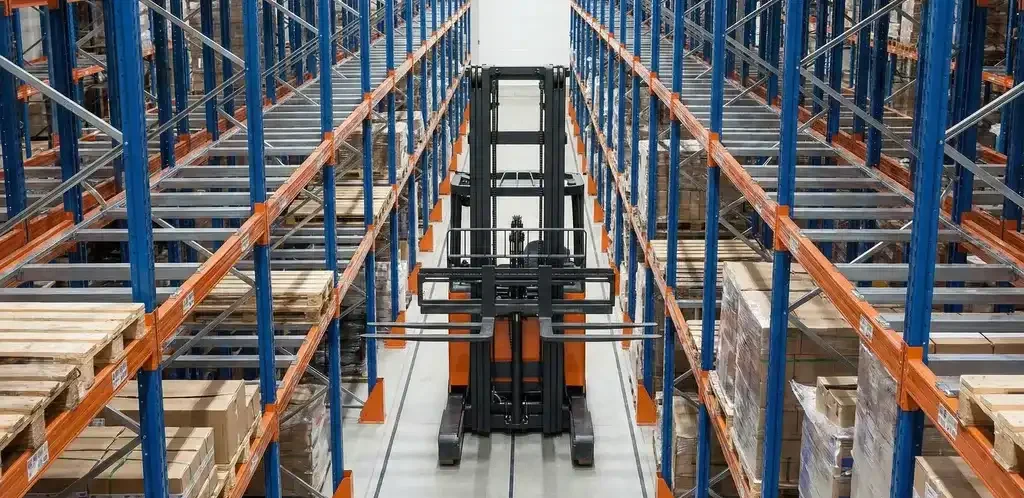
Do you really need 12-foot aisles? Standard forklifts require wide turning radiuses, but specialized equipment can change the game.
If you switch to narrow aisle equipment and install VNA (Very Narrow Aisle) racking systems, you can reduce aisle widths to as little as 6 feet.This allows you to add several extra rows of racking to your facility, significantly increasing your density.
4. Reduce SKU Redundancy
Audit your inventory catalog. Do you have three different SKUs for what is essentially the same box? Or old versions of a product that have been replaced?
Consolidating redundant SKUs reduces the number of pick faces you need to maintain. Fewer pick faces mean you can use more of your warehouse for bulk storage rather than active picking slots.
5. Move Excess Inventory
If you have dead stock that hasn’t moved in 12 months, get rid of it. It is costing you more in rent than it is worth in potential profit.
Liquidation, donation, or deep discounting is better than letting it sit. Clear the “dead wood” to make room for revenue-generating products. You should regularly review your inventory aging reports to identify these space-wasters.
6. Categorize Inventory
Use the ABC analysis method to categorize your stock based on value and velocity. This ensures prime real estate is used for prime products.
- A-Items (High Velocity): Store these near shipping/packing areas and at ergonomic heights.
- B-Items (Moderate): Store in the middle zones.
- C-Items (Low Velocity): Store in the back corners or highest rack levels.
| Category | % of Inventory Items | % of Revenue/Movement | Storage Strategy |
|---|---|---|---|
| A | 20% | 80% | Most accessible, easiest to pick. |
| B | 30% | 15% | Standard racking locations. |
| C | 50% | 5% | Deep storage, high bay, or mezzanines. |
7. Implement Slot Optimization Strategies
Slotting is the science of putting items in the right size location. Don’t put a shoebox-sized item in a full pallet slot.
Use bin shelving, carton flow racks, or dividers for smaller items to maximize cube utilization. Dynamic slotting—where locations change based on current demand—can further optimize pick paths and storage density.
8. Improve Forecasting Accuracy
Work closely with your sales and procurement teams to tighten up your numbers. The more accurate your forecast, the less “safety stock” you need to hold.
Lower safety stock means more open racking for active inventory. By predicting peaks accurately, you can arrange temporary overflow storage in advance rather than clogging up your main aisles.
9. Integrate Cross-Docking
Cross-docking involves unloading materials from an incoming truck and loading them directly onto outbound trucks, with little to no storage time in between.
This completely bypasses the need for racking storage for those items. If you can cross-dock even 10% of your volume, you effectively free up 10% of your storage capacity.
10. Consider Modular Shelving
Static shelving is rigid and often wasteful. Boltless shelving units or light-duty racking (which Aceally manufactures) allow you to adjust shelf heights in small increments.
If your product packaging changes, you can adjust the shelf to fit the box perfectly, removing wasted air gaps. This flexibility is key for e-commerce businesses where product dimensions vary wildly.
11. Standardize Employee Training
Train your receiving team to measure incoming cargo and your put-away team to consolidate partial pallets. Create a culture of “clean as you go.”
If a picker sees two half-empty pallets of the same item, they should be empowered to combine them immediately. This manual consolidation frees up pallet positions daily without requiring management intervention.
12. Update Your Technology
Invest in a WMS that offers directed put-away. The system can calculate the size of the incoming load and tell the operator exactly which bin location fits that specific size.
This eliminates human error and “guesstimating,” ensuring that small pallets go into small slots and large pallets go into large slots, maximizing the cube automatically.
Maximize Your Warehouse Space With Aceally
At Aceally, we don’t just sell steel; we provide comprehensive storage solutions. As a leading manufacturer and supplier of industrial shelving and warehousing equipment, we understand that every square inch of your facility represents potential profit.
We differ from generic distributors because we are a factory-direct wholesale racking supplier. Whether you need custom warehouse racking, drive-in racks for high-density storage, or a complex structural mezzanine platform to double your floor space, we manufacture the products directly. This means you get factory-direct pricing and custom configurations that fit your specific layout challenges perfectly.
If you are struggling with the calculations mentioned above, let us handle the heavy lifting. We can assess your current layout, analyze your product mix, and propose a racking design that maximizes your vertical space and optimizes your workflow.
Frequently Asked Questions
What principle is essential for optimizing space in a warehouse?
What is the ideal warehouse utilization rate?
What percentage of a warehouse should be empty space?
Summary
Optimizing your warehouse space utilization is a continuous process. It requires a shift in mindset from “how much floor do we have?” to “how much volume can we use?” By calculating your true capacity, identifying your inefficiencies, and implementing smart storage strategies like vertical racking and better slotting, you can significantly reduce your operational costs.
You don’t always need a bigger warehouse; often, you just need a smarter one.
Contact Aceally today. Our team of engineers and manufacturing experts will work with you to design and build a storage solution that fits your unique inventory needs. Whether you need to retrofit your current facility or outfit a new one, we have the expertise to make your space work for you.


